
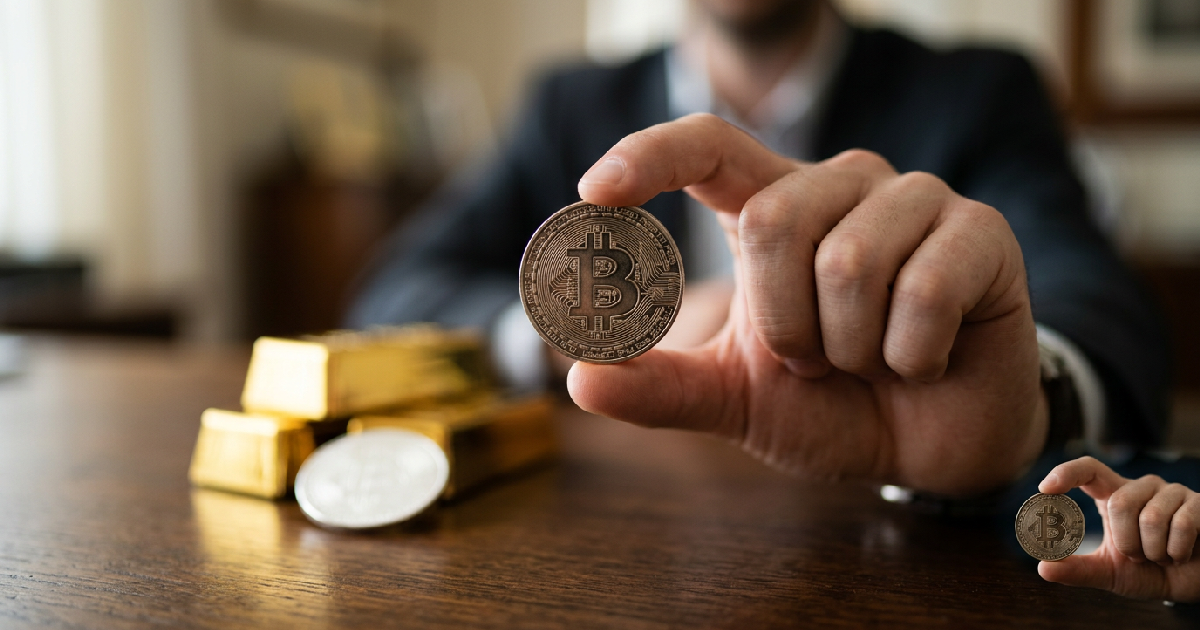

Investors are aggressively shifting capital into Bitcoin, gold, and silver as market expectations pivot toward a potential delay in Federal Reserve interest rate hikes. The simultaneous rally across digital and precious metals follows economic indicators suggesting the Federal Reserve (Fed) may maintain its current stance longer than previously anticipated, rather than continuing its aggressive tightening cycle.
This rare alignment between traditional safe-haven metals and cryptocurrencies highlights a growing belief that the U.S. central bank is nearing a prolonged pause. As the U.S. dollar index shows signs of softening, the appeal of non-yielding assets has strengthened, allowing these stores of value to gain ground against fiat volatility.
Interest rate expectations drive Bitcoin and precious metals higher
The correlation between digital assets and hard commodities is narrowing as macro-economic data influences investor behavior. For much of the recent tightening cycle, high interest rates supported a strong dollar, which typically puts downward pressure on assets that do not offer a yield or dividend. However, recent trends indicate a potential shift toward a more accommodative monetary environment.
When the Fed chooses to delay rate hikes, the opportunity cost of holding non-interest-bearing assets like gold or Bitcoin decreases significantly. This environment has encouraged whales and institutional buyers to increase their exposure, even as Bitcoin price analysis shows the market is still navigating heavy technical resistance at higher levels.
Silver has seen a particularly sharp reaction, benefiting from its dual role as both an industrial metal and a monetary hedge. The inclusion of Bitcoin in this “hard asset” rally suggests that market participants now view the digital token as a legitimate component of a broader diversification strategy intended to hedge against monetary debasement.
Exchange supply constraints amplify recent price movements
The cooling of the U.S. dollar has provided essential liquidity for this multi-asset surge. A strong dollar often acts as a vacuum, pulling liquidity out of alternative markets. With the Federal Reserve signaling a possible pause, that pressure is easing, allowing capital to flow back into the crypto ecosystem and commodity markets.
This inflow of capital occurs while the available supply of digital assets on major trading platforms is reaching historic lows. Recent data indicates that Bitcoin exchange supply maintains multi-year lows, which naturally intensifies upward pressure when demand increases. When fewer units are available for sale, even moderate buying volume can trigger a rapid price appreciation.
Investors are increasingly prioritizing assets with transparent and fixed supplies. Bitcoin’s programmed scarcity, mirroring the physical scarcity of gold, remains a primary draw for macro-investors. Many are looking to move away from the traditional banking sector’s inflationary pressures, viewing these assets as “insurance” against fiscal instability.
Risks of a Federal Reserve hawkish reversal
While current sentiment remains bullish, the relationship between interest rates and crypto valuations remains sensitive. High interest rates make government bonds more attractive because they offer a “risk-free” return. If inflation remains higher than the Fed’s target, officials could return to a hawkish stance, which would likely reverse the gains seen in gold and Bitcoin.
Sudden shifts in monetary policy can lead to rapid deleveraging. Previous market cycles show that macro warning signs can lead to rapid liquidations, as investors often sell liquid assets like crypto to cover losses in other sectors during a market shock.
The market is currently betting that the worst of the tightening cycle is over. However, the path forward will be dictated by upcoming Consumer Price Index (CPI) and employment reports. If these reports show a strong labor market or persistent inflation, the Fed could be forced to resume rate hikes, ending the current relief rally for both precious metals and digital tokens.