
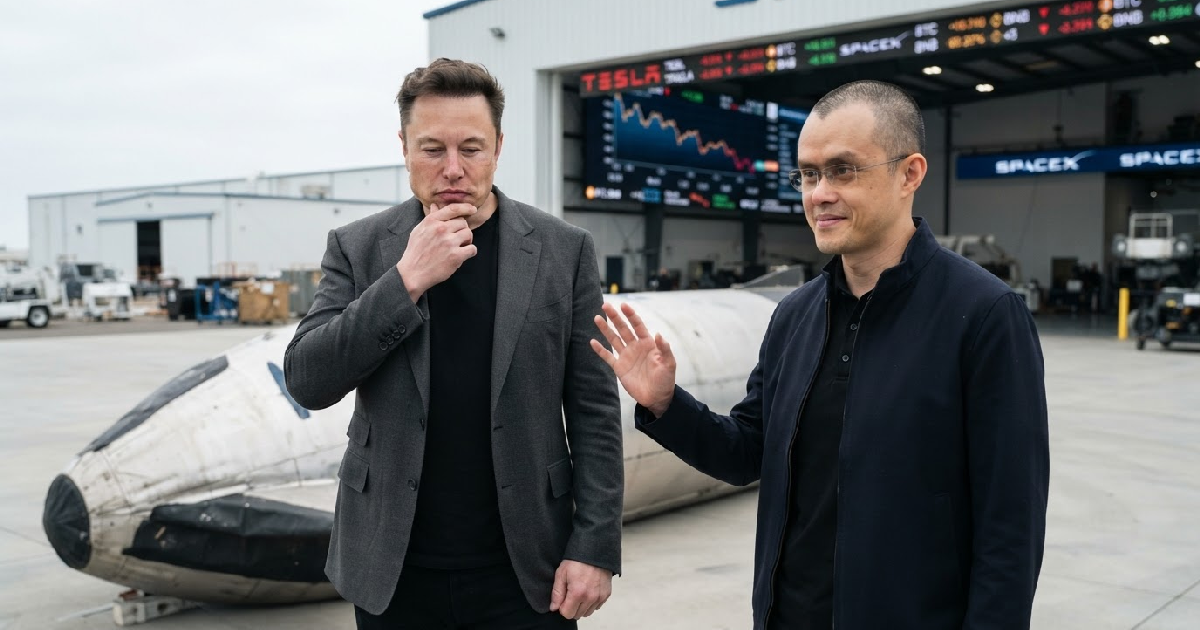

In a moment that underscored the fleeting nature of extreme wealth, Binance co-founder Changpeng Zhao, widely known as CZ, humorously labeled Elon Musk as “pre-rich.” This came on July 25, 2026, after Musk had publicly joked about his own exit from the exclusive trillionaire club.
The exchange between two of the world’s most prominent entrepreneurs highlights a significant and rapid recalibration of Musk’s immense fortune, driven largely by dips in SpaceX and Tesla’s stock performance.
The ephemeral reign of an Elon Musk trillionaire status
CZ’s wry comment offers a unique perspective from the cryptocurrency world, where fortunes can rise and fall dramatically. It invites a re-evaluation of what constitutes true financial stability, even at the highest echelons of global wealth. This isn’t just about Musk losing money; it’s about how the world views and discusses such monumental financial shifts.
Elon Musk briefly held an unprecedented distinction, becoming the first and only US dollar trillionaire in history. His monumental wealth was primarily derived from his substantial ownership stakes in his ventures, SpaceX and Tesla. This apex, however, proved remarkably short-lived.
Musk’s net worth briefly peaked at an astonishing $1.45 trillion on June 16, 2026, just days after SpaceX’s eagerly anticipated initial public offering (IPO). Yet, the financial landscape shifted rapidly, and his fortune dipped below the $1 trillion mark by early July 2026. This sharp decline represented a staggering loss.
Figures from July 23, 2026, estimated his wealth at $738 billion by the Bloomberg Billionaires Index and $744 billion by Forbes. This marked a precipitous drop of between $650 billion and $700 billion in just five weeks, a downturn that has captivated financial observers globally. By July 24, Forbes’ Real-Time Billionaires List further adjusted this figure to $725.1 billion, illustrating the ongoing volatility.
SpaceX’s valuation struggles amidst high-stakes launches
The primary catalyst for Musk’s financial retraction was a notable slump in SpaceX’s stock price. Despite a record-setting IPO on June 12, 2026, with shares debuting at $135, the aerospace company’s stock quickly surged to an all-time high of $225.64 on June 16, 2026. But this initial momentum proved unsustainable.
The stock now trades around $115, falling below its initial public offering price and erasing approximately $1 trillion in market value since its mid-June peak. Reports widely point to repeated delays in Starship test flights as a significant factor. These technical setbacks have amplified investor concerns, directly impacting the valuation of Musk’s roughly 42% stake in the company.
The aerospace sector is notoriously capital-intensive and subject to intense scrutiny. While record launches generate significant buzz, consistent operational execution is what ultimately sustains investor confidence. The market’s reaction to SpaceX’s performance suggests a growing impatience for tangible returns on its ambitious projects.
Tesla’s unexpected earnings shortfall
Adding to the financial headwinds, Tesla’s shares experienced an 18% drop in one week, marking their worst weekly performance since 2022. This followed a second-quarter earnings report that largely missed analyst expectations. While the electric vehicle maker’s Q2 revenue of $28.2 billion managed to surpass estimates, its adjusted earnings told a different story.
Tesla reported 33 cents per share, falling significantly short of the anticipated 50 cents. This disparity between revenue and profitability spooked investors, leading to a substantial sell-off. Musk’s 20% ownership in Tesla, combined with an additional $116 billion in restricted shares removed from Forbes’ calculation due to new restrictions, further exacerbated his net worth decline.
The market’s reaction to Tesla’s earnings underscores the intense pressure on growth companies to deliver consistent profitability. Even dominant players like Tesla are not immune to investor skepticism when bottom-line figures disappoint. This dual pressure from his two largest holdings painted a clear picture of the forces at play in Musk’s recent financial recalibration.