
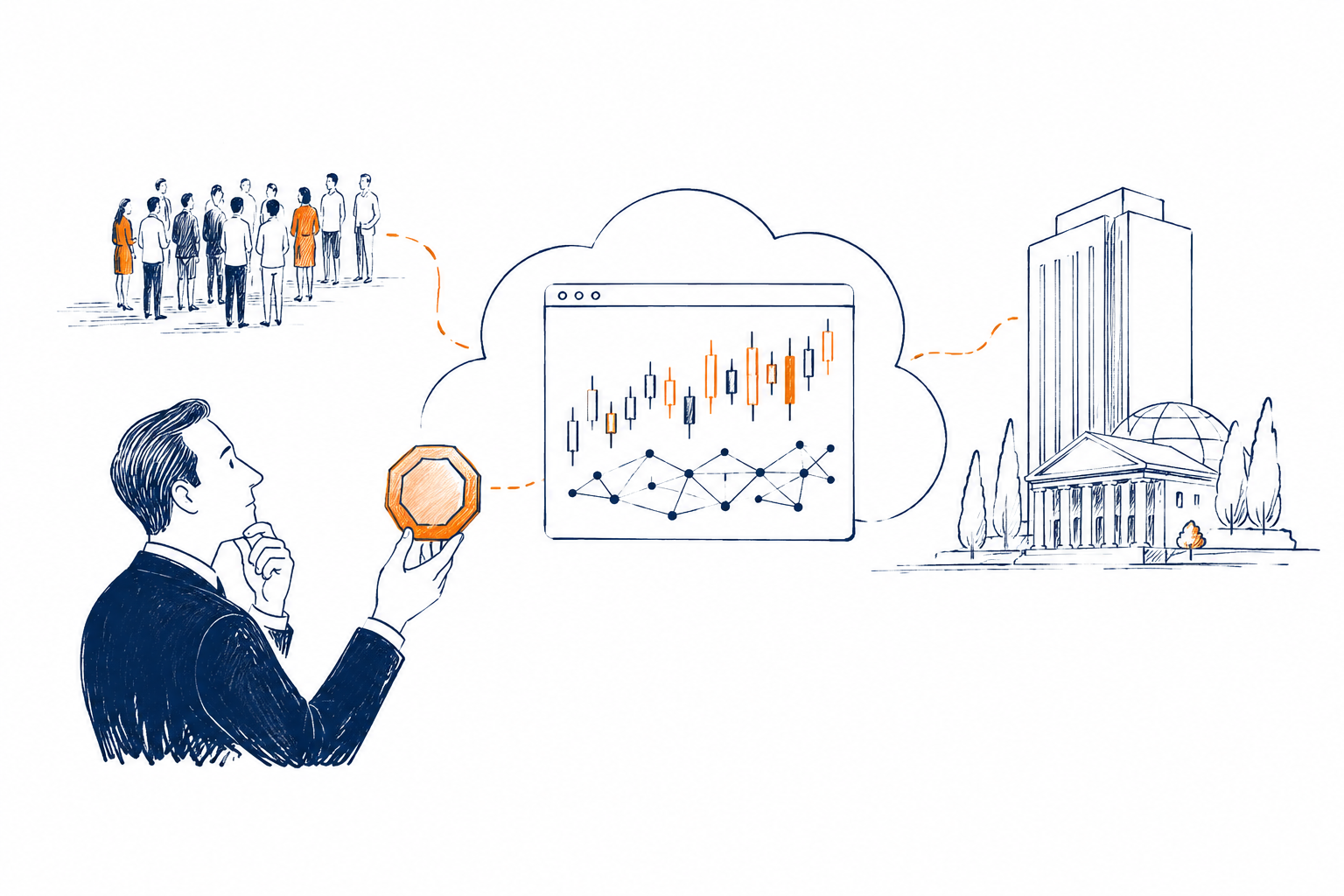

Buying a tokenized stock does not automatically make someone a shareholder.
As tokenized equities move from concept to commercial products, one of the market’s biggest assumptions is beginning to face closer scrutiny.
Investors often see a familiar company logo, a familiar stock ticker and a familiar market price. What they may not see is that tokenized stocks can represent very different legal structures depending on how they are issued.
That distinction is becoming one of the most important questions facing the future of tokenized capital markets.
Not every tokenized stock represents ownership
The term “tokenized stock” is increasingly used to describe products that are fundamentally different from one another.
Some tokens simply track the market price of a publicly traded company without transferring any ownership rights.
Others are backed by real shares held by a custodian, giving investors economic exposure while leaving legal ownership with an intermediary.
A third model still relatively rare integrates blockchain directly into the issuer’s shareholder registry, allowing the token itself to represent legal ownership.
To most investors, these products appear almost identical.
Legally, they are not.
Price exposure and shareholder rights are different things
Owning a company’s stock has traditionally meant more than benefiting from price appreciation.
Shareholders may receive dividends, participate in corporate actions and, in many jurisdictions, vote on major company decisions.
Many tokenized products do not automatically provide those rights.
Instead, they offer financial exposure that depends on contractual arrangements between investors, custodians and platform operators.
That distinction becomes particularly important if legal disputes, insolvency or corporate restructuring occur.
The token may continue tracking the stock’s value while offering a very different level of legal protection.
Technology solved trading before regulation solved ownership
Blockchain has already demonstrated its ability to improve settlement speed, market accessibility and operational efficiency.
The more difficult challenge lies elsewhere.
Financial markets still require clear answers about ownership, shareholder records and legal recognition.
Who ultimately recognizes an investor as a shareholder?
The blockchain?
The issuing company?
Or the regulated intermediary holding the underlying shares?
Those questions are becoming increasingly important as regulators and market participants work to define standards for tokenized securities.
The next phase of tokenization will be built on trust
The long-term success of tokenized equities is unlikely to depend solely on faster transactions or lower costs.
It will depend on whether investors clearly understand what they are purchasing.
Markets function because ownership rights are predictable.
If tokenized securities are expected to become part of mainstream capital markets, legal certainty may prove just as important as technological innovation.
The next chapter of tokenization is therefore unlikely to be about building faster blockchains.
It will be about ensuring that a digital representation of an asset carries the same confidence as the asset itself.