

The crypto industry spent much of its history attracting people and businesses for essentially the same reason: buying digital assets.
Even when they used different platforms, most participants shared the same economic logic. That reality is beginning to disappear.
As the industry matures, companies, banks, asset managers and investors are increasingly using the same infrastructure for entirely different purposes. That may be the clearest sign yet that crypto is no longer a single market.
The Same Technology Is Serving Different Economies
The most important developments of recent months all point in that direction.
Institutional investors continue using ETFs to increase their exposure to Bitcoin.
Companies are adopting stablecoins for cross-border payments and treasury management.
Banks are developing tokenized deposits to modernize their infrastructure.
Asset managers are tokenizing funds and financial securities.
Other institutions are investing in blockchain to reduce operational costs and accelerate settlement.
At first glance, all of these developments belong to the same industry. In practice, they are responding to completely different economic needs.
Capital Is No Longer Entering Through the Same Door
For years, most of the capital entering the sector followed a similar path. Investors were seeking exposure to digital assets, and the industry’s growth depended largely on the appreciation of those assets. That relationship is becoming more complex.
Some capital continues to flow into Bitcoin. Other capital is seeking access to digital dollars.
Some is being directed toward the tokenization of traditional assets, while banks are investing in blockchain infrastructure with no intention of increasing their exposure to cryptocurrencies.
Money continues to flow into the same ecosystem.
It is simply no longer chasing the same opportunity.
The Industry Is Beginning to Function More Like an Economy
That may be the most important transformation underway.
For years, “crypto market” was a relatively accurate description.
Most participants shared similar objectives and were largely driven by the same market cycles.
That is no longer the case.
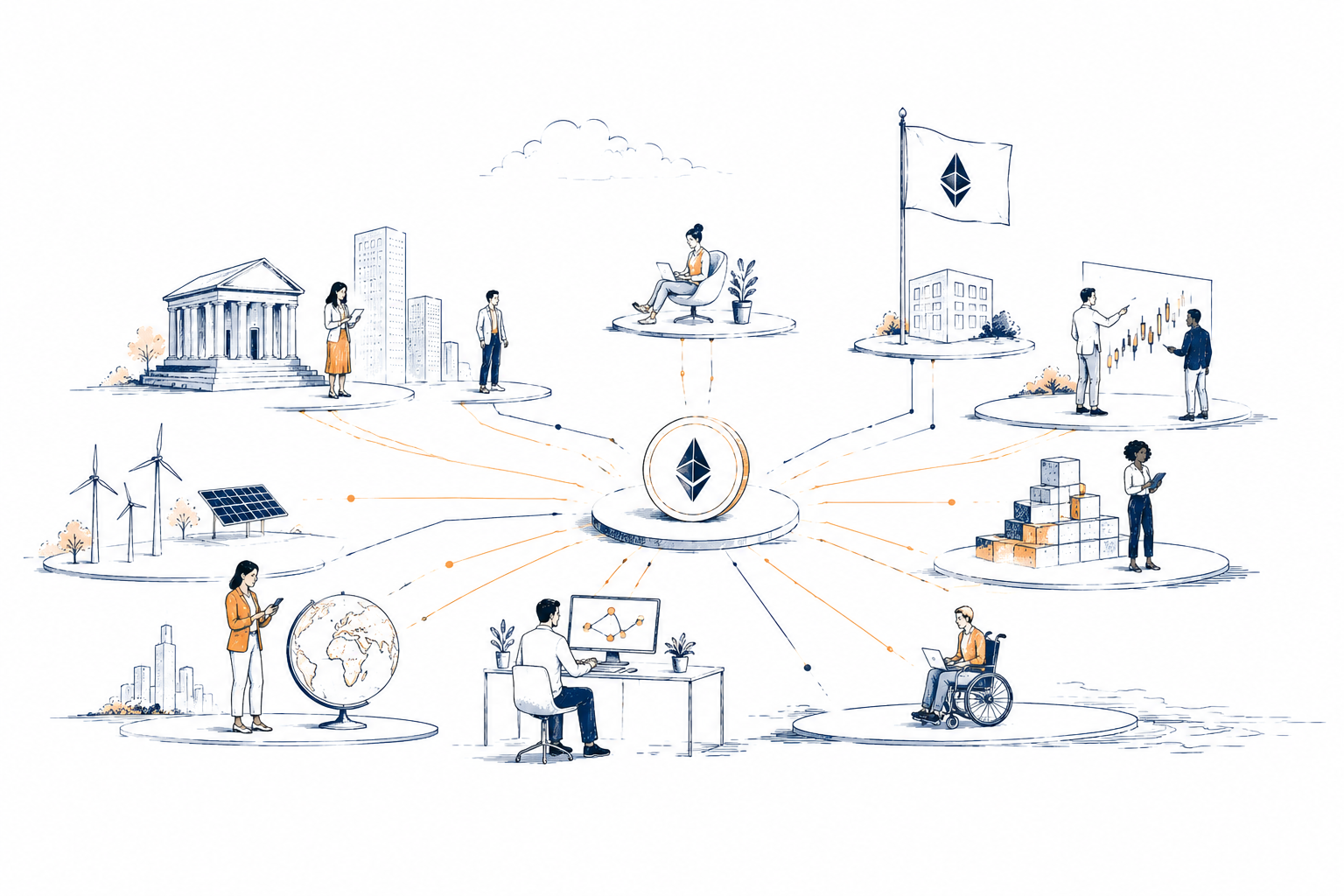
Bitcoin, stablecoins, tokenization, financial infrastructure and real-world assets remain connected by the same technological foundation, but each segment is beginning to develop its own economic dynamics. The industry is gradually behaving less like a single market and more like an economy made up of different sectors.
Maturity May Lie in That Diversity
None of this suggests that the market has stopped responding to common forces. Global liquidity, monetary policy and regulatory developments continue to influence virtually every segment of the industry.
What is changing is the number of economic activities now taking place within that same ecosystem.
For years, participating in the crypto industry almost always meant participating in the same market. Today, it still makes sense to speak of a single industry.
It may no longer be enough to speak of a single market.