
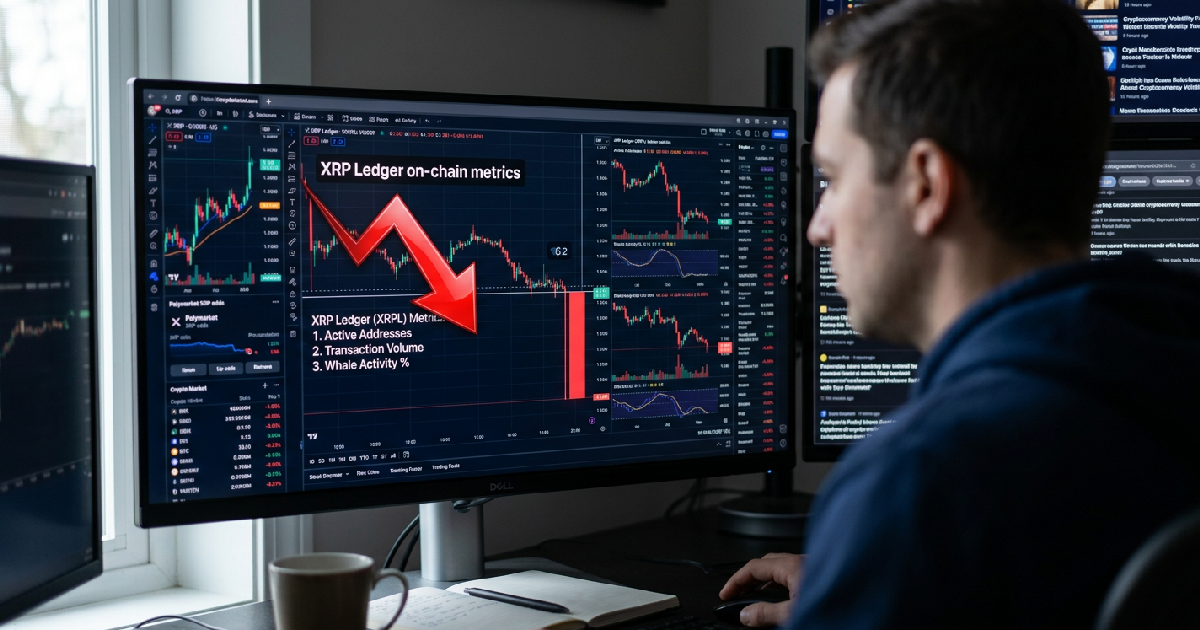

On-chain metrics have become one of the most widely used tools for investors seeking to decode the cryptocurrency market. However, industry experts are increasingly warning that the sheer volume of available indicators may be paralyzing decision-making rather than making it more effective.
The debate gained significant traction after Charles Edwards, founder of Capriole Investments, argued that a large portion of on-chain metrics generate far more noise than genuinely useful signals for market analysis.
Too Much Data Is Creating Confusion, Not Clarity
As the crypto industry has matured, dozens of analytical platforms have emerged, each offering its own proprietary blockchain metrics. The core challenge is that many of these indicators rely on vastly different heuristic models to identify exchange wallets, track internal transactions, and measure active network addresses.
In practice, this means the exact same indicator can produce conflicting results depending on the data provider. Instead of offering clear answers, this abundance of unstandardized information often leads to contradictory interpretations of market behavior, leaving traders staring at a confusing mess of overlapping chart lines.
Past market crises have brought this issue to light. During the collapse of FTX, for instance, different major analytics firms reached wildly different conclusions while publicly tracking the exchange’s dwindling reserves. The episode served as a stark warning to the industry that the quality and accuracy of data analysis are far more important than the quantity of indicators on a dashboard.
Why Institutional Investors Are Changing Their Approach
As hedge funds, asset managers, and corporate treasuries increase their exposure to digital assets, concerns about data reliability have forced a shift in strategy. Institutional allocators cannot afford to base multi-million-dollar positions on lagging indicators or unverified data models.
Instead of monitoring hundreds of speculative metrics simultaneously, institutions are narrowing their focus to a select group of core metrics with proven historical relevance and transparent methodologies. Furthermore, sophisticated firms are no longer viewing blockchain data in a vacuum. On-chain data is now increasingly combined with macroeconomic indicators, global liquidity metrics, and traditional order book analysis to build a more holistic market view.
The Alpha Lies in Separating Signal From Noise
The democratization of blockchain analytics has given retail traders unprecedented access to raw network data. However, as the market becomes more institutionalized, a competitive edge no longer comes from tracking the highest number of indicators.
True market advantage belongs to those who can identify which metrics genuinely explain forward-looking market dynamics and which simply reflect trends that have already occurred.
As the digital asset market becomes more sophisticated, successful investors will likely prioritize methodological transparency over the hype of new, untested indicators.