
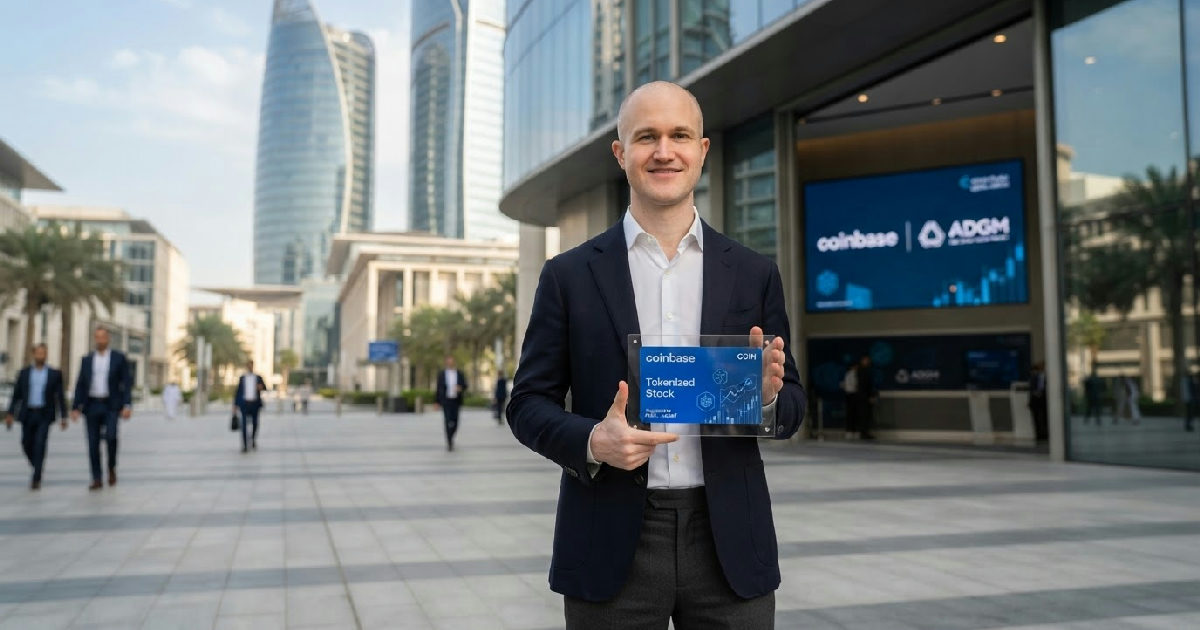

Coinbase tokenized stock will launch in Abu Dhabi Global Market (ADGM) after Coinbase secured a Financial Services Permission (FSP) from the FSRA on August 11, 2026. This landmark approval allows Coinbase to arrange investment deals and provide custody services for tokenized securities. Holders will retain full shareholder rights, including dividends and voting privileges.
The move signifies a critical step in Coinbase’s strategy to bridge billions worldwide to global capital markets through blockchain technology. By establishing this hub in a jurisdiction with a progressive regulatory framework, Coinbase aims to make investable opportunities more accessible and reduce participation costs for a vast, underserved population.
Abu Dhabi’s pioneering regulatory framework
The decision to base this pivotal operation in Abu Dhabi was largely driven by ADGM’s distinct regulatory environment. Brett Tejpaul, Co-CEO of Coinbase Institutional, highlighted the FSRA’s unique approach. He noted that “no major financial center has yet built a framework that treats tokenized equities simultaneously as securities, blockchain-native tokens, and DeFi-composable assets.”
This comprehensive regulatory stance ensures that tokenized securities issued within ADGM are fully backed by their underlying shares. Crucially, they remain under the direct supervision of the FSRA. ADGM has been a trailblazer in digital asset regulation, having issued one of the world’s first regulatory frameworks for virtual assets back in 2018.
The framework also incorporates stringent compliance measures. Every transfer of these tokenized securities is subject to continuous sanctions screening, according to Coinbase. Furthermore, the platform retains the ability to freeze and seize assets at the wallet level when required by law or regulation, adding a layer of security and legal adherence.
Expanding global access with tokenized assets
Coinbase’s primary motivation for this tokenization hub is to address the significant global gap in capital market access. Approximately 4 billion people worldwide currently face barriers to participating in traditional investment opportunities. Tokenization, the company believes, offers a pathway to democratize access by leveraging blockchain efficiency.
Investors looking to engage with these tokenized securities will only require a compatible digital wallet. This eliminates the traditional hurdles of needing a brokerage account or establishing a correspondent banking relationship, simplifying the investment process considerably. The inclusion of full shareholder rights, such as dividends and voting, ensures these digital assets replicate the benefits of conventional stock ownership.
As a tangible example, the FSRA approved a prospectus earlier in August 2026 for “Apple CB Certificates.” These certificates, issued by Coinbase Onchain SPV Ltd., represent beneficial interests in Apple common stock, providing a clear demonstration of the hub’s operational capabilities.
Coinbase’s strategic Middle East expansion
This Abu Dhabi tokenization hub marks Coinbase’s second significant footprint in the United Arab Emirates. The company is also developing a global derivatives hub in Dubai, illustrating a broader strategic focus on the Middle East as a key region for its international expansion. These distinct operations cater to different facets of the burgeoning digital asset market.
Coinbase Onchain SPV Ltd., an ADGM special purpose vehicle, was established in June 2026, laying the groundwork for this new venture. The exchange has been actively engaging with ADGM since December 2023, initiating “Project Diamond,” an institutional smart-contract platform built on Base, which entered the FSRA’s RegLab sandbox.
The move aligns with Coinbase’s broader “everything exchange” initiative, aimed at offering a comprehensive suite of digital asset services. Arvind Ramamurthy, Chief Market Development Officer at ADGM, noted that the Coinbase hub is “a strong endorsement of Abu Dhabi’s growing role in shaping the future of global finance.” This sentiment underscores the emirate’s commitment to fostering innovation in the financial sector.
The evolving global landscape for digital securities
Coinbase’s Abu Dhabi venture highlights a growing trend among major cryptocurrency firms to seek out jurisdictions with clear and supportive regulatory frameworks. This strategic diversification allows them to innovate and expand services that might face slower adoption or greater regulatory uncertainty in other markets, particularly the United States.
The ability to offer fully regulated, tokenized versions of traditional financial assets like stocks represents a significant step towards the convergence of traditional finance and blockchain technology. It provides a blueprint for how on-chain assets can adhere to established financial market standards while leveraging the efficiencies of distributed ledger technology.
This development also sets a precedent for how sovereign wealth funds might increasingly interact with public blockchains. Notably, Mubadala Capital, an Abu Dhabi sovereign wealth vehicle, tokenized a private-market strategy onto public blockchains in July. Coinbase had taken a stake in this strategy, which attracted approximately $75 million in on-chain assets, demonstrating institutional appetite for such innovations.
The “next phase of global finance is on-chain,” as Tejpaul asserted, suggesting a future where digital assets play an increasingly integrated role in mainstream financial operations. This regulated environment in ADGM offers a strong foundation for such an evolution, paving the way for further institutional adoption and expanded investor participation in the tokenized economy.
For market participants, this license signals the emergence of a robust, compliant pathway for accessing tokenized equities. It underscores the potential for digital assets to offer not just speculative opportunities but also to function as regulated instruments with transparent ownership and dividend distribution. This dual functionality is vital for driving broader acceptance and trust in the digital asset space.
The careful consideration of shareholder rights, regulatory oversight, and compliance mechanisms within ADGM positions these tokenized offerings as sophisticated financial products. Such features will be key considerations for investors and institutions reviewing the viability and integrity of these new investment avenues. Coinbase’s entry into this regulated space will likely spur similar initiatives from competitors, further accelerating the adoption of tokenized securities globally.