
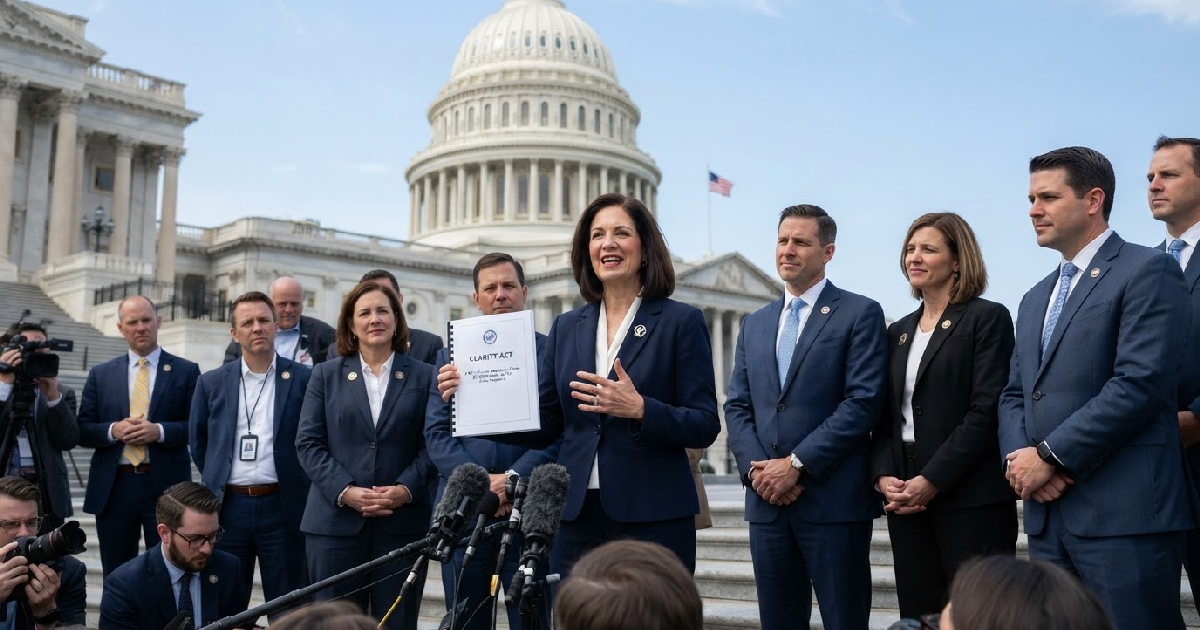

Democratic Senator Catherine Cortez Masto has offered critical support for proposed changes to the Digital Asset Market Clarity Act, signaling a potential breakthrough for the long-stalled cryptocurrency legislation in the U.S. Congress. Today, Cortez Masto, alongside the National Association of Assistant U.S. Attorneys and the National District Attorneys Association, indicated they “feel good” about amendments sent to the White House.
These revisions primarily address concerns from law enforcement regarding illicit activities on crypto platforms and introduce new ethics guidelines for federal officials. The backing from key Democratic figures and law enforcement groups could pave the way for the bill’s passage before lawmakers depart for their August recess, a goal many in Washington now share.
Revised Clarity Act aims to break legislative deadlock
The Clarity Act, known formally as H.R. 3633, seeks to establish a comprehensive regulatory framework for digital assets in the United States, clarifying the often-conflicting jurisdictions of the Securities and Exchange Commission (SEC) and the Commodity Futures Trading Commission (CFTC).
While the House of Representatives passed an earlier version in 2025, the bill has faced significant hurdles and remained in deadlock within the Senate throughout 2026.
Lawmakers have been actively circulating a new, 616-page version of the bill since last week, incorporating substantial changes. These modifications are specifically designed to bridge the divides that previously hindered bipartisan consensus, particularly among some Democrats who had raised concerns about ethical standards and consumer protections.
Law enforcement concerns addressed in new draft
A key set of changes endorsed by Senator Cortez Masto and the law enforcement groups targets a critical gap: protecting crypto software developers and firms. The proposed amendments would shield these entities from prosecution for illicit activities committed by others using platforms or tools they create, an issue that has been a major point of contention.
This protection is balanced by enhanced powers for investigators. The revised bill explicitly protects digital asset companies and stablecoin issuers from liability when they voluntarily delay suspicious transactions or act at the request of law enforcement. Such temporary holds are intended to give investigators crucial time to prevent losses, trace stolen assets, and disrupt illicit transfers effectively.
Key provisions bolster illicit finance controls
The amendments also significantly strengthen anti-illicit finance measures within the digital asset ecosystem. These include expanding the application of Bank Secrecy Act and sanctions obligations to covered digital commodity exchanges, brokers, and dealers.
These businesses would now face rigorous anti-money laundering, customer identification, and due diligence requirements. The bill also proposes a permanent interagency working group on digital asset illicit finance and updates seizure and forfeiture authorities, crucial tools for tackling sophisticated financial crimes.
Organisations like the Fraternal Order of Police (FOP), representing 382,000 members, officially endorsed the revised Clarity Act on July 24, 2026. Their support came after lawmakers added robust protections for criminal investigations, suspicious transaction holds, and digital asset seizures, indicating a successful effort to incorporate law enforcement feedback.
Similarly, the National Organization of Black Law Enforcement Executives (NOBLE) supported the bill, recognizing its potential to expand investigative capabilities while preserving established criminal authorities. Even the Major County Sheriffs of America, which had previously opposed the bill, moved to a neutral position after further discussions and revisions.
Ethics overhaul targets conflicts of interest
Another significant addition to the updated Clarity Act is a dedicated government ethics title, developed in collaboration with the White House. This section aims to prevent conflicts of interest by barring covered federal officials and their spouses from issuing or sponsoring a digital asset in exchange for consideration while in public service.
The ethics provisions also prohibit digital asset intermediaries from listing assets issued or sponsored in violation of this new rule. These measures are designed to increase transparency and trust in the burgeoning digital asset space, addressing prior concerns raised by lawmakers regarding ethical issues.
Limitations and Democratic concerns on enforcement
While a crucial step forward, these ethics provisions come with a sunset clause, expiring in 2029. More notably, enforcement actions for these ethics violations may only be brought by the Attorney General, explicitly excluding state attorneys general or private parties from initiating such cases.
This particular aspect remains a sticking point for some Democratic senators. A group of seven Democratic senators has already issued a joint statement expressing concerns over this limitation, arguing that state attorneys general should also play a role in enforcement to ensure broader oversight and accountability.
Senator Angela Alsobrooks (D-MD), who had previously voted yes in committee to “keep working in good faith,” stated by July 22 that she would oppose the bill unless Republicans strengthened its ethics provisions, especially concerning the Justice Department’s sole enforcement power. This indicates that while progress has been made, further negotiation may be needed on this specific point.
Broader industry reaction and legislative path ahead
Despite the remaining points of contention, the overall sentiment among many stakeholders is positive. Major institutions, including Fidelity and Goldman Sachs, as well as several influential crypto lobby groups, have indicated that the revised bill works well in its current form for market structure.
The Senate Banking Committee advanced the Clarity Act by a 15-9 vote on May 14, and H.R. 3633 was reported in the Senate on June 1. This momentum, coupled with the latest bipartisan endorsements, suggests a growing urgency to finalize the legislation.
Lawmakers are pushing hard to get the Clarity Act passed before the upcoming August recess. The inclusion of these targeted amendments, particularly those addressing law enforcement capabilities and ethical standards, seems to be the key to unlocking crucial Democratic support and moving this pivotal piece of crypto regulation closer to becoming law.