
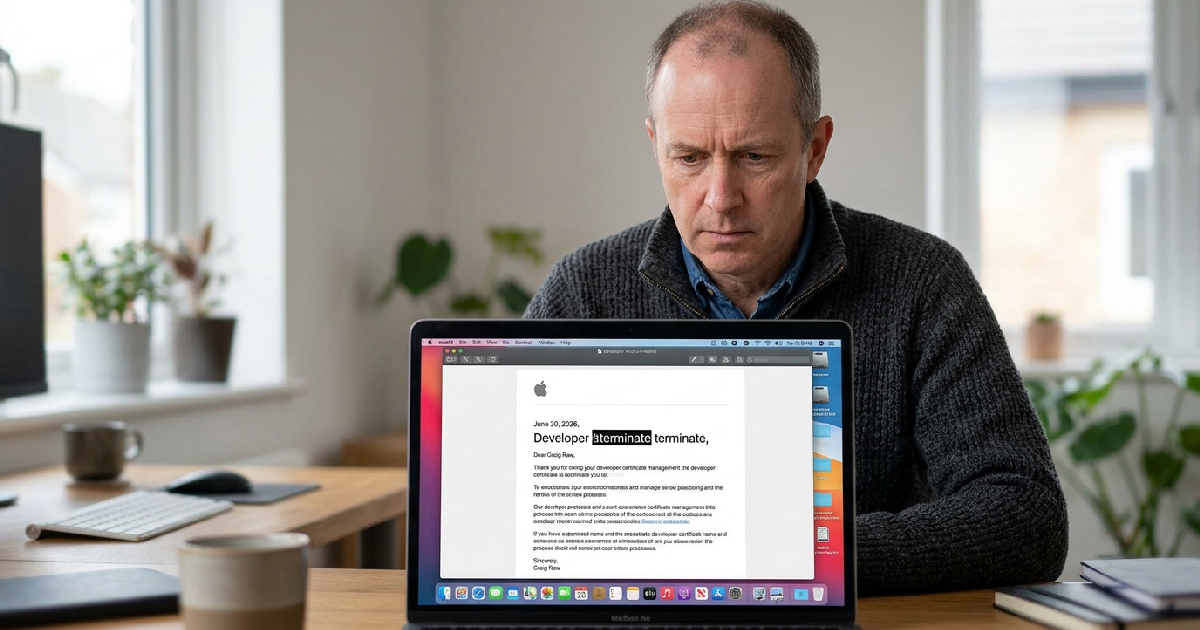

Apple has issued a deadline of June 30, 2026, to Craig Raw, the developer of the popular Sparrow Bitcoin wallet, threatening to terminate his Apple Developer account over allegations of “dishonest” activity.
The tech giant’s move follows an attempt by Craig Raw to alert users to a series of fraudulent applications appearing on the App Store that impersonate his software to steal digital assets.
Apple flags Sparrow developer for dishonest activity after scam warnings
If the termination proceeds, the authentication certificates for the macOS version of Sparrow will be revoked, effectively halting new installations and ending the app’s development on the platform.
The dispute centers on a “placeholder app” Craig Raw submitted to the App Store in August 2025. This application carried no functional code other than a warning message informing users that the legitimate Sparrow Bitcoin wallet is exclusively a desktop-based tool and that any mobile versions found on the App Store are unauthorized scams.
Apple rejected the submission, citing policies against placeholder content and software that merely “demonstrates a concept,” eventually escalating the matter to a full account deactivation threat.
The software developer found himself in Apple’s crosshairs after trying to mitigate a long-standing security issue within the iOS ecosystem. Craig Raw, who holds the registered US trademarks for the Sparrow logo and name, claims that more than a dozen counterfeit apps have bypassed Apple’s review process since 2023.
These malicious programs are designed to look like the official Sparrow interface but are built to harvest wallet recovery phrases from unsuspecting investors. This tension comes as Bitcoin price analysis remains a central focus for holders who prioritize self-custody and security above all else.
The automated nature of Apple’s enforcement system appears to be at the heart of the current crisis. Craig Raw believes that the “dishonest activity” flag was a machine-generated misclassification resulting from his unorthodox attempt to publish a warning app.
Key details
“This approach may have been misguided, but there was nothing dishonest about it,” Raw stated in a public thread on X. He expressed a deep concern that his account could be permanently deleted before a human employee at the Cupertino headquarters reviews his formal appeal.
The stakes for the developer are exceptionally high because of how macOS handles security. While the genuine Sparrow software is distributed through Raw’s website rather than the Mac App Store, it relies on an Apple Developer ID certificate to verify its integrity for macOS users.
Termination of the account would immediately invalidate this certificate, causing all future installation attempts to trigger system security warnings or fail entirely. This would effectively strand the software, making it impossible for the developer to ship updates or for new users to safely adopt the wallet.
The devastating impact of fraudulent App Store wallets
The urgency of Craig Raw’s warning is backed by recorded instances of heavy financial loss. In August 2025, a victim identified only as “Bitcoin Jimmy” reported the loss of 7.4 BTC—his entire life savings—after downloading a fake Sparrow app from the official App Store.
The victim entered a seed phrase from his Coldcard Q hardware wallet into the counterfeit software, which immediate gave hackers the ability to drain his funds. At the time of the theft, 7.4 BTC represented a substantial six-figure sum.
Despite repeated reports from Craig Raw starting in early 2024, counterfeit versions of the wallet have continued to appear in the store. The most recent fraudulent version was reportedly spotted as recently as April 2026. This recurring failure of Apple’s “walled garden” to filter out high-stakes financial malware has frustrated many in the cryptocurrency community.
These users often point to similar incidents where fraudulent recovery schemes have targeted investors through mainstream platforms and social media channels.
Bitcoin community rallies as the June 30 deadline approaches
Since the news of the impending termination broke on June 23, prominent figures within the Bitcoin ecosystem have come to the developer’s defense. Podcaster Stephan Livera publicly vouched for Craig Raw, describing him as a “highly respected Bitcoin app developer.” The official Sparrow Wallet account also warned its followers that without a reversal, development on macOS will permanently end by the end of the month.
Critics of Apple’s decision argue that the company is effectively penalizing a developer for doing Apple’s job. Educator BTC Sessions noted that by threatening Raw for flagging scams, Apple is creating a “direct incentive for people to turn a blind eye from now on.”
This sentiment is shared by many who feel that the automated enforcement of App Store policies lacks the nuance required to distinguish between malicious actors and legitimate developers acting in the interest of public safety.
The situation highlights a broader trend in how the tech industry moderates digital finance. As crypto market liquidations and volatility continue to make headlines, the safety of self-custody tools remains paramount.
Key details
Apple’s historical relationship with Bitcoin apps has been rocky; as far back as February 2014, the company removed major apps like Coinbase and Blockchain from its store, only to allow them back later under strict compliance guidelines.
Uncertainty remains for macOS Bitcoin self-custody
Apple’s internal data suggests that a successful appeal is statistically unlikely. In 2025, the company terminated over 193,000 developer accounts. Out of the 10,127 developers who managed to file an appeal, Apple restored only 499. This roughly 5% success rate has left the Bitcoin community pessimistic about Craig Raw’s chances of reaching a human reviewer before the June 30 cutoff.
For now, users of the legitimate Sparrow wallet are being advised to ensure their software is up to date and to remain vigilant against any mobile apps bearing the Sparrow name.
Because Sparrow was built from the ground up as a desktop application focused on privacy and power-user features, there is no official mobile version in development for iPhone or Android.
The outcome of this standoff will likely serve as a precedent for how other specialized software developers interact with centralized gatekeepers when security interests collide with rigid platform policies.