
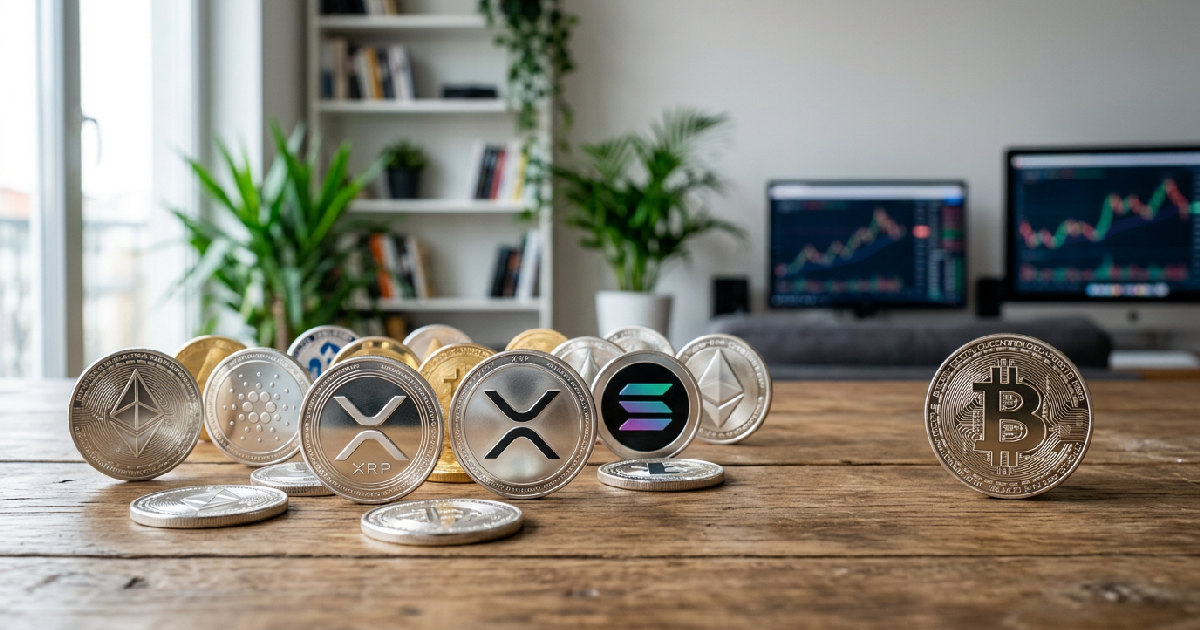

XRP and other major altcoins are demonstrating a notable shift in market behavior as they increasingly decouple from Bitcoin’s price movements. Recent market observations suggest that the historical correlation between digital assets is weakening, potentially signaling an end to the traditional “Alt Season” where the entire market rallied in unison behind the leading cryptocurrency.
For several years, Bitcoin served as the primary indicator for the crypto ecosystem, with its price swings often mirrored by smaller tokens. But recent sessions have shown a departure from this trend, as certain assets move independently of Bitcoin’s trajectory. This shift indicates that investors may be prioritizing individual asset performance over broader market momentum.
This decoupling is particularly evident in the altcoin sector, where tokens like XRP are following technical paths that don’t always align with Bitcoin’s current volatility. As the market matures, the blanket term “Alt Season” may no longer accurately describe how capital moves through the digital asset space.
Shifting correlations in the altcoin market
The historical relationship between Bitcoin dominance and altcoin performance is becoming less predictable. In previous cycles, a decline in Bitcoin’s market share was a reliable precursor to a broad-based rally for smaller tokens. Now, the market appears more fragmented, with capital flowing into specific projects based on their own unique circumstances.
Market participants are noticing that XRP speculative activity returns even when Bitcoin remains stagnant or faces rejection at key levels. This suggests that traders are looking at factors beyond Bitcoin’s price action to dictate their entries. This independence is a departure from the “rising tide lifts all boats” philosophy that dominated previous years.
The progress of specific legislative efforts has also contributed to this divergence. The XRP Clarity Act legislative progress represents a localized catalyst that affects only a select group of assets rather than the market at large. When legal or regulatory developments target specific tokens, those assets often break away from the general market trend to react to their own news cycles.
Institutional impact on asset independence
The introduction of diverse financial products and the entry of institutional players have changed how liquidity is distributed. Large-scale investors often focus on specific assets that fit their risk profiles, rather than buying into the entire cryptocurrency class as a whole. This selective investment strategy reinforces the decoupling of individual altcoins from Bitcoin.
Additionally, investor interest is shifting toward newer opportunities as the market evolves. The ApeMars presale gains momentum as an example of how emerging projects can capture liquidity that might have otherwise stayed within established large-cap ecosystems. This competition for capital ensures that Bitcoin’s gains do not always translate to a universal lift across the board.
The result is a market where technical indicators are no longer uniform. Some assets may establish firm support zones while others continue to test lower boundaries, regardless of Bitcoin’s position. This fragmentation makes it increasingly difficult for traders to rely on traditional “Alt Season” signals, requiring a more granular approach to asset analysis.