
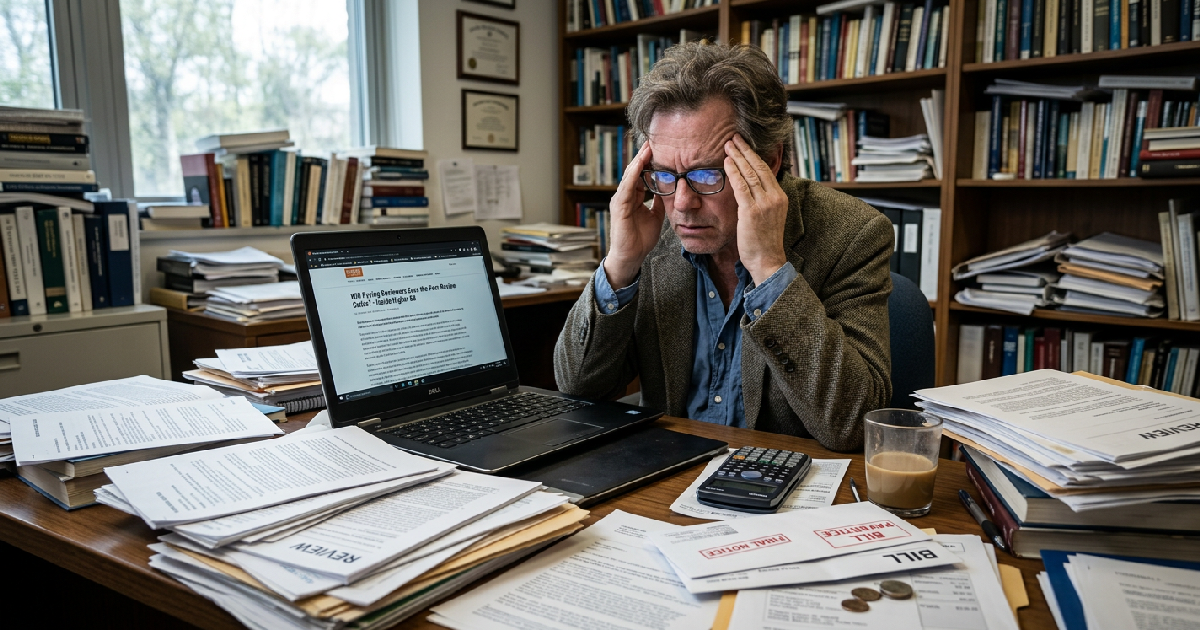

The academic publishing industry is currently grappling with a fundamental shift in how research is vetted, as institutions and journals debate whether offering financial compensation to scholars can solve a widening peer-review crisis. According to reports from Inside Higher Ed, the traditional model of relying on unpaid volunteer labor is undergoing severe strain. As the volume of research submissions grows globally, the pool of experts willing to evaluate those papers without pay is reportedly reaching a breaking point.
This “peer review crisis” highlights a growing difficulty for editors who must find qualified academics to verify the accuracy and methodology of new findings. Reports suggest that rejection rates for review invitations are at an all-time high, forcing journal editors to contact dozens of potential reviewers just to secure a single person for the job. These delays can stall the release of vital research, including medical developments and technical breakthroughs that rely on timely publication.
The debate centers on whether the current system is sustainable within a highly profitable commercial publishing sector. Major commercial publishers reportedly generate substantial annual revenue, much of which is built on the free labor of faculty members whose salaries are typically paid by universities or public funding. Critics of the existing system suggest that the “gift economy” of peer review increasingly feels like an oversight as teaching and administrative loads for scholars continue to rise.
Assessing the Risks and Rewards of Financial Compensation
Experts are divided on whether cash payments would improve the speed of research or unintentionally damage the quality of the vetting process. One concern is that paying for reviews might encourage speed at the expense of thoroughness. There are fears that a “mill” system could emerge, where reviewers rush through complex papers to claim a fee rather than conducting the rigorous scrutiny necessary for scientific integrity. Much like how top CCMS software solutions are used to manage complex data in other industries, academic publishing is searching for a managed framework to handle its own increasing technical density.
Conversely, some small-scale trials and specialized journals that have tested payment models report improved response times and higher engagement. In these instances, even modest honoraria are viewed as a gesture of professional respect. This shift in perspective acknowledges that reviewing is a highly specialized skill that requires significant time. Some argue that a formal payment structure is the only way to modernize a system that hasn’t changed in decades.
Impact on Equity and Early-Career Researchers
The lack of compensation for peer reviews also carries an equity cost. Some reports indicate that female and minority scholars are frequently asked to perform a disproportionate amount of service-oriented work, which includes peer review, compared to their colleagues. Without pay, this labor functions as a “service tax,” taking time away from their own research and publication goals. Proponents of a paid model believe that standardizing fees would lead to a more equitable distribution of labor and credit.
For early-career researchers, such as postdoctoral fellows or adjunct instructors who often face financial uncertainty, providing a fee for their expertise could provide a helpful secondary income stream. This move toward direct compensation for highly technical labor reflects broader trends in the digital economy. The focus on securing quality through investment is similar to how security firms launch quantum-proof wallets to protect high-stakes assets in a changing technological environment.
Institutional Hurdles and the Future of Research Vetting
Despite the potential benefits, many large publishing houses remain hesitant to implement a universal pay-for-review system. A primary concern is the total cost involved. Because millions of research papers are published every year, paying even a small fee for every review could lead to a massive increase in operating expenses. Publishers argue that these costs would likely be passed back to researchers or their universities through higher publication fees, which could disadvantage scholars from smaller institutions or developing countries.
As the industry looks for a middle ground, some are turning to specialized leadership or decentralized models to handle the complexity. Similar to how the Ethereum Foundation names new protocol co-leads to guide technical developments, academic publishing may require specific oversight bodies to manage the logistics of a paid ecosystem. Alternatives to cash are also being explored, such as offering credits to waive the reviewer’s own future publication costs or ensuring university tenure committees give more weight to review work.
The transition toward a paid model is likely to be gradual rather than immediate. Some high-impact and medical journals are already beginning to offer financial incentives to attract top-tier experts in a competitive market. As global research continues to expand, the reliance on a strictly voluntary model is being questioned by many as a relic of a less commercialized academic era. The coming years will determine if a financial bottom line can resolve the intellectual bottleneck currently facing the scholarly community.