
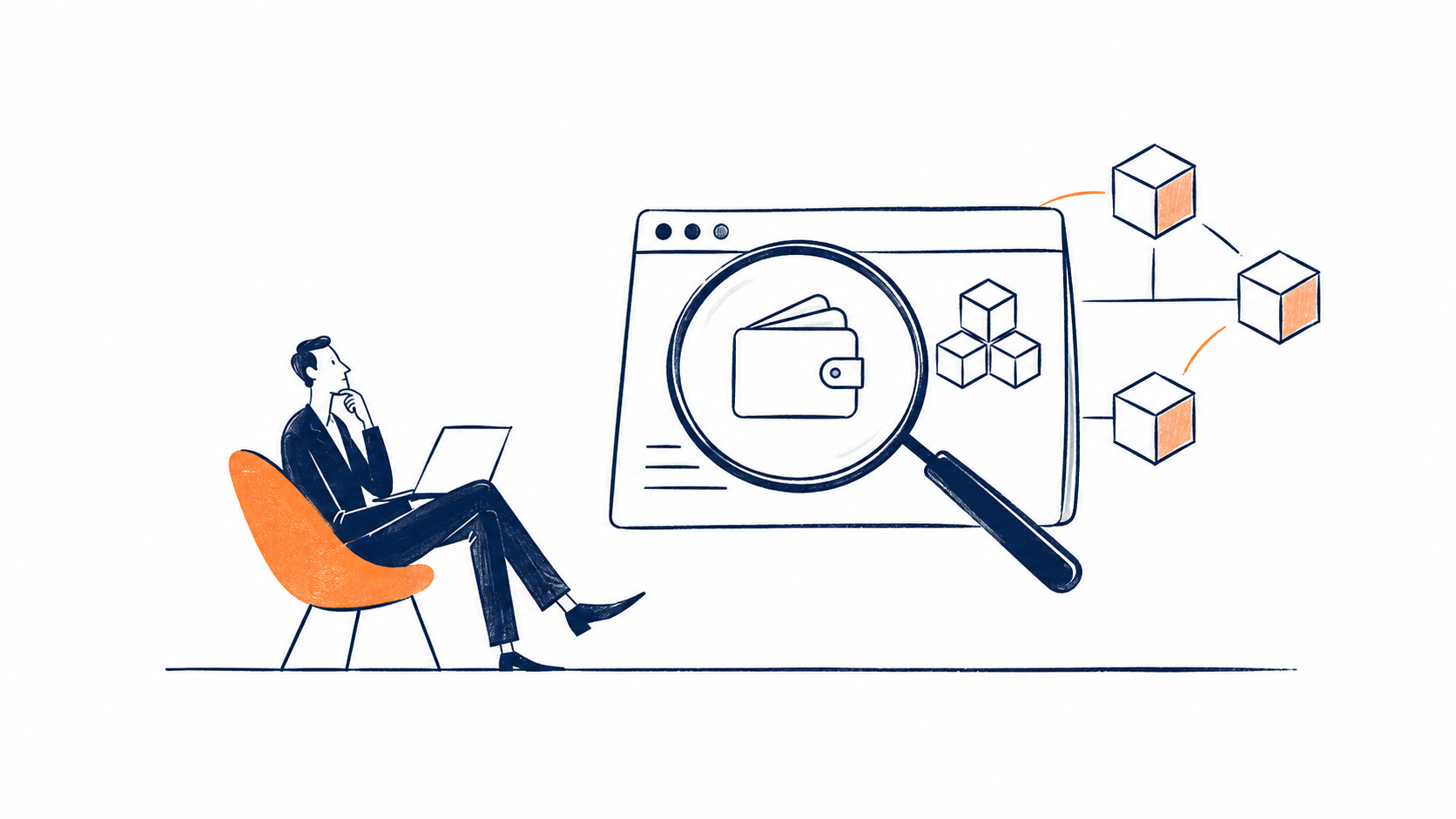

Seeing a public dashboard filled with verified wallet addresses feels reassuring. After high-profile exchange collapses shook trust across the digital asset industry, centralized platforms rushed to adopt Proof of Reserves as a badge of honor.
The pitch is straightforward: instead of asking customers to take a company’s word on faith, the platform publishes cryptographic evidence proving it holds the funds it claims to hold.
On the surface, this looks like the ultimate transparency upgrade. Blockchains are public ledgers by design, so verifying balances on-chain should theoretically eliminate the guesswork of traditional banking.
Yet there is a critical catch that trips up many retail investors. Demonstrating that an exchange controls a specific pile of digital assets is not the same thing as proving the business is financially healthy.
A company can pass a reserve check with flying colors and still be unable to honor customer withdrawals if its underlying financial picture is incomplete.
The Missing Half of the Equation: Assets Without Liabilities
To understand the core limitation of centralized exchange transparency, it helps to borrow a basic rule from traditional accounting: you cannot judge solvency by looking at only one side of a balance sheet.
Imagine a friend shows you a bank statement with $100,000 in cash. You might assume they are doing great financially. What the statement does not tell you is whether they owe $150,000 in short-term personal loans due next week. Without knowing their debts, the cash balance alone tells a misleading story.
Proof of Reserves operates under a very similar constraint. The mechanism focuses heavily on crypto assets versus liabilities, yet it rarely captures the liability side with the same rigor. An exchange might prove beyond a shadow of a doubt that it holds 50,000 Bitcoin across several wallet addresses.
However, if the report does not account for every dollar and token owed to retail users, institutional lenders, and third-party creditors, that 50,000 Bitcoin figure lacks context.
Even when exchanges attempt to include customer balances in their reports, cryptographic verification has practical boundaries:
- Ownership versus temporary control: Proving that a company holds the private keys to a wallet at a specific moment confirms control, not unencumbered ownership. In theory, funds could be borrowed briefly to pass a verification check or pledged as collateral elsewhere;
- Legal and operational restrictions: Assets sitting in a verified wallet might be frozen due to regulatory disputes, locked in staking contracts, or tied up in complex corporate structures that prevent immediate liquidation during a surge in withdrawals;
- Off-balance-sheet obligations: Smart contracts and cryptographic proofs cannot automatically detect side agreements, corporate credit lines, or legal liabilities that exist outside the blockchain ecosystem.
Cryptographic math is exceptionally good at verifying digital signatures and wallet balances. It is not designed to conduct a forensic legal or accounting audit of a multinational corporation.
The Illusion of Real-Time Data and Snapshot Latency
Another common misconception is that on-chain verification acts like a live security camera monitoring an exchange’s vaults 24/7. In reality, most reserve reports function much more like a photograph taken at a single moment in time.
Many major platforms—Binance among them—rely on a cryptographic structure called a Merkle tree to let users verify their accounts. In simple terms, a Merkle tree bundles thousands or millions of individual user balances into a single digital fingerprint, known as a Merkle root.
Customers can use this tool to confirm that their specific account balance was included in the exchange’s total calculation without exposing everyone else’s private financial data.
While clever, this approach runs straight into merkle tree verification limits. The verification confirms that your balance was part of the dataset when the snapshot was taken. It says nothing about what happened five minutes later.
Once the snapshot is captured, funds can move, market conditions can shift, and customer liabilities can fluctuate before the next scheduled report.
Even automated data feeds that bring reserve numbers onto a blockchain do not update instantaneously with every deposit or withdrawal. In technical architectures like Chainlink’s Proof of Reserve feeds, updates are governed by specific triggers rather than continuous streaming:
- Deviation thresholds: A new update is pushed to the blockchain only after the underlying reserve balance changes by a predetermined percentage;
- Heartbeats: If the balance stays relatively flat, the system waits until a maximum scheduled time interval passes before publishing a fresh confirmation.
Between the moment a balance changes at a custodian, the moment an external system reads that change, and the moment a transaction is confirmed on a busy network, latency is unavoidable.
Treating a reserve dashboard as a live pulse of crypto exchange solvency overlooks the timestamps that give those numbers meaning. A figure can be 100% accurate for the exact second it was recorded and still be outdated by the time an investor reads it.
When On-Chain Verification Meets Off-Chain Realities
The technical friction increases whenever an exchange or token issuer needs to prove reserves that do not live natively on a blockchain. While Bitcoin or Ether can be verified directly through public wallet addresses, traditional assets—such as U.S. dollars sitting in a commercial bank account or Treasury bills held by a custodian, exist entirely off-chain.
A smart contract cannot log into a bank portal to check an account balance on its own. To bridge that gap, crypto infrastructure relies on blockchain oracles and data feeds—specialized middleware designed to fetch external data and deliver it to on-chain applications.
Using APIs and external adapters, oracle operators collect reserve figures from off-chain custodians and publish them to a blockchain feed where anyone can inspect them.
Here, the distinction between data delivery and data verification becomes crucial. A blockchain faithfully records whatever information the oracle submits, making the record tamper-proof once it is on-chain. However, the blockchain cannot independently audit whether the original bank statement was complete, accurate, or free of hidden conditions.
If the off-chain reporting is flawed or incomplete, the on-chain feed simply immortalizes an incomplete picture.
The Transparency Paradox for Everyday Investors
This brings retail investors face-to-face with an interesting paradox. Proof of reserves was created to reduce blind trust in centralized platforms, yet relying on it uncritically can create a new form of false confidence.
None of this means reserve reporting is useless. Far from it. Before these tools became standard practice, users had almost zero visibility into whether an exchange held any assets at all.
Public cryptographic proofs dramatically raise the bar for accountability, force platforms to maintain cleaner internal accounting, and give users a concrete way to verify that their accounts are not being quietly excluded from company ledgers.
The mistake lies in treating a specialized transparency tool as a comprehensive seal of safety. Knowing an exchange holds substantial assets is a positive sign, but genuine financial resilience depends on factors that code alone cannot confirm: sound risk management, clear separation between corporate and customer funds, transparent liability reporting, and disciplined liquidity practices.
For anyone keeping funds on a centralized platform, Proof of Reserves works best as a starting filter rather than a final verdict. Checking the timestamp of the latest snapshot, verifying whether liabilities are included alongside assets, and understanding what happens off-chain will tell you far more than a headline reserve ratio ever could.
Ultimately, proving the money is there today is only half the story—what matters just as much is knowing it will still be available when customers decide to walk out the door.