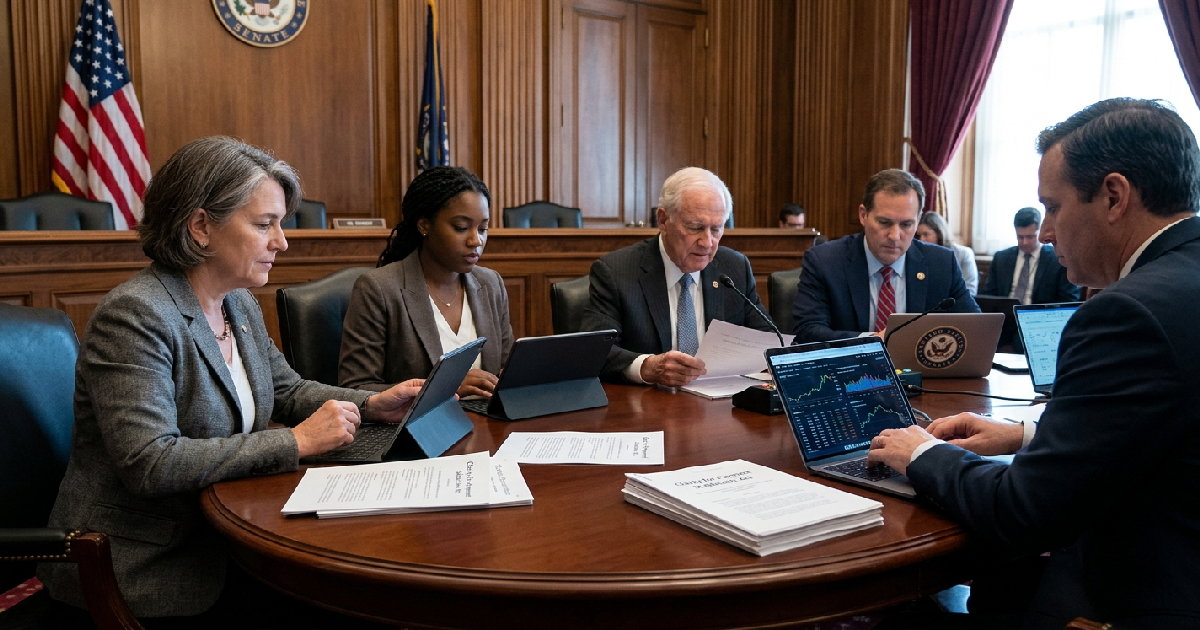
The United States Senate Banking Committee has reportedly advanced the Clarity for Payment Stablecoins Act, marking a pivotal step in the federal effort to regulate digital assets. Committee members moved the legislative framework forward following a markup session that drew significant attention from the financial sector. While the final tallies remain subject to official verification, reports indicate the bill cleared the committee with a level of bipartisan support, moving the proposal closer to a potential vote on the full Senate floor.
The legislation primarily addresses the governance of payment stablecoins, which are digital tokens pegged to the value of the U.S. dollar. The act seeks to establish a dual regulatory system where both the Federal Reserve and state-level banking authorities share oversight responsibilities. This development comes as market participants increasingly seek a definitive legal structure to replace the current patchwork of state guidelines.
Institutional interest in the digital asset sector has remained high during these legislative deliberations. Proponents of the bill argue that a clear federal framework is necessary to maintain national competitiveness in the evolving financial technology space. As
bitcoin leads crypto fund inflows as CLARITY Act hopes grow, the advancement of the bill suggests that lawmakers are feeling pressure to provide the legal certainty that large-scale investors require.
Regulatory Standards and the Push for Stability
A central component of the proposed act involves strict reserve requirements for stablecoin issuers. Under the reported provisions, companies would be required to back their digital tokens with highly liquid assets, such as cash or government securities. This measure aims to prevent the destabilizing “runs” that have previously affected the digital asset market, ensuring that users can redeem their tokens for traditional currency without delay.
The committee’s discussions also highlighted the broader economic implications of digital asset regulation. Supporters of the measure suggest that bringing stablecoin issuers into a regulated environment could facilitate broader adoption of blockchain technology within the traditional banking system. This shift coincides with a period where a
global liquidity surge boosts bitcoin as a scarce asset, potentially positioning regulated stablecoins as a primary bridge between fiat currency and decentralized finance.
But the bill faces internal resistance from some committee members who remain skeptical of its long-term effects. Critics have expressed concerns that the proposed rules might not go far enough to prevent money laundering or that they could inadvertently create gaps in federal oversight. The debate over whether state regulators or the Federal Reserve should hold terminal authority over non-bank issuers remains a sticking point that could complicate the bill’s progress through subsequent legislative stages.
Operational Changes for Digital Asset Firms
If the act becomes law, digital asset companies will face a new era of compliance and transparency. The framework is expected to mandate regular third-party audits and public disclosures regarding the composition of the assets backing each token. While several prominent issuers already provide these details, the transition from voluntary practices to federal law would significantly raise the stakes for compliance.
These changes are expected to favor established entities that possess the capital and infrastructure to meet rigorous reporting standards. The market is already reacting to these potential shifts in the regulatory landscape. Analysts are looking at how these developments might impact
crypto price predictions for BTC and other assets in May 2026, as formal recognition of stablecoins is often viewed as a precursor to wider institutional product launches.
Hurdles on the Road to Implementation
Despite the momentum generated in committee, the path to final enactment remains uncertain. The Senate leadership must determine the timing for a floor vote, which or could be affected by shifting political priorities or the legislative calendar. Discrepancies between this Senate proposal and similar bills circulating in the House of Representatives will also need to be reconciled before any final text reaches the president’s desk.
The primary challenge for negotiators involves balancing the powers of different regulatory bodies. Some lawmakers are advocating for the Federal Reserve to have a final “veto” over state-approved issuers to ensure national financial stability. Conversely, others believe that such a move would stifle the innovation historically fostered at the state level. Whether these two positions can be harmonized will likely determine if the digital asset industry sees its first major federal legislative victory this session.

 By Michael Fawn