
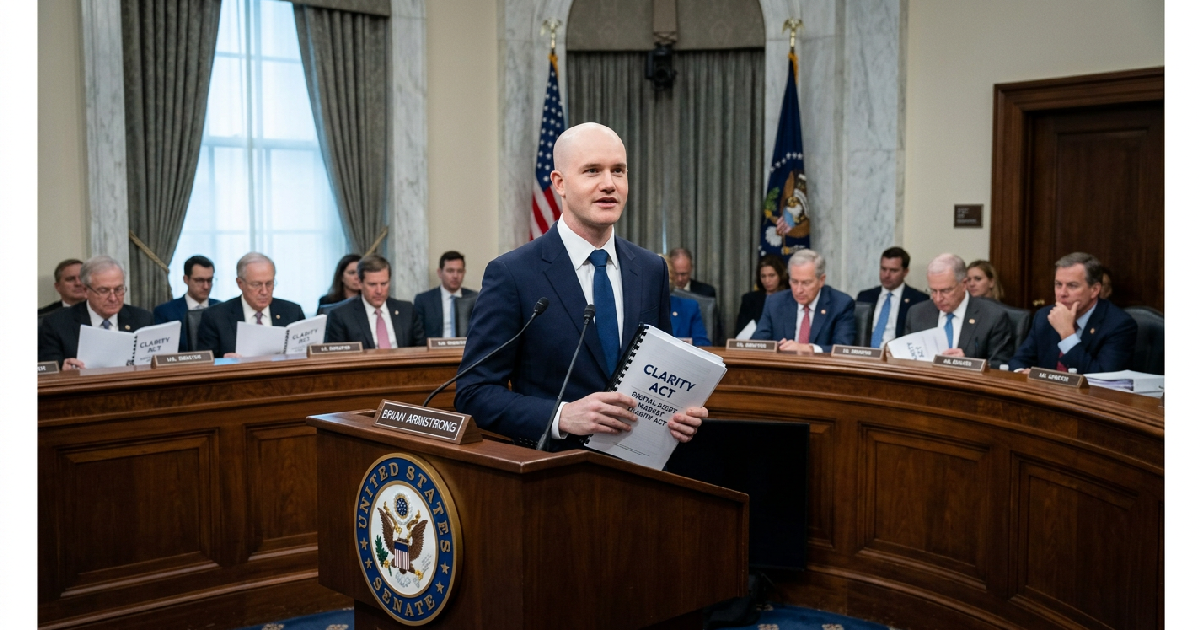

Coinbase CEO Brian Armstrong has offered public support for the Digital Asset Market Clarity Act, describing the proposed legislation as a fundamental shift that could reorganize the American financial system. The endorsement comes as the Senate Banking Committee prepares for a critical markup and vote on the bill, representing a significant step forward after months of legislative deliberation. Chairman Tim Scott has indicated that the committee is moving toward a resolution, with supporters looking at a potential floor vote later this year.
The legislation, widely known as the CLARITY Act, serves as an ambitious attempt to define the jurisdictional boundaries between the Securities and Exchange Commission (SEC) and the Commodity Futures Trading Commission (CFTC). For years, industry leaders like Armstrong have argued that “regulation by enforcement” has hampered domestic innovation. During a recent interview, the Coinbase executive suggested that the current version of the bill is perhaps the most viable iteration to date, following extended negotiations between digital asset advocates and traditional financial institutions.
Legislators are expected to consider various amendments during the upcoming session, though a finalized list of these proposals has not yet been made public.
Establishing Regulatory Boundaries and SEC-CFTC Jurisdiction
The core of the CLARITY Act involves a division of power intended to resolve long-standing disputes between federal regulators over digital assets. The bill reportedly grants the CFTC oversight of spot and cash markets for digital commodities. Meanwhile, the SEC is expected to maintain its authority over assets classified as investment contracts and primary market fundraising activities. This clarity is what ETH traders wait for lead and other market participants require to function under a predictable legal framework.
The Senate version of the legislation has expanded significantly since earlier drafts were debated in the House of Representatives. It reportedly includes provisions addressing decentralized finance (DeFi), consumer bankruptcy protections, and software developer liabilities. These updates aim to address the complex Senate banking committee stablecoin bill vote obstacles that have previously stalled similar efforts to modernize financial oversight.
The Yield Compromise and the Banking Sector
One of the most debated sections of the bill involves the treatment of stablecoins and their potential impact on traditional bank deposits. Financial sector representatives previously expressed concerns that high-yield digital assets could lead to capital outflows from regional banks. To navigate these concerns, Senators Thom Tillis and Angela Alsobrooks reportedly worked on a compromise that places specific limits on how rewards can be distributed to stablecoin holders.
Current reports suggest the text prohibits stablecoin issuers from offering rewards that mirror traditional bank interest. However, certain incentives remain permissible under the proposed rules. Activity-based rewards, such as those linked to retail transactions or merchant services, are expected to remain legal. This distinction ensures stablecoins focus on payment utility rather than functioning as high-yield savings products. Armstrong noted that these bipartisan efforts were essential in creating a framework that banking executives and crypto firms could both support.
Traditional finance is showing increased interest in this regulatory progress. Many executives at major financial institutions are reportedly exploring the integration of stablecoins into their payment rails. This shift suggests that a solid legal framework could further diminish the wall between digital assets and legacy finance, particularly as a global liquidity surge continues to drive interest toward more efficient value transfer systems.
Path Toward a Potential Legislative Conclusion
The upcoming committee vote is a major milestone, yet the CLARITY Act faces a complex path before reaching the president’s desk. If the Senate Banking Committee moves the bill forward, it must still be reconciled with versions from other relevant committees. Furthermore, any final vote on the Senate floor will require broad bipartisan support to clear procedural hurdles, making the current compromise language vital for its survival.
Observers expect a range of proposals regarding consumer protection and anti-money laundering measures to be introduced during the legislative process. Treasury Secretary Scott Bessent has voiced support for a structured digital asset framework, framing it as a necessity for national economic competition. While supporters hope for a conclusion to the process in the coming months, the results of the next several weeks will determine if the United States finally adopts a comprehensive national strategy for the digital asset industry.