
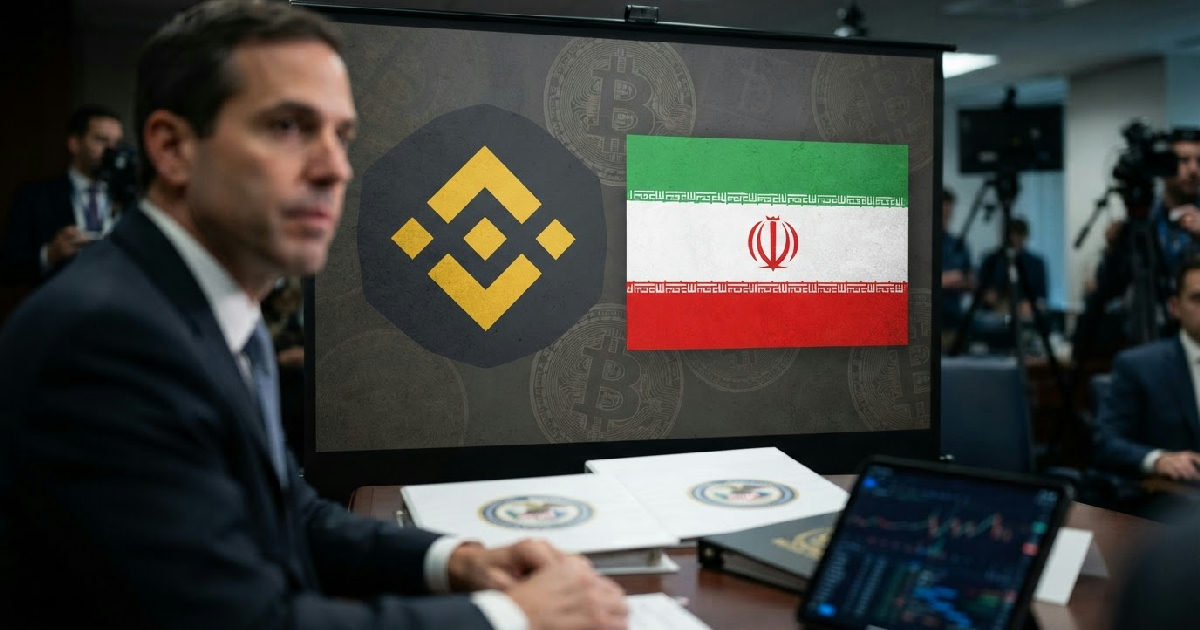

U.S. federal prosecutors are investigating Binance Holdings Ltd. for potential violations of Binance Iran sanctions, specifically regarding transactions with entities in Iran. to determine if the world’s largest cryptocurrency exchange violated American sanctions by allowing entities in Iran to transact on its platform.
The probe, first reported by Bloomberg citing people familiar with the matter, scrutinizes whether Binance knowingly failed to prevent trades that would contravene U.S. economic restrictions against Tehran.
The investigation places Binance, a company with a history of regulatory challenges, back under the microscope of American authorities. According to reports, the inquiry is being led by the U.S. Attorney’s Office for the Southern District of New York, with participation from the Department of Justice’s Criminal Division in Washington.
Details of the Binance Iran sanctions investigation
Their focus is on the exchange’s compliance with laws prohibiting financial services to sanctioned nations, even as the wider market notes a rise in Bitcoin’s realized capitalization.
This latest probe follows closely on the heels of another major enforcement action. Just last week, the U.S. Department of Justice (DOJ) announced the seizure of $61 million in cryptocurrency. The department alleged these funds were proceeds from the black-market sale of sanctioned Iranian oil, laundered through Binance by intermediary Chinese entities.
That action suggests authorities already have visibility into illicit funds moving through the exchange.
U.S. sanctions on Iran are comprehensive, severely restricting the country’s access to the global financial system. They are intended to pressure the Iranian government over its nuclear program and other activities. The investigation into Binance centers on whether its platform provided a financial loophole, allowing Iranian users or state-linked groups to circumvent these economic barriers using digital assets like Bitcoin.
Binance, which has no official headquarters and is incorporated in the Cayman Islands, ran into trouble with U.S. authorities after it allegedly allowed funds linked to virtual theft and terrorism to flow through its exchange undetected. This new inquiry suggests that despite past settlements, federal agencies remain concerned about the exchange’s role in the global flow of funds, particularly those linked to sanctioned states.
Iran’s pivot to Bitcoin amid economic pressure
The investigation highlights a broader trend: Iran’s increasing use of cryptocurrency to navigate a landscape of intense economic sanctions. With its access to traditional banking channels cut off, the nation has openly explored digital assets as a means for international trade and to stabilize its economy.
The Financial Times recently reported that Iran was settling cross-border transactions using Bitcoin, following advice from its central bank for citizens to do what is necessary to support the economy. This comes amid robust weekly Bitcoin ETF inflows, showcasing sustained investor interest.
Bitcoin’s decentralized and permissionless nature makes it a powerful tool for these purposes. Unlike assets held in the traditional banking system or even certain stablecoins like Tether (USDT), Bitcoin transactions cannot be easily frozen or censored by a central authority. This was underscored when Treasury Secretary Scott Bessent noted that while the U.S.
had frozen some of the Iranian regime’s crypto assets, they were mostly in USDT. Bitcoin, by contrast, remains resistant to such seizures.
Iran has even integrated Bitcoin into its state-level economic planning. Earlier this year, the country reportedly launched a Bitcoin-backed insurance service for its shipping companies, providing a way to secure maritime trade without relying on international financial intermediaries. This strategic adoption of Bitcoin as a sanctions-evasion tool is a primary driver behind the U.S. government’s intensified scrutiny of the exchanges that facilitate these transactions.
Binance’s history of regulatory friction
For Binance, this is not its first confrontation with U.S. regulators. The exchange previously paid a historic $4.3 billion fine and agreed to exit the U.S. market to settle charges of widespread anti-money laundering (AML) and sanctions violations. Those charges included allegations that the platform had been used to move funds linked to terrorism and virtual theft without adequate checks.
As part of that settlement, Binance founder and then-CEO Changpeng Zhao pleaded guilty to AML violations and stepped down from his role. Though he was later pardoned by President Trump, the case established a clear precedent of U.S. authorities holding the exchange accountable for its actions, regardless of its decentralized corporate structure.
This history of non-compliance likely informs the aggressive posture prosecutors are taking in the current Iran-related probe, as Binance navigates a complex legal landscape where many are building corporate Bitcoin holdings.
The renewed investigation signals that the previous settlement may not have been the end of Binance’s legal troubles in the United States. Federal agencies appear determined to ensure that crypto exchanges, no matter where they are based, cannot be used as conduits for illicit finance or to undermine U.S. foreign policy.
What this means for crypto enforcement
The probe into Binance is part of a wider, multi-agency campaign by the U.S. government to police the use of cryptocurrency for illicit activities. Under the banner of “Operation Economic Outcast,” the Treasury Department has been actively targeting entities enabling Iran. Last week, it designated BitBank, an Iranian crypto exchange, for its role in helping the regime evade sanctions.
This escalating pressure puts all global cryptocurrency exchanges on notice. The expectation is clear: if an exchange wants to operate, even indirectly, within reach of the U.S. financial system, it must implement robust Know Your Customer (KYC) and AML protocols. This includes geolocation tracking and IP address blocking to prevent users from sanctioned jurisdictions like Iran from accessing their services.
The outcome of the Binance investigation could have far-reaching consequences. A finding of wrongdoing could lead to further multi-billion-dollar fines, criminal charges against executives, or other restrictions that could hobble the world’s largest crypto trading platform. More broadly, it would send an unmistakable message to the industry that compliance with U.S.
sanctions law is not optional, setting a new standard for regulatory enforcement in the digital asset space.