
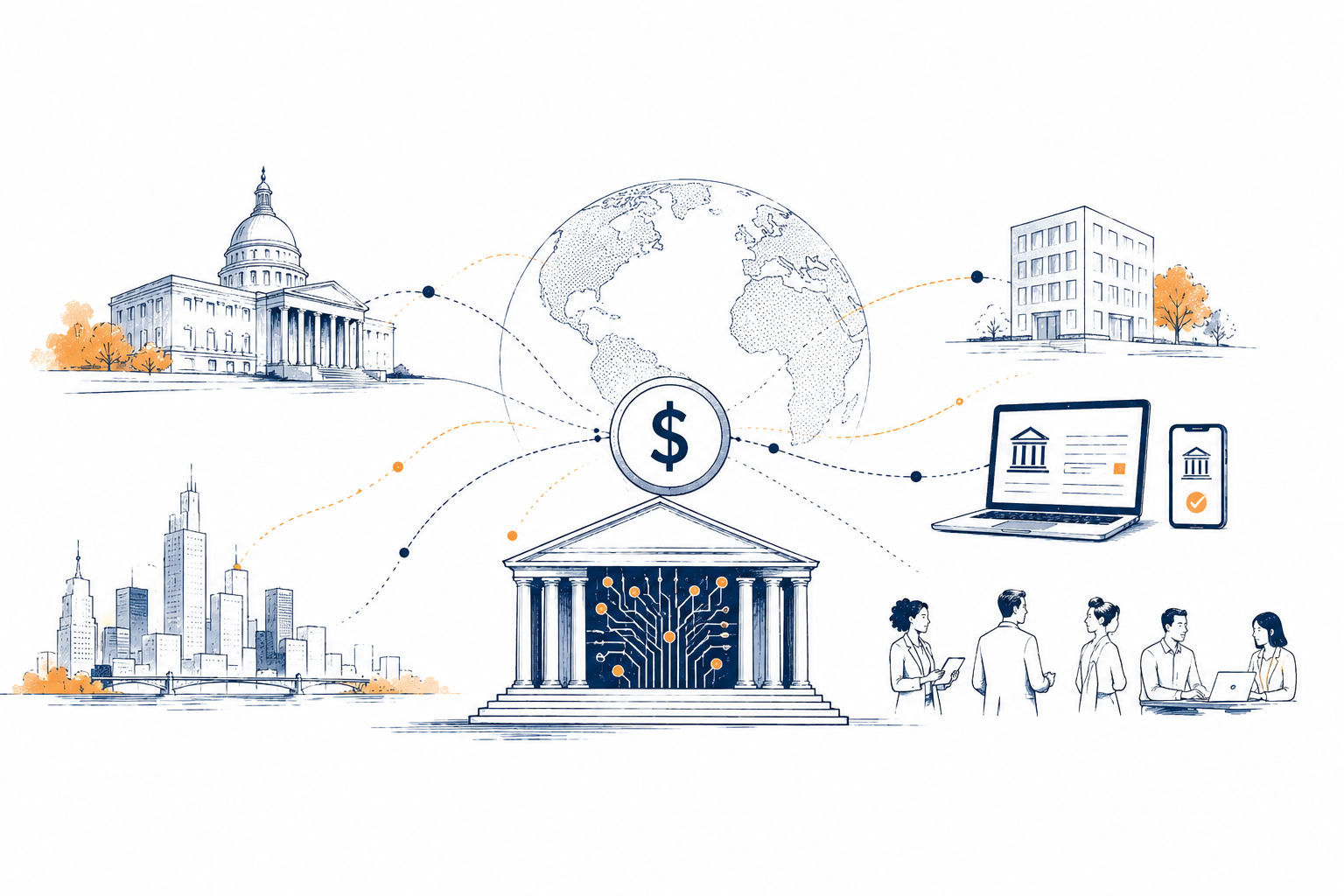

The global expansion of the U.S. dollar and the expansion of the banking infrastructure that supports it have long gone hand in hand. The more widely the dollar was used in international trade, the more important correspondent banks, global payment networks and financial institutions became in moving dollars across borders.
That relationship is beginning to change not because the dollar is losing ground, but because it is starting to circulate through an entirely different infrastructure.
The Dollar Is Finding New Rails
Most of the discussion around stablecoins has focused on the companies issuing them Circle, Tether, PayPal and, increasingly, banks.
The question always seemed to be the same: who will issue the dominant digital dollar?
That may never have been the most important transformation. The growth of stablecoins is beginning to show that the real impact of this market lies somewhere else.
For the first time, the dollar is starting to circulate through an infrastructure that no longer depends exclusively on the banking networks built to distribute it. The currency remains the same. The rails are beginning to change.
Access to the Dollar No Longer Depends on the Same System
That shift is already becoming visible in the way businesses and individuals move money across borders.
Stablecoins are increasingly being used for corporate settlement, cross-border payments, treasury management and transfers between different markets. In many of these transactions, neither the sender nor the recipient even needs to know that a blockchain carried part of the payment.
What matters is that the dollar still reaches its destination, only now through a different route. Infrastructure is no longer just a technical detail; it is becoming an alternative to the model that has handled much of the international circulation of the U.S. dollar for decades.
The Dollar Can Expand Without Expanding the Same Banking Infrastructure
That may be the biggest paradox created by stablecoins. For years, it seemed natural to assume that any blockchain-based alternative would reduce the importance of the U.S. dollar.
The opposite may be happening. The overwhelming majority of stablecoins continue to be denominated in dollars.
The more they expand, the greater the international reach of the dollar itself may become.
The difference is that this expansion no longer necessarily requires the same banking infrastructure that historically supported it. The dollar remains at the center, but the system responsible for distributing it is beginning to change.
The Transformation Is Happening in the Infrastructure, Not the Currency
None of this suggests that banks will stop playing a central role in the financial system. Stablecoin reserves still depend on traditional financial assets.
Converting between fiat currencies and digital assets continues to involve financial institutions at multiple stages. What is beginning to change is something else.
For decades, the U.S. dollar and the banking infrastructure that distributed it appeared almost inseparable. Now they are beginning to follow partially different paths. The dollar continues to preserve its position as the world’s leading currency, while stablecoins are beginning to provide a new infrastructure through which that same currency can circulate.
That may be the most important aspect of this transformation. Stablecoins are not creating a new global currency. They are beginning to create a new way to distribute the global currency that already exists.