
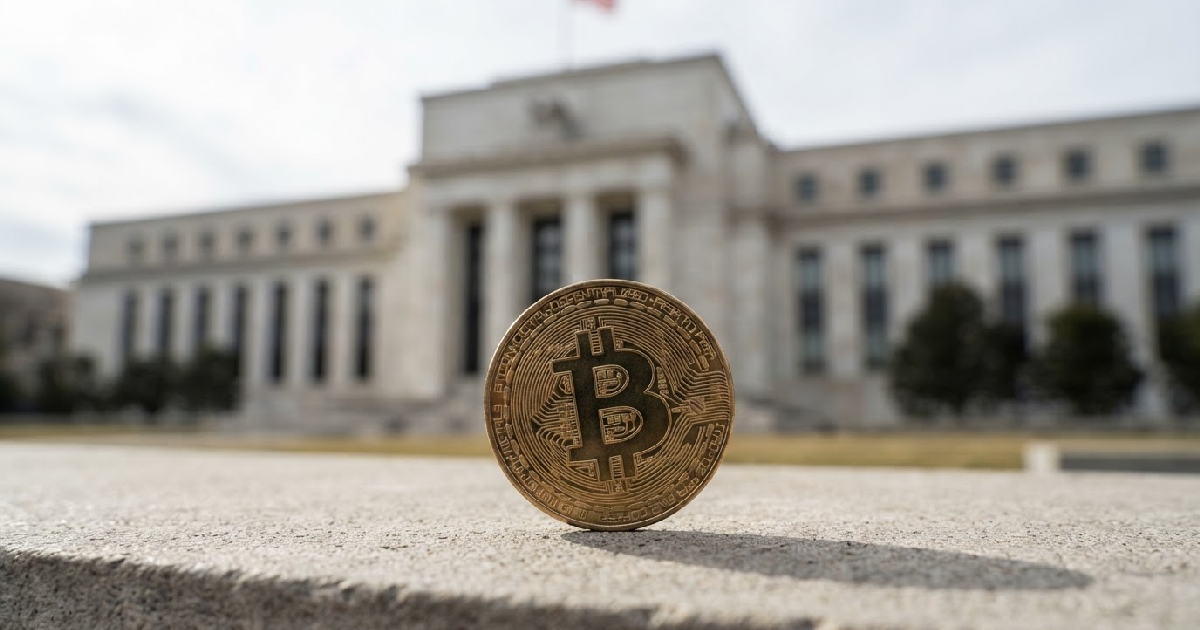

The broader cryptocurrency market experienced a risk-off sentiment on Wednesday, July 29, 2026, driven by mounting fears of a US Federal Reserve (Fed) interest rate hike. This macroeconomic anxiety particularly weighed on Bitcoin (BTC), pushing its price lower, while Bittensor (TAO) and Cardano (ADA) managed to sustain gains from the previous day.
Investors keenly watched for the Fed’s scheduled interest rate decision later that day, as the prospect of a hawkish monetary policy stance heightened caution across financial markets. The pervasive concern centers on how tighter financial conditions could impact high-beta assets, a category that prominently includes cryptocurrencies.
Bitcoin faces downward pressure
Bitcoin, the market’s largest cryptocurrency by market capitalization, traded just above $63,000 on Wednesday, July 29. This marked a continuation of a downward trajectory observed over the past few days, as the digital asset struggled to hold its ground.
Earlier in the week, on Tuesday, July 28, the BTC/USD pair registered a price of $63,751.41. This followed Monday’s valuation of $63,670, which represented a 1.9% decline over the preceding 24 hours, illustrating the growing selling pressure.
These recent movements stand in stark contrast to Bitcoin’s performance earlier in the month. The cryptocurrency had reached a July high of around $67,000 and even traded at $64,700 on Monday, July 20, showing a 0.5% gain over 24 hours and a 3.2% rise over the preceding week.
Even more recently, Bitcoin touched $65,400 on Friday, July 24. This volatility underscores how quickly market sentiment can shift, driven by external macroeconomic factors rather than internal crypto-specific developments. Historically, Bitcoin also held above $61,000 on Friday, July 3, recovering to $61,800 after dipping to a 21-month low earlier that same week.
Fed’s hawkish stance drives market caution
The primary driver behind the current apprehension in the cryptocurrency market is the US Federal Reserve. Investors are closely scrutinizing its anticipated interest rate decision, which could signal a more hawkish monetary policy stance. This expectation alone is enough to inject significant uncertainty into global financial markets.
Market participants are also keenly awaiting the press conference following the decision, where Fed Chairman Kevin Warsh is expected to provide comments. His remarks will offer critical insights into the central bank’s assessment of inflation and its future intentions regarding interest rate adjustments. Such guidance can heavily influence investor behavior in the short to medium term.
A hawkish Fed typically means higher borrowing costs, which can reduce the appetite for riskier assets. This environment disproportionately impacts cryptocurrencies, given their classification as high-beta assets. The market’s current risk-off sentiment reflects these prevailing fears, leading investors to reallocate funds away from volatile investments.
Altcoins Bittensor and Cardano defy the downturn
While Bitcoin faced headwinds, some altcoins demonstrated notable resilience against the prevailing market sentiment. Bittensor (TAO) and Cardano (ADA) both managed to sustain gains they had accumulated in prior trading sessions, setting them apart from the broader market trend.
This divergence suggests that even as macroeconomic forces exert pressure on the entire crypto ecosystem, individual projects can still carve out independent momentum. It implies that strong project fundamentals, unique technological narratives, or specific investor interest can sometimes insulate certain digital assets from broader market corrections.
The performance of TAO and ADA offers a nuanced perspective on the crypto market’s response to external pressures. Though Bitcoin often serves as a barometer for overall sentiment, the selective strength seen in these altcoins highlights the market’s increasing segmentation and the potential for specific niches to outperform.
Inflation, geopolitics, and AI market spillover
The Fed’s potential actions are rooted in persistent inflationary pressures that continue to trouble the US economy. Inflation surged to a three-year high in May, a rise largely attributed to escalating oil and energy prices, compounded by ongoing geopolitical tensions.
Specifically, growing US-Iran geopolitical tensions have significantly contributed to global risk aversion. These broader uncertainties make assets perceived as higher risk, such as cryptocurrencies, less appealing to investors prioritizing stability and capital preservation. The flight to safety often translates into selling pressure on volatile markets.
Adding another layer of complexity, a recent sell-off in AI-linked stocks has created a noticeable spillover effect into the cryptocurrency sector. This trend highlights the increasing interconnectedness between traditional technology equity markets and the digital asset space, suggesting that sentiment in one can quickly impact the other.
These combined factors create a challenging environment for cryptocurrencies, amplifying the risk-off sentiment as investors grapple with multiple sources of uncertainty. The market is effectively processing a confluence of economic and geopolitical developments.
Navigating upcoming data and market sentiment
Beyond the immediate Fed decision, market participants are also looking ahead to other crucial economic indicators. The release of the Personal Consumption Expenditures (PCE) index, scheduled for Thursday, July 30, 2026, is particularly anticipated.
The PCE index is the Federal Reserve’s preferred measure of inflation, and its data will provide further context for the central bank’s monetary policy outlook. A higher-than-expected PCE figure could reinforce the Fed’s hawkish stance, potentially leading to continued pressure on risk assets like Bitcoin.
Conversely, a softer PCE reading might offer some reprieve, suggesting that inflationary pressures could be easing. The market’s reaction will hinge on how these data points align with or diverge from current expectations. These economic releases, combined with official statements, shape investor sentiment for the coming weeks.
The current landscape underscores the growing influence of macroeconomic factors on the cryptocurrency market. While digital assets once traded with a degree of independence, they are increasingly integrated into the broader financial system, making them susceptible to the same forces that drive traditional markets. Investors are adapting their strategies to account for this evolving relationship.