
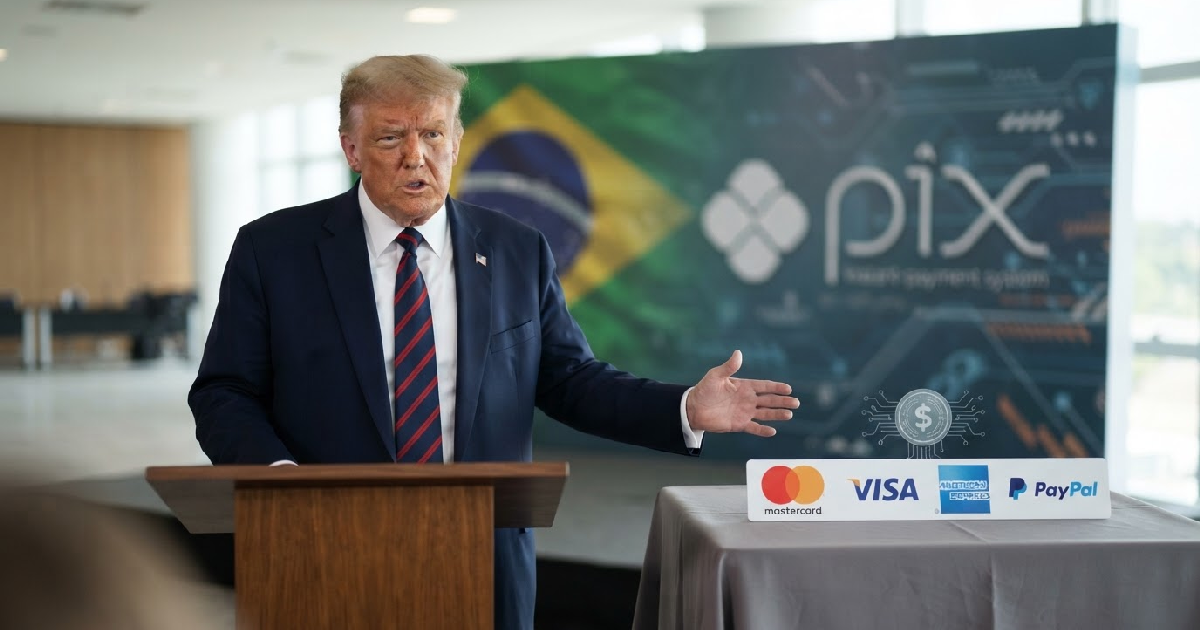

The Donald Trump administration is set to impose a 25% tariff on most Brazilian goods starting July 22, escalating a trade dispute focused on Brazil’s state-run Pix instant-payment system. Washington views Pix as an unfair trade practice, claiming it disadvantages American payment firms, and the Trump Brazil payments issue is a key point of contention.
This aggressive stance, however, overlooks a significant development: dollar-linked stablecoins are already quietly dominating Brazil’s crypto economy, fundamentally shaping its digital payments landscape.
Washington’s paradoxical trade offensive
This move marks an unusual application of Section 301 trade authority, typically reserved for issues like intellectual property or market access. It highlights a growing international tension over domestic digital financial infrastructures. The tariffs reflect a paradoxical effort to protect the US dollar’s global standing, even as the dollar thrives within Brazil’s digital economy through blockchain-based tokens.
The upcoming 25% Section 301 tariff represents a revived strategy by the Trump administration, after its earlier import taxes faced legal challenges. Ambassador Jamieson Greer affirmed the action is necessary “to address these unfair trade practices to ensure American workers and companies can compete on a level playing field.” The focus has shifted from traditional goods to digital payment mechanisms.
The U.S. Trade Representative specifically cites Brazil’s Pix as creating an uneven playing field for American companies like Visa and Mastercard. Pix’s rules, which mandate free services for individuals and cap merchant fees, are central to Washington’s complaint. This intervention sets a precedent for how global trade policy might intersect with national digital infrastructure.
The meteoric rise of Brazil’s Pix payment system
Launched in November 2020, Pix has rapidly become an integral part of daily life for Brazilians. Over 90% of Brazilian adults now use the instant-payment system. Its adoption has been so widespread that it processes more transactions than credit and debit cards combined.
According to Brazil’s central bank data from June, Pix processed nearly 7 billion transactions. These transactions were valued at roughly R$3 trillion, or approximately $590 billion. In the latter half of 2025 alone, Pix handled an astounding 42.9 billion transactions, dwarfing the 23.8 billion processed by traditional cards.
Stablecoins’ quiet dollar dominance in Brazil
While Washington targets Pix over its perceived threat to dollar-based trade, the US dollar itself is flourishing in Brazil’s digital ecosystem through stablecoins. Dollar-linked stablecoins constitute approximately 90% of all crypto transaction volume in Brazil. Much of this volume is actively used for payments and settlement purposes, according to tax authority data.
Brazil processes between $6 billion and $8 billion in crypto transactions each month. A significant portion of this activity involves dollar-denominated stablecoins, rather than the country’s own fiat currency. This demonstrates a robust, organic demand for dollar liquidity within Brazil’s digital financial landscape, independent of traditional banking rails.
Brazil’s own regulatory push against stablecoins
Ironically, Brazilian regulators are also moving to limit the role of stablecoins in certain financial flows. Brazil’s Central Bank Resolution 561, set to take effect on October 1, will bar payment firms from settling cross-border payments in stablecoins or other cryptocurrencies. This measure aims to close a back-end channel that previously routed Brazilian real through dollar tokens.
The central bank views stablecoins as a potential threat to monetary sovereignty, tax enforcement, and anti-money laundering controls. This dual pressure on Pix—from Washington’s trade tariffs and from its own regulators limiting stablecoins—underscores the complex global interplay of digital payment innovations and national policy objectives.
Implications for global digital payments
The Trump administration’s decision to target Brazil’s payment system creates a notable precedent for future trade disputes. This type of action could extend to other countries building their own digital payment networks, such as India’s Unified Payments Interface (UPI) or the European Central Bank’s planned digital euro, as the Atlantic Council suggests. It signals a new battleground in the competition for financial influence.
The fundamental disconnect in Washington’s approach lies in its focus on traditional payment system competition, while largely ignoring the burgeoning, decentralized dollar economy already active in Brazil. Rodrigo Caggiano, founder of RWA Monitor, notes that Pix and stablecoins are often complementary, with Pix handling domestic instant payments and stablecoins expanding possibilities on blockchain networks. This suggests the US policy might be fighting the wrong battle.
Washington’s pressure may inadvertently accelerate Brazil’s internal debate on stablecoin regulation and digital financial infrastructure. With Brazil’s central bank developing its own tokenized-settlement system, Drex, these trade actions could inadvertently push nations further into sovereign digital solutions.
The enduring strength of the US dollar in Brazil through stablecoins highlights a critical blind spot in current US trade policy, revealing that the dollar’s digital presence is already pervasive, regardless of efforts to protect its traditional channels.