

You spend hours analyzing the market, pinpointing the exact psychological level to execute a trade. You connect your wallet, set a reasonable slippage tolerance, and click confirm. Yet, in the mere milliseconds it takes for your data to travel across the network, the token price spikes, leaving you with less value than you anticipated. It feels like bad luck, or perhaps the typical volatility of decentralized finance (DeFi).
In reality, you just fell victim to the invisible mechanics of blockchain transaction ordering.
Most newcomers enter DeFi believing that the blockchain is a perfectly impartial, chronological ledger. We are taught that decentralized networks replace central authorities with consensus mechanisms designed to ensure consistency and liveness.
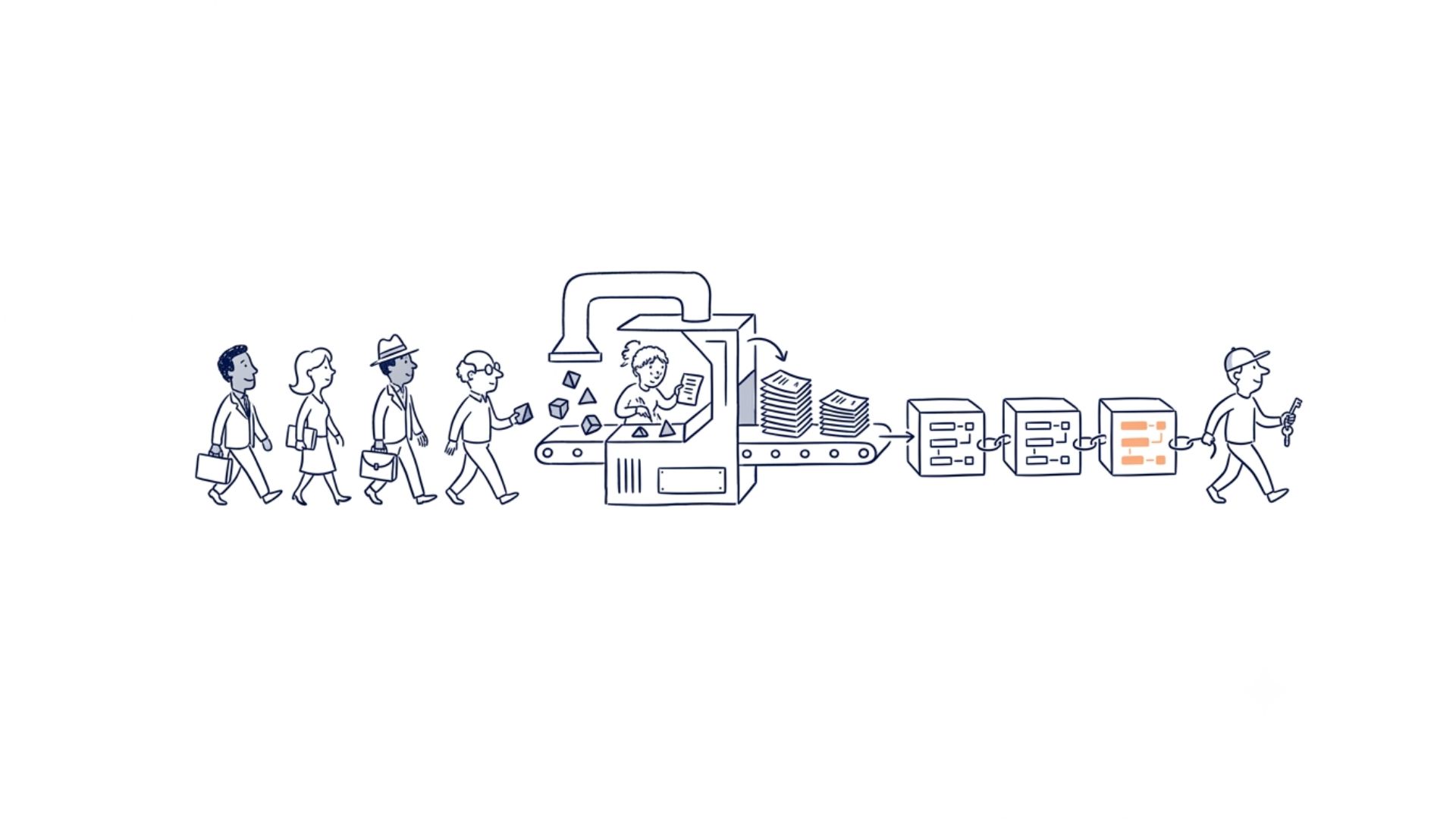
Consistency guarantees that every node agrees on the same history, preventing double-spending. Liveness ensures the network never freezes, constantly grinding through new data, and cares about the final destination, not the order of the boarding line.
While consensus mechanisms guarantee that your transaction will be processed, they say absolutely nothing about the fairness of the queue. This gap between processing a trade and ordering it creates a highly lucrative playground for validators, block builders, and high-frequency trading bots.
The VIP Bouncers of the Mempool and the Frontrunning Tax
To understand how your trades are manipulated, it helps to look at the blockchain not as a sterile supercomputer, but as an exclusive fashion week after-party.
When you broadcast a transaction, it doesn’t immediately get written into a block. Instead, it enters a virtual waiting room called the mempool. Think of the mempool as the sidewalk outside the club, packed with people waiting to get in. In a truly fair world, the bouncer would let people in strictly based on who arrived first.
But blockchain validators and block builders are not impartial bouncers. They have unilateral power to arrange the crowd however they see fit. If a high-frequency trading bot approaches the bouncer and offers a massive tip — known in crypto as a priority fee — the bouncer will happily pull that bot from the back of the line and push them to the front.
This structural loophole is the birthplace of Maximum Extractable Value (MEV), a multi-billion-dollar shadow industry that extracts wealth directly from everyday users.
The most common manifestation of this is a sandwich attack, a highly sophisticated form of DeFi frontrunning. Imagine you submit a large order to buy a specific token on a decentralized exchange, a move that will naturally push the token’s price up.
A predator bot hovering in the mempool spots your pending transaction. Recognizing the imminent price shift, the bot pays an exorbitant priority fee to a validator to ensure its own buy order is placed exactly milliseconds before yours.
The bot buys the token cheap. Your transaction goes through next, buying the token at a higher price because of the bot’s sudden demand. In the exact same block, the bot inserts a sell order right after yours, pocketing the profit from the artificial price bump you just funded. You are left with a worse execution price, a hidden tax paid directly to algorithmic predators.
Why does blockchain transaction ordering decide who wins and loses
The intuitive solution to this problem seems obvious: networks should simply mandate a strict “first come, first served” rule. In computer science, this is known as Receive-Order Fairness. It sounds beautiful on paper, but when applied to a globally distributed network, it collides with a harsh reality of physics and logic.
First, there is the problem of global latency. Decentralized networks are asynchronous systems. Information travels via fiber-optic cables under oceans and satellites in orbit, meaning distance dictates speed.
Second, even if we ignore the physics of internet speed, we run into a logical roadblock known as the Condorcet Paradox. Borrowed from political voting theory, this paradox describes a loop where collective preferences become cyclical and impossible to rank.
Imagine three transactions floating in the network: A, B, and C. Because of how data propagates across the globe, one group of validators sees A arrive before B. Another group sees B arrive before C. Naturally, you would assume A arrived before C. However, a third group of nodes registers C arriving before A. The network traps itself in a logical loop: A > B > C > A.
Mathematically, the system cannot declare a definitive winner. The concept of an absolute chronological order breaks down entirely.
The Trade-Offs in Engineering a Fairer Network
Because a flawless chronological order cannot exist, blockchain architects have to make fundamental trade-offs. Different networks have engineered distinct ways to handle this chaos, each favoring certain properties over others.
Some protocols completely abandon the traditional concept of a linear chain of blocks to solve the time dilemma. The Hedera network, for example, uses a Hashgraph architecture — a Directed Acyclic Graph (DAG) that looks more like a web of interconnected events than a single-file chain.
Instead of relying on a single block producer to dictate order, nodes on a Hashgraph use a “gossip protocol” to constantly tell each other what transactions they have seen, attaching a cryptographic proof of the history.
To resolve simultaneous transactions, the network calculates the median timestamp of when the entire network witnessed the event. If the majority of the network is honest, this median neutralizes any individual validator trying to lie about timing. The trade-off? Sophisticated actors can still sutilmente manipulate this average by intentionally delaying how they pass the “gossip” along.
On the other side of the engineering spectrum are protocols that utilize Batch-Order Fairness (BOF), seen in experimental architectures like Themis. BOF takes a highly pragmatic approach to the Condorcet Paradox: if a group of transactions falls into a cyclical loop where order cannot be fairly determined, the protocol stops trying to sort them individually.
Instead, it bundles all conflicting transactions into a single, localized batch. Within that specific packet, chronological order is discarded entirely. The internal transactions are executed based on a neutral, non-temporal mathematical rule, such as alphabetical sorting by their cryptographic hashes.
This entirely neutralizes the ability of MEV bots to perform sandwich attacks, as they cannot guarantee their position before or after your trade. However, this level of security requires massive computational overhead and complex cryptographic proofs, which historically threatens to slow network throughput down to a crawl.
The default state for most major blockchains remains the traditional gas auction. It is simple, highly efficient from a code perspective, but brutal for the user: whoever pays the highest fee gets processed first, leaving the door wide open for systemic MEV extraction.
Layer 2 Rollups and the Centralized Sequencer Dilemma
This technical debate is no longer confined to academic papers; it has become the primary battleground for Layer 2 scaling solutions — networks built on top of chains like Ethereum to process thousands of transactions cheaply and quickly.
To achieve lightning-fast speeds and near-zero fees, almost all major Layer 2 networks currently rely on a single, centralized entity called a sequencer. The sequencer is the ultimate gatekeeper. It receives all user transactions and single-handedly dictates their ordering before packing them up and shipping them down to the main Ethereum chain.
For now, most centralized sequencers operate on a strict, local “first-in, first-out” basis. Because there is only one machine making the decision, the physical paradoxes of global latency are temporarily bypassed. But this creates a glaring single point of failure and a massive centralization risk.
If that single sequencer goes down, the entire network halts. Furthermore, users must implicitly trust that the entity running the sequencer isn’t secretly frontrunning them behind closed doors.
The immediate roadmap for the crypto ecosystem involves decentralizing these sequencers — distributing the task of transaction ordering across a network of independent machines. The moment these Layer 2 networks achieve this, however, they will slam directly into the exact same physical limitations of global latency and the logical loops of the Condorcet Paradox.
The scaling solutions that successfully navigate these boundaries without introducing predatory MEV or crippling network speed will likely capture the bulk of institutional capital in the coming cycles.
Beyond Faux Perfections
The pursuit of absolute, unassailable chronological fairness in a global, decentralized network is a mathematical wild goose chase. In a world without a centralized master clock, the laws of physics guarantee that a distributed queue will always retain an element of uncertainty.
The differentiator between an experimental network and enterprise-grade financial infrastructure is not whether it achieves perfect fairness, but how transparently it manages this inherent imperfection. Robust protocols do not pretend the ordering problem doesn’t exist; they build rigid mathematical guardrails to limit how far validative power can be abused.
Ultimately, the true innovation of decentralized networks does not lie in replicating the artificial cleanliness of a centralized server. It lies in accepting the physical constraints of our chaotic world and, despite those limits, building an environment that is transparent, predictable, and fully auditable.
For anyone navigating the DeFi ecosystem, understanding these invisible rules of the queue is the ultimate tool for capital preservation.