
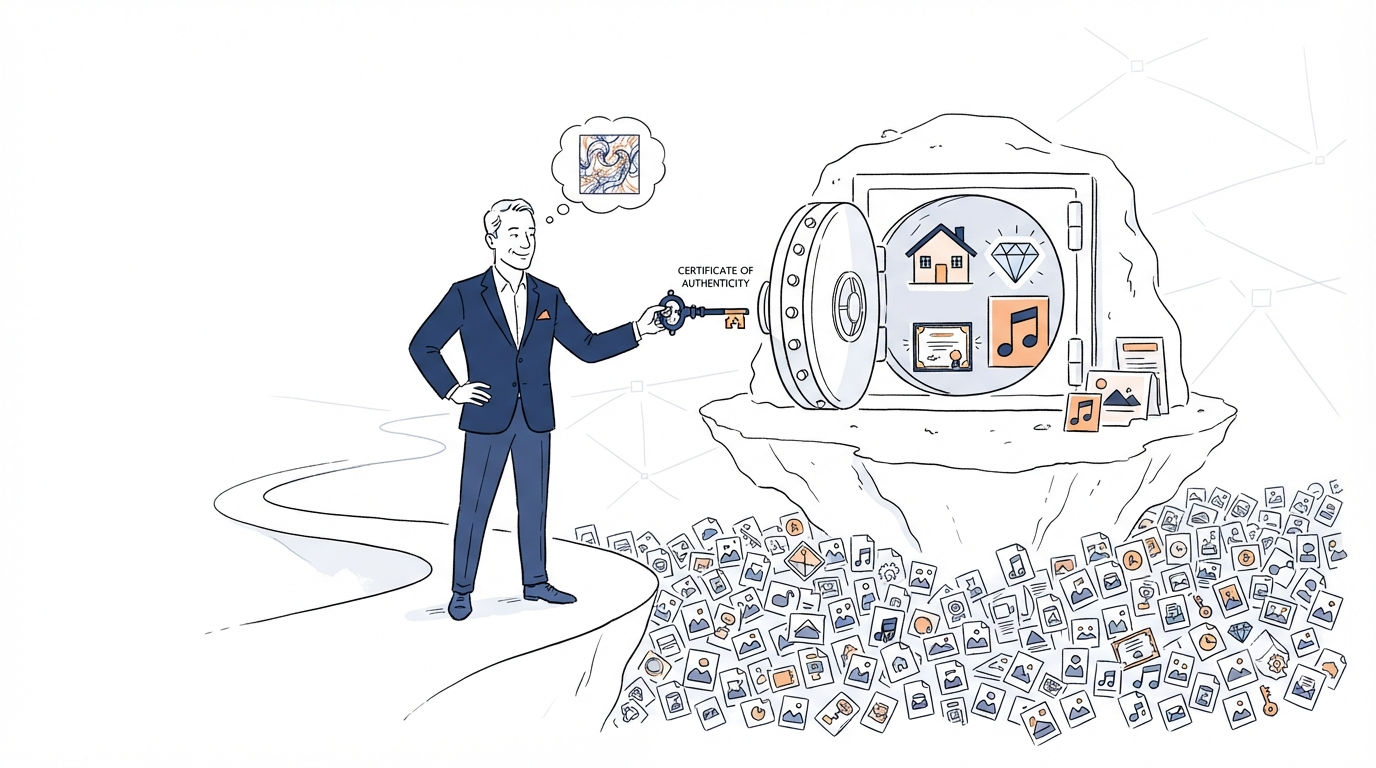

If anyone can save an image to their phone or take a screenshot in two seconds, why would anyone pay for an NFT?
During the height of the digital art boom, stories of pixelated avatars selling for millions made it easy to believe the value was in the image itself. In reality, that was a misunderstanding of the technology. The underlying innovation was never about the visual file.
Non-Fungible Tokens (NFTs) were designed to solve an architectural flaw of the internet: the inability to prove ownership of a digital asset in an environment where everything can be duplicated infinitely.
Instead of preventing a file from being shared, an NFT registers, in a public and verifiable way, who owns a specific version of that asset. This subtle shift changes how we establish trust, authenticity, and property online.
Now that the speculative dust has settled, the technology is moving out of the art galleries and into the background of everyday industries — from event ticketing to luxury goods and loyalty programs.
The Difference Between Storing a File and Holding the Receipt
To understand how an NFT works, it helps to separate the digital asset from its record of ownership.
Think of it like buying an iconic, highly coveted designer handbag. Millions of counterfeit versions exist, and anyone can buy a cheap replica that looks almost identical to the untrained eye. However, only the official, registered receipt from the brand proves that your specific bag is authentic. That receipt is what carries the long-term value, the proof of origin, and the right to resell it in high-end markets.
An NFT is that official receipt, but for the digital world.
In economic terms, “fungible” describes something that can be easily replaced by an identical item. A $100 bill is fungible; if you swap it for another $100 bill, you still have the exact same purchasing power. Cryptocurrencies like Bitcoin are also fungible — one Bitcoin has the exact same properties as any other.
An NFT, however, is unique. Even if two digital files look identical, the tokens representing them contain distinct identification codes registered on a blockchain. This individual identity makes it possible to track the asset’s origin, its transaction history, and its current owner with absolute certainty.
Why a Public Ledger Solves the Internet’s Counterfeit Problem
If the receipt is digital, what stops someone from just forging the receipt? This is where the blockchain comes in.
A blockchain is a decentralized ledger shared across a global network of computers. Instead of relying on a single company, bank, or database to store records, every participant in the network maintains an identical, synchronized copy of the transaction history.

Whenever an NFT is minted (created) or transferred, that movement is permanently etched into this shared history. This allows anyone to instantly verify:
- The wallet address that originally created the asset
- The exact date and time it was issued
- Every hand it has passed through since its creation
- The current, rightful owner
Crucially, the blockchain does not typically store the actual high-resolution image, video, or music file. Storing heavy media files directly on a blockchain would make the network slow and prohibitively expensive.
Instead, the blockchain stores a cryptographic signature and metadata. This metadata acts as an unalterable digital pointer directing users to where the actual file is hosted online.
The Invisible Code That Replaces Traditional Middlemen
The real utility of an NFT is unlocked when we look at how these assets move. In the traditional world, transferring ownership of high-value items — like a rare collectible or a property deed — requires escrows, lawyers, and third-party verifiers.
In the blockchain ecosystem, this process is automated by smart contracts.
Despite the name, these are not legal documents. They are self-executing software protocols written directly onto the blockchain. They operate on a simple “if/then” logic: if Condition A is met, then Action B is executed automatically.
How a smart contract handles a sale:
If a buyer sends the agreed-upon amount of cryptocurrency to the contract, the smart contract automatically transfers the NFT to the buyer’s wallet and routes the payment to the seller.
Because this happens in a single, atomic transaction on the blockchain, there is no risk of one party running away with the money, nor is there any possibility of selling the same digital asset to two people at the same time.
Furthermore, creators can hardcode rules into these contracts that persist forever. For example, an artist or brand can program the smart contract to automatically trigger a 10% royalty payment every time the NFT is resold on secondary marketplaces.
This automates a complex, global system of secondary royalties without relying on corporate distributors or legal departments to enforce it.
Real-World Scenarios Where Digital Certificates Make Sense
Once you look past digital art, the practical applications of this architecture become clear. The technology is starting to reshape industries that struggle with counterfeiting, ticket scalping, and fragmented digital identity.
| Industry | The Problem | How NFT Utility Solves It |
| Event Ticketing | Fraudulent duplicate tickets and aggressive scalpers inflating prices on secondary sites. | Tickets issued as NFTs can have price caps coded into their smart contracts, making scalping unprofitable while allowing instant authenticity checks at the venue door. |
| Gaming | Players spend hundreds of dollars on in-game items, but those items remain locked inside a single company’s servers. | In-game assets can be minted as NFTs, allowing players to truly own, trade, or sell their digital gear across different platforms and independent marketplaces. |
| Luxury Goods | High-end physical items (watches, designer bags) are easily counterfeited, and physical paper certificates are easily lost. | Brands are pairing physical products with a “digital twin” NFT. Scanning a microchip on the item reveals its unalterable blockchain certificate, proving its authenticity and origin. |
The Trap of Minting Versus Finding True Market Demand
Creating an NFT is remarkably simple. Modern marketplaces allow users to upload a file, choose a network (like Ethereum, Polygon, or Solana), and “mint” a token in a few clicks. Some platforms even offer “lazy minting,” where the asset is only officially registered on-chain after a buyer makes a purchase, saving the creator upfront network fees.
But the low barrier to entry reveals a fundamental truth about the market: technology creates scarcity, but it does not create demand.
Minting an image on a blockchain does not magically make it valuable, just as printing a contract on high-quality paper does not make its terms valuable. The value of any digital asset relies on the reputation of the creator, the utility of the token, and the strength of the community supporting it.
The speculative era of NFTs treated the technology as a quick way to manufacture value out of thin air. The current era is treating it as what it actually is: a highly secure, automated filing cabinet for the digital age.
The Paradox of the Digital Age
The ultimate irony of the NFT is that its value increases the more its associated file is shared.
In the physical world, if someone copies your painting, your original loses its uniqueness. In the digital world, if an image associated with your NFT goes viral and is shared millions of times across social media, the cultural relevance of that asset skyrockets.
Yet, amid those millions of shared copies, the public ledger points to only one wallet address as the true, verified owner of the original signature.
We are moving away from an internet where digital assets are treated as temporary, easily copied files. As we spend more of our lives, careers, and social interactions online, the need to prove who owns what will only grow.
The images of cartoon characters may have defined the first wave of this technology, but the infrastructure of digital ownership is what will shape the next.