
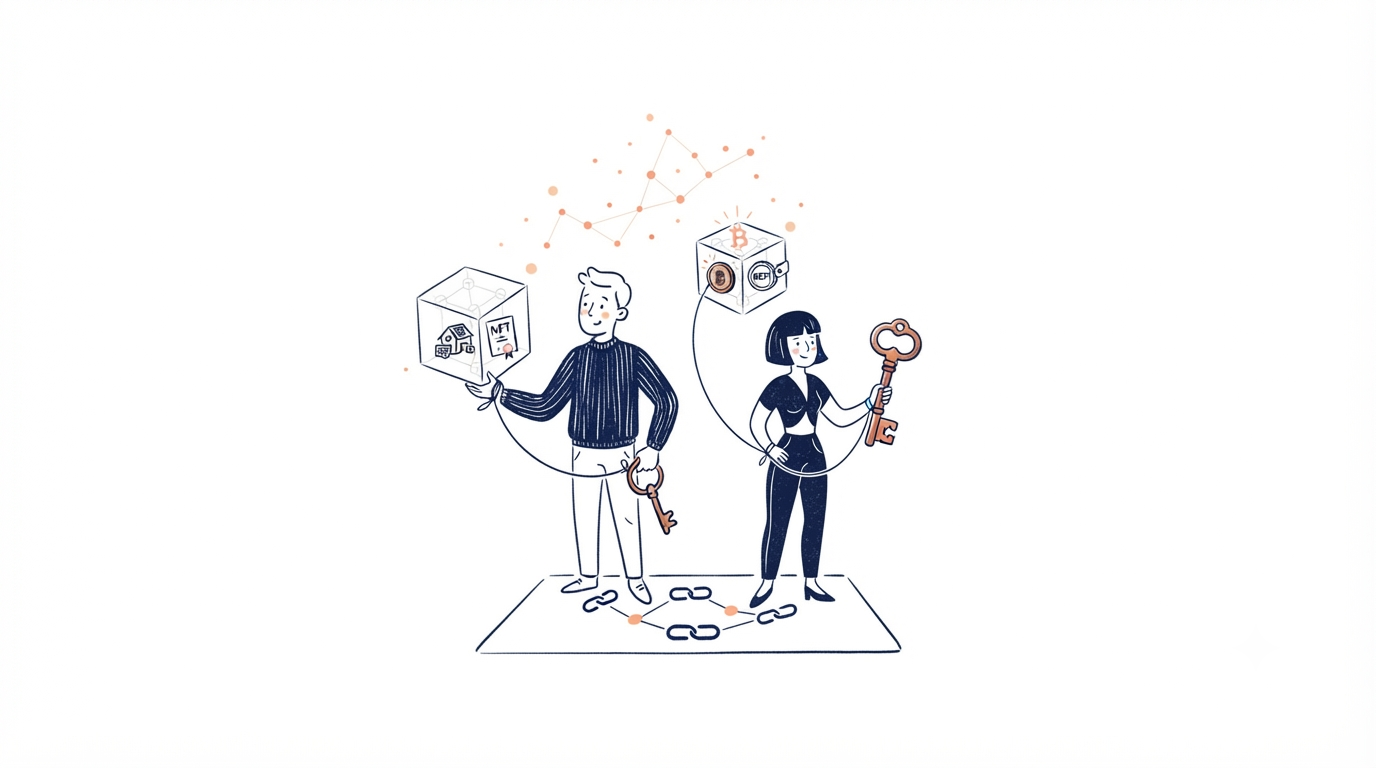

Imagine spending years building a library of digital books, curation lists, and rare in-game items, only to wake up one morning and find the door locked. The platform you used changed its terms of service, your account was flagged by an automated bot, or the company simply went bankrupt. In an instant, your digital life is wiped clean.
This is not a dystopian hypothetical. It happens daily to thousands of internet users.
The current state of the internet operates under a profound illusion of ownership. This systemic vulnerability is the driving force behind the migration toward Web3. To build a more resilient digital economy, we first need to understand how the current model traps our digital identities — and how cryptography offers an escape hatch.
We click “buy now” on movie platforms, ebook stores, and gaming marketplaces, but we are not actually buying anything. We are paying for a temporary, highly conditional license to access a file stored on someone else’s computer.
The streaming era’s biggest illusion: You’re permanently renting your digital life
The shift from physical media to digital convenience was a triumph of distribution. We traded dusty CD shelves and heavy book boxes for instant, global access. But in that transition, we quietly signed away our property rights.
In the physical world, ownership is clear. If you buy a vinyl record, you can play it, scratch it, lease it to a friend, or sell it at a garage sale. The record store cannot knock on your door three years later and demand it back because their distribution agreement with the record label expired.
Online, however, ownership is entirely permission-based. When you “purchase” an item on a centralized platform, a private database simply updates a single row of data, granting your specific user profile permission to view that asset.
This model of “infinite renting” has concentrated unprecedented power in the hands of a few tech conglomerates. They control the servers, which means they control the rules. If a platform decides to alter its monetization structure, censor certain creators, or close down entirely, everything you built or bought within that ecosystem evaporates.
Web3 is not just an aesthetic upgrade to the internet; it is a fundamental restructuring of this digital power dynamic.
Swapping corporate servers for cryptographic keys
To reclaim digital ownership, we have to change the underlying plumbing of the internet. We must transition from centralized corporate databases to a shared, decentralized infrastructure.
In a decentralized network, the proof that you own a digital asset does not live on a private server owned by a tech giant. Instead, it is recorded on a blockchain — a tamper-proof, public ledger distributed across thousands of independent computers worldwide. Once a transaction is validated and written to this ledger, it becomes mathematically permanent. No single entity, not even the creator of the platform, has the power to alter or erase it.
This shift from database permissions to cryptographic ownership relies on three interconnected tools:
- The Public Ledger: A shared ledger serves as a universal notary. It records exactly who owns what, when it was transferred, and who owned it previously, without needing a middleman to verify the claim.
- Smart Contracts: These are self-executing protocols hardcoded directly onto the blockchain. They operate on a simple premise: if condition X is met, action Y is executed automatically. By removing human discretion, they ensure transactions are settled fairly and instantly.
- Crypto Wallets: Despite the financial name, a Web3 wallet is actually a portable, cryptographic identity card. It holds your private keys — the complex mathematical signatures that prove your ownership over assets registered on the blockchain.
Instead of creating hundreds of different accounts with vulnerable passwords across various websites, you use a single wallet to log into decentralized applications. Your assets, your identity, and your history do not belong to the apps; they reside securely inside your wallet, traveling with you across the digital ecosystem.
Beyond overpriced avatars: The actual utility of proving authenticity
For years, mainstream conversations around digital property rights were dominated by speculative trading of digital profile pictures. This speculative bubble obscured the true, structural value of non-fungible tokens (NFTs) and digital certificates: their ability to prove authenticity and provenance without a central authority.
Consider the creator economy. Today, musicians, writers, and visual artists are entirely beholden to algorithmically driven distribution channels that claim massive cuts of their revenue. By using smart contracts, a musician can sell an album directly to their audience. Furthermore, they can program the digital asset so that a percentage of every future secondary sale automatically routes back to their wallet in perpetuity. This removes predatory distributors and aligns the financial interests of creators and fans.
The gaming industry is experiencing a similar structural evolution. Players spend billions of dollars annually on virtual gear, skins, and expansions. Yet, these assets remain trapped inside the specific game’s database. If you stop playing the game, or if the studio shuts down its servers, your investments disappear.
By tokenizing these items on a blockchain, they become independent digital property. You can trade them on external marketplaces, collateralize them, or even use them in entirely different games that support the same standard.
This logic is now spilling over into the physical world. Through asset tokenization, tangible properties like real estate, fine art, and commodities are being mapped onto blockchains.
This makes fractional ownership and global trading of physical assets faster and more transparent, although integrating this tech with traditional legal frameworks remains an ongoing challenge.
The terrifying weight of absolute control
Eliminating the corporate gatekeeper resolves the issues of platform monopoly and arbitrary censorship. However, it introduces a stark, psychological hurdle that the average internet user is not yet prepared for: the burden of absolute self-sovereignty.
In the Web2 world, convenience is king. If you forget your password, you click a link and receive a reset email. If your credit card is charged fraudulently, you call your bank and request a chargeback. The platform and the financial institution act as protective shock absorbers between you and your mistakes.
Web3 removes those shock absorbers. When you assume custody of your digital assets, you become your own bank, your own notary, and your own security team.
If you lose the seed phrase to your crypto wallet, there is no customer support line to call. Your assets are gone forever. If you are tricked into signing a malicious smart contract by a phishing site, there is no central authority that can reverse the transaction. The blockchain does not care about intent; it only executes code.
This trade-off between convenience and control is the primary bottleneck preventing mass adoption. The current user experience of Web3 demands a level of technical vigilance and risk tolerance that most casual internet users find overwhelming.
The ultimate success of Web3 will not be determined by how many speculative tokens rise in value. Instead, it will depend on our ability to build intuitive, secure interfaces that offer the sovereign protections of cryptography without sacrificing the simple user experience we have grown accustomed to. Until we bridge this gap, true digital ownership will remain a luxury of the technically brave.