
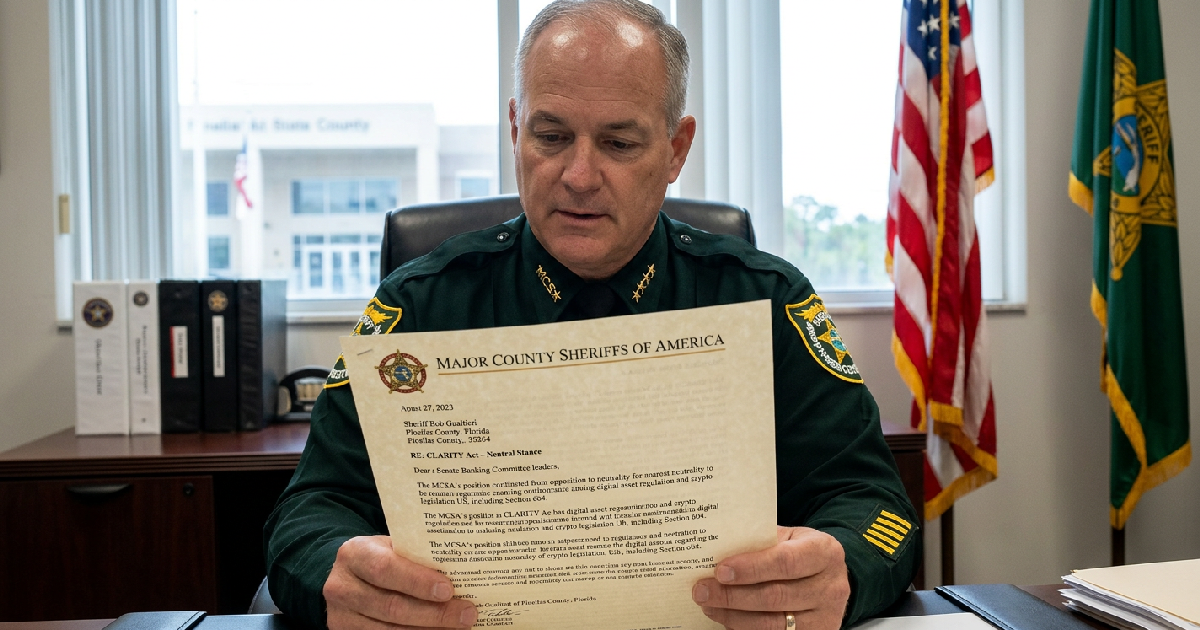

The Major County Sheriffs of America (MCSA) has officially dropped its opposition to the CLARITY Act, a crucial piece of digital asset legislation. This significant shift, confirmed in a July 3 letter to Senate Banking leaders, removes a major roadblock for the bill’s passage and signals evolving consensus on cryptocurrency regulation within law enforcement circles.
The group’s change to a neutral stance followed extensive discussions with the Biden administration, which reportedly provided “additional clarity” on how Section 604 of the proposed bill would be interpreted and implemented. For a bill struggling to gather sufficient support, this development could prove instrumental.
Major County Sheriffs reverse CLARITY Act opposition
The MCSA, a powerful voice in American law enforcement, represents sheriffs’ offices in counties with populations of 500,000 residents or more. Its reach is considerable, serving over 120 million Americans and roughly one-third of the entire US population, giving its policy positions significant weight in Washington.
The organization’s initial objection on May 14 had raised serious concerns among legislators and industry stakeholders. But the recent July 3 letter, signed by Sheriff Bob Gualtieri of Pinellas County, Florida, explicitly outlined the group’s new neutral position to Senate Banking Committee leaders Tim Scott and Elizabeth Warren.
Section 604 clarified after administration talks
At the core of the MCSA’s previous CLARITY Act opposition was Section 604, also known as the Blockchain Regulatory Certainty Act. This provision is designed to shield non-custodial developers, who do not control customer funds, from stringent money transmission rules.
Key details
Law enforcement groups had argued that such language could inadvertently complicate efforts to prosecute crypto-enabled financial crimes. They feared it might create loopholes for illicit activities within the digital asset ecosystem, hindering investigations into fraud, ransomware, and other serious offenses.
However, supporters of the CLARITY Act have consistently countered these assertions. They emphasize that the provision explicitly preserves liability for anyone who knowingly facilitates the movement of illicit funds. It appears these assurances, reinforced through direct talks, helped mollify the sheriffs.
MCSA’s letter cited a “continued review” and a clearer understanding of how Section 604 would be applied in practice as the basis for their changed stance. It shows a willingness to engage and find common ground on complex digital asset issues.
Sheriffs seek more resources and advisory roles
While the Major County Sheriffs of America has moved to neutrality, it stopped short of a full endorsement of the CLARITY Act. Instead, the organization presented several requests to Congress, aiming to secure a more prominent and resourced role for local law enforcement in future digital asset oversight.
The MCSA specifically asked for a formal state and local role in the Section 309 Treasury study. This study is crucial for examining emerging digital asset trends and their implications.
They also sought seats on advisory bodies and interagency working groups that would be established under the Act. And the sheriffs underlined a critical need for increased funding, targeting training, technology upgrades, and advanced blockchain forensics capabilities.
MCSA stressed that local agencies disproportionately handle the brunt of digital asset crime. These crimes range from sophisticated fraud and ransomware attacks to narcotics trafficking and the growing threat of child exploitation. Adequate funding would equip these agencies to combat such challenges more effectively.
Legislative path clears for digital asset bill
The MCSA’s shift is a significant win for proponents of the CLARITY Act, particularly as the bill faces a tight legislative timeline in the Senate. This development follows closely on the heels of the National Organization of Black Law Enforcement Executives (NOBLE) delivering the bill’s first formal police endorsement, further building momentum.
Senator Cynthia Lummis has been a vocal defender of the bill. She’s actively countered claims from Senator Elizabeth Warren that the legislation could facilitate illicit finance, pointing to over 16 built-in safeguards designed to prevent such misuse. That direct engagement from key senators highlights the contentious nature of this debate.
The bill still needs 60 Senate votes to pass before the upcoming August recess, a deadline many consider ambitious. Galaxy Research had recently cut the bill’s passage odds to 50%, citing shrinking floor time and persistent concerns. However, investor Mark Chadwick quickly recognised the gravity of the sheriffs’ move.
“This is bigger than it looks…Their opposition was one of the biggest roadblocks in the Senate, reinforcing law enforcement concerns and stalling momentum,” Chadwick posted on social media. “With that hurdle now out of the way, the path to passage just got a lot clearer. One more major hurdle down.” His assessment underscores the political impact of MCSA’s influence.
And it’s worth noting that the CLARITY Act already allocates a substantial $150 million for enforcement purposes. This funding demonstrates a clear legislative intent to combat crypto-related crime, a commitment the MCSA wants to ensure reaches local levels.
What this means for crypto regulation in the US
The evolving consensus among influential law enforcement bodies like the MCSA signals a maturing landscape for digital asset regulation in the United States. It’s becoming increasingly clear that policymakers are moving beyond initial skepticism to grapple with the practicalities of integrating cryptocurrencies into existing legal and criminal justice frameworks.
This isn’t just about preventing illicit activity; it’s about creating a predictable environment for innovation. For the digital asset industry, reduced regulatory uncertainty can unlock further investment and development. The conditional nature of the MCSA’s neutrality, coupled with their requests for funding and a seat at the table, suggests a desire for partnership rather than outright obstruction.
It means the debate is shifting from whether to regulate to how to regulate effectively. The coming weeks will be critical to see if Congress can fold the sheriffs’ specific requests into the bill. But for now, a significant hurdle has been overcome, offering a glimmer of hope for the CLARITY Act to establish clearer rules for the burgeoning US crypto sector.