
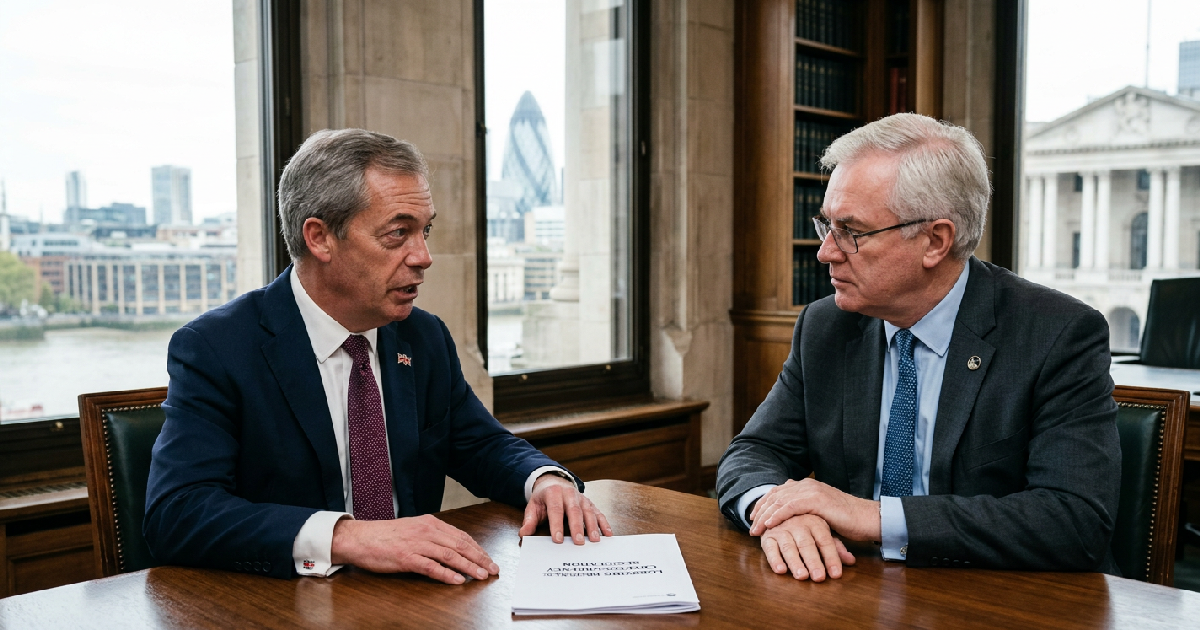

Reform UK leader Nigel Farage is now facing a formal complaint to the Parliamentary Commissioner for Standards over his crypto lobbying activities. Labour MP Phil Brickell filed the complaint on July 2, asking Daniel Greenberg to investigate Farage’s private meeting with Bank of England Governor Andrew Bailey in September 2025.
The complaint alleges that Farage’s advocacy for a softer approach to stablecoin regulation may have breached rules prohibiting MPs from lobbying officials for recent financial benefactors. This comes after Farage received significant donations from billionaire Christopher Harborne, who reportedly holds a 12% stake in Tether’s USDT stablecoin.
UK Parliamentary Rules Under Scrutiny
The core of the complaint hinges on official UK parliamentary guidance which prohibits Members of Parliament from approaching ministers or public officials. This ban applies for 12 months after receiving a financial or material benefit from a person or organisation. It’s designed to prevent donor influence on policy.
This restriction has seen recent amendments. The British Parliament doubled the ban from six to 12 months in March 2023. This change followed the Owen Paterson scandal, where Paterson resigned in 2021 after being found to have lobbied for two firms that paid him over £100,000 ($133,500) a year.
The Purpose of Lobbying Restrictions
The updated code of conduct for MPs aims to reinforce ethical standards and rebuild public trust. It establishes a clear separation between financial contributions and legislative or regulatory advocacy. The complaint against Farage represents a high-profile test of this strengthened rule, especially concerning the evolving digital asset sector.
Phil Brickell, chair of Parliament’s anti-corruption group, reported Farage to Commissioner Daniel Greenberg. According to a report by The Guardian, Brickell stated: “This is not simply a debate about cryptocurrency. It is about whether an MP who has received millions from one individual should be lobbying for policies that could increase the value and profitability of that donor’s investments.”
Farage’s Donations and Bank of England Meeting
The timeline of financial contributions and meetings forms a central part of the complaint against Nigel Farage. He reportedly accepted a £5 million gift from Harborne before the July 2024 general election. This particular gift is already being examined by Daniel Greenberg to determine if it was properly declared, as reported by the BBC.
Farage also received two £25,000 donations from Harborne, one in January 2025 and another in February 2026. Beyond this, Reform UK, Farage’s party, reportedly received a further £15 million from the same donor. The January 2025 donation is considered central to the lobbying complaint.
The Impact of the September 2025 Meeting
Approximately eight months after the January 2025 donation, Farage held a private meeting with Bank of England Governor Andrew Bailey in September 2025. This meeting falls squarely within the 12-month restriction period. During that discussion, Farage reportedly urged the Bank of England to scrap its digital pound plans.
Key details
Nine months later, the Bank of England indeed adjusted its stance on stablecoin holding caps. It dropped previous caps in favour of a £40 billion ($53.4 billion) issuance ceiling. Industry voices had previously warned that the more restrictive £20,000 ($26,700) cap could make businesses unworkable in the UK.
Farage has since claimed credit for this softer approach, as reported by the Telegraph. His claimed influence, combined with Harborne’s significant reported stake in Tether, fuels the lobbying complaint. Brickell’s filing questions whether Farage’s actions could have provided a direct financial benefit to his benefactor.
A second Labour MP, Joe Powell, has also asked Bailey for details of the September 2025 meeting. This demand highlights the growing political interest in the transparency of such high-level discussions, especially when they intersect with emerging financial sectors.
Denials and Ongoing Regulatory Scrutiny
Reform UK has dismissed the claims of wrongdoing entirely. Both Nigel Farage and Christopher Harborne maintain that the gift and subsequent donations were unconditional. The Bank of England has described the September meeting as a routine engagement, downplaying its significance. This difference in interpretation underscores the ambiguities often found in lobbying regulations.
Daniel Greenberg, the Parliamentary Commissioner for Standards, is currently reviewing Brickell’s complaint. It’s crucial to note that no wrongdoing has been established at this stage. Greenberg has not yet indicated whether the lobbying complaint will trigger a formal inquiry. The stakes are high, given the precedent set by past cases.
Potential Outcomes for Farage and UK Regulation
Should a breach of parliamentary rules be found, potential sanctions for Farage could range from issuing a public apology to a suspension from Parliament. Owen Paterson, in his case, faced a recommended 30 sitting-day suspension before he quit Parliament. The outcome of this review could significantly influence how MPs engage with financial interests, particularly in burgeoning sectors like crypto.
Farage’s personal connection to the digital asset space continues to grow. He made a £2 million Bitcoin (BTC) purchase in April, further intertwining his financial interests with the industry. Meanwhile, the UK now bans crypto political donations outright, underscoring a broader push for greater transparency in political finance.
Greenberg’s decision on a formal inquiry will be a critical moment, defining the boundaries of parliamentary ethics in the digital age. It will also determine how robustly the 12-month rule can be enforced against powerful political figures with increasing stakes in new financial technologies. The cryptocurrency industry, always keen for regulatory clarity, will be watching closely.