

The International Monetary Fund (IMF) has issued a critical warning: tokenized assets will struggle to move beyond the periphery of global finance without clear legal definitions for their ownership and settlement. This comes as new BeInCrypto research highlights a fragmented $60 billion market, largely inaccessible to most US retail investors due to regulatory complexities.
This push from the IMF underscores growing concerns among international financial bodies about the ambiguous legal status of digital assets. Without concrete frameworks, the transformative potential of tokenization to reshape financial systems could be severely limited, impacting both institutional adoption and individual participation.
IMF calls for clear rules on tokenized assets
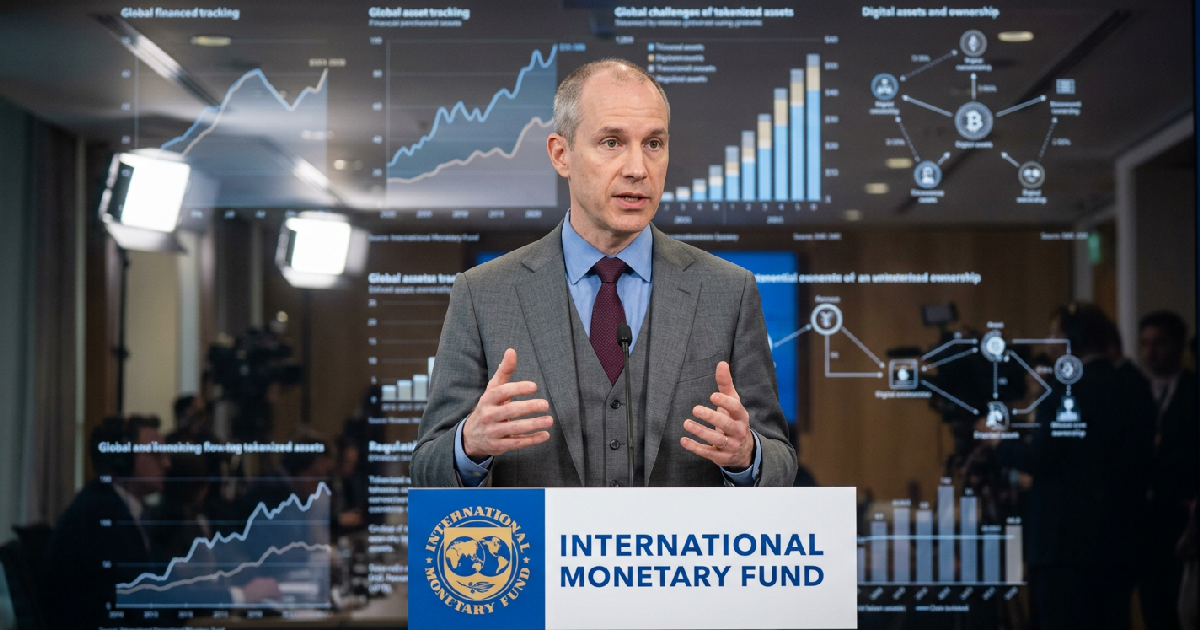
Tobias Adrian, the Financial Counsellor and Director of the IMF’s Monetary and Capital Markets Department, emphasized that tokenization is more than just a technological upgrade. He noted it fundamentally changes the structure of the financial system itself. Clear rules are essential for its future.
Adrian stressed that clear regulations on asset ownership, settlement finality, and jurisdictional boundaries are paramount. He stated that market participants must understand if tokenized records truly represent definitive ownership. They also need to know which jurisdiction’s law applies to their holdings.
“Without clarity, tokenization will remain fragmented and peripheral,” Adrian stated, highlighting the urgent need for a unified approach. This ambiguity means that a large part of the market operates in a legal grey zone. It makes it harder for traditional finance to fully embrace these innovations.
Fragmented market challenges tokenization growth
BeInCrypto’s “Real State of Tokenization in 2026” report provides empirical data supporting these concerns. The research tracked roughly $60 billion in tokenized real-world assets (RWAs) as of May 31, excluding stablecoins and repurchase agreements.
This substantial market isn’t a single, cohesive entity. Instead, it’s fractured across various regulatory regimes, geographical limitations, and investor classifications. Such fragmentation significantly hinders the broader adoption and utility of tokenized assets.
Limited retail access in the United States
A key finding from the BeInCrypto report reveals that about 97% of this $60 billion market’s value remains inaccessible to US retail investors. This segment also lacks retail-grade regulation, creating substantial barriers for individual participation.
Only $1.7 billion of tokenized assets is currently available to retail buyers in the United States. While accredited US investors can access a larger pool, roughly $8.3 billion, which includes Regulation D products, a significant portion still remains out of reach for everyday investors. This uneven access further compounds market disparity.
Synthetic exposure versus true ownership concerns
Another critical distinction highlighted by the report concerns the type of ownership conferred by these tokens. Assets typically fall into categories such as direct ownership, fund shares, or synthetic exposure. Synthetic structures offer price exposure without any actual claim on the underlying asset.
This issue is particularly evident in the equities sector. The report indicates that 59% of all stock tokens, by count, provide synthetic price exposure. This means holders track price movements but don’t possess actual shares, a vital difference for investor rights and recourse.
Addressing regulatory ambiguity for market integrity
Compounding the problems of access and ownership is widespread regulatory ambiguity. About 39% of the entire tokenized asset market operates without an identifiable regulatory framework. This significant gap is flagged as a major due diligence risk, particularly for institutional allocators evaluating investments.
The lack of clear rules forces investors to operate in an uncertain environment. Legal protections can be unclear, and enforcement mechanisms often remain undefined. Such conditions naturally deter mainstream adoption and make it difficult for traditional financial institutions to fully commit to tokenization.
A consistent global framework is also missing, which can create opportunities for regulatory arbitrage. Different jurisdictions may adopt varying stances, leading to an uneven playing field. This dynamic could impede the development of a secure and interoperable global tokenized ecosystem.
The path toward tokenization’s mainstream future
The warnings from the IMF and the specific data from BeInCrypto converge on one crucial conclusion: the future success of tokenization depends on establishing a clear, internationally recognized legal framework. Without it, tokenized assets risk remaining a niche phenomenon, unable to realize their full potential for efficiency and access in financial markets.
This isn’t merely a technical or legal problem; it poses a fundamental challenge to market integrity and investor confidence. The current patchwork of regulations and diverse approaches to digital property creates uncertainty that prevents broader participation.
For regulators and policymakers, the message is clear: piecemeal solutions won’t suffice. A concerted effort is needed to define who owns a tokenized asset, how its transfer is legally recognized, and which laws apply in cross-border transactions.
This would protect investors and pave the way for tokenization to become a central pillar of global finance, not just a sidelined innovation. Bitcoin exchange supply at multi-year lows also shows a shifting landscape that benefits from clear regulations.
The current state, where a significant portion of the market offers synthetic exposure without true ownership, and where most retail investors are excluded, undermines the very principles of transparency and accessibility that tokenization proponents often champion. Moving forward, the focus must shift towards establishing a truly equitable and legally sound foundation for these digital assets.