
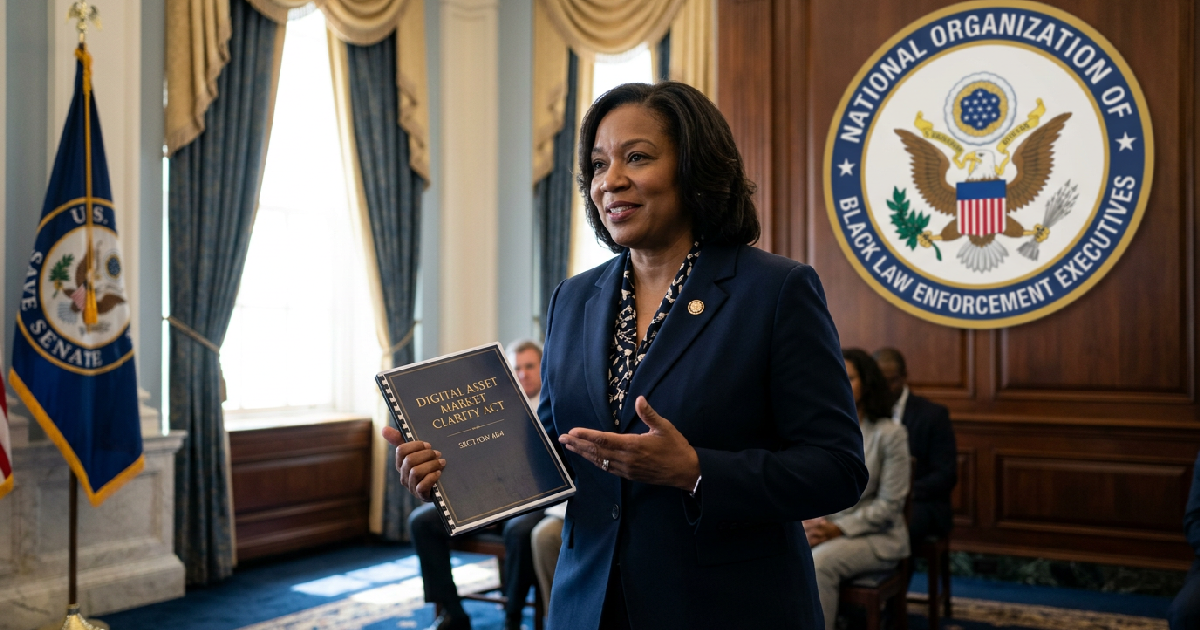

The National Organization of Black Law Enforcement Executives (NOBLE) officially endorsed the Digital Asset Market Clarity Act (CLARITY Act) on July 3, 2026. This pivotal move, detailed in a letter sent to Senate leaders John Thune and Chuck Schumer, marks NOBLE as the first major law enforcement group to publicly back the contentious cryptocurrency legislation.
The endorsement arrives at a critical juncture for the CLARITY Act, which has faced significant opposition over concerns about ethics and illicit finance provisions. Other prominent prosecutor and police organizations have voiced strong reservations, making NOBLE’s support a notable divergence in the ongoing debate.
NOBLE cites enhanced tools for digital asset oversight
NOBLE National President Reneé Hall, a former Dallas police chief, signed the letter outlining the organization’s support. Hall emphasised that the bill would equip law enforcement with new, vital capabilities while simultaneously preserving existing criminal enforcement authorities, a key point in its favour.
The group highlighted several specific provisions within the bill that they believe will bolster efforts to combat financial crime. These include expanded regulatory obligations across the burgeoning digital asset industry, alongside stronger forfeiture authorities. New compliance expectations are also part of the proposed framework, aiming to bring greater transparency.
Additionally, the legislation proposes increased oversight for crypto kiosks, which have increasingly drawn scrutiny as potential conduits for illicit financial activities. This focused attention on kiosks addresses a gap in current regulatory frameworks, aiming to close avenues for bad actors.
Key details
“Collectively, these provisions have the potential to improve investigative visibility and provide law enforcement with additional tools to combat financial crime,” NOBLE’s letter stated. This assertion directly counters arguments that the bill might weaken police powers.
Crucially, NOBLE underscored that the CLARITY Act would not modify any existing federal criminal authorities. This means established legal instruments used to prosecute offenses like money laundering, unlicensed money transmission, conspiracy, and sanctions violations would remain fully intact, ensuring no erosion of current enforcement capabilities. Law enforcement officials want to ensure they can maintain their grip on emerging financial technologies.
Their stance suggests a belief that the bill strikes a necessary balance. It introduces new regulatory measures without undermining the foundational legal framework already in place for tackling serious financial crimes. This clarity on enforcement powers is a significant aspect of NOBLE’s position.
A clear divergence from other police and prosecutor groups
NOBLE’s endorsement stands in stark contrast to the widespread reservations expressed by other influential law enforcement and prosecutor associations. Groups such as the National District Attorneys Association and the National Association of Assistant US Attorneys have previously raised significant concerns about the bill’s implications for tackling financial crime.
The International Association of Chiefs of Police and the National Sheriffs’ Association have also joined this chorus of opposition. Their primary objections have largely centered on Section 604 of the CLARITY Act, which they fear could create unintended loopholes or hinder effective prosecution of digital asset-related offenses. This section has become a focal point for critics.
A coalition of Catholic sisters has also urged Senate leadership to scrutinise the bill further, specifically highlighting what they perceive as a lack of robust provisions addressing illicit finance, anti-money laundering measures, and overall accountability within the digital asset sector. The broader legislative progress on the Digital Asset Market Clarity Act has certainly not been without its critics from various angles.
Key details
Section 604 of the Digital Asset Market Clarity Act has indeed emerged as the most debated component of the proposed legislation. Critics argue that its current framing could unintentionally complicate or even hinder law enforcement efforts to effectively track and prosecute financial crimes involving cryptocurrencies. They fear it might introduce ambiguities that bad actors could exploit.
The concerns raised by various prosecutor and police groups stem from a fundamental desire to ensure that any new regulatory framework does not inadvertently weaken existing criminal statutes or investigative capabilities. Their opposition reflects a caution against legislation that, while aiming for clarity, might inadvertently complicate the enforcement landscape. This balancing act is proving difficult.
Conversely, industry advocates continue to press for the bill’s passage. Organizations like Stand With Crypto urged their supporters this week to lobby their senators, emphasising the need for clear regulatory guidelines to foster innovation and legitimate growth in the digital asset space. This advocacy highlights the tension between differing stakeholder interests.
Path forward for digital asset legislation in Senate
The CLARITY Act faces a steep climb in the Senate, requiring 60 votes to pass. This means the bill will need bipartisan support, potentially necessitating seven Democrats to cross party lines to secure its passage. NOBLE’s endorsement could significantly influence this delicate political calculus, particularly for moderate senators.
The question remains whether a law enforcement endorsement, especially from a historically significant group like NOBLE, will soften resistance to Section 604. It could provide political cover for some lawmakers to support the bill, framing it as a measure that strengthens rather than weakens the fight against financial crime. This adds a new dimension to the debate.
But the broader challenge of regulating digital assets remains immense. Lawmakers are attempting to balance the rapid innovation of the crypto industry with the critical need for robust consumer protection, market integrity, and national security measures. The complexity of the technology itself makes crafting effective legislation particularly difficult.
Key details
NOBLE’s decision highlights the evolving understanding of digital assets within law enforcement circles. Historically, many authorities have viewed cryptocurrencies primarily through the lens of illicit activity. This endorsement, however, suggests a recognition of the need for a comprehensive framework that also enables legitimate use while providing clear tools for intervention.
For the crypto industry, any progress on the CLARITY Act represents a potential step towards regulatory certainty, which many businesses crave. A lack of clear rules has been a significant barrier to mainstream institutional adoption and investment. This also affects how different digital assets are perceived, impacting things like XRP speculative activity.
Ultimately, the debate around the CLARITY Act reflects a wider global effort to integrate digital assets into existing financial and legal systems. The differing opinions from various law enforcement groups underscore just how challenging it is to forge consensus on how best to achieve this balance. The coming weeks in the Senate will be crucial in determining the bill’s fate and its lasting impact.