
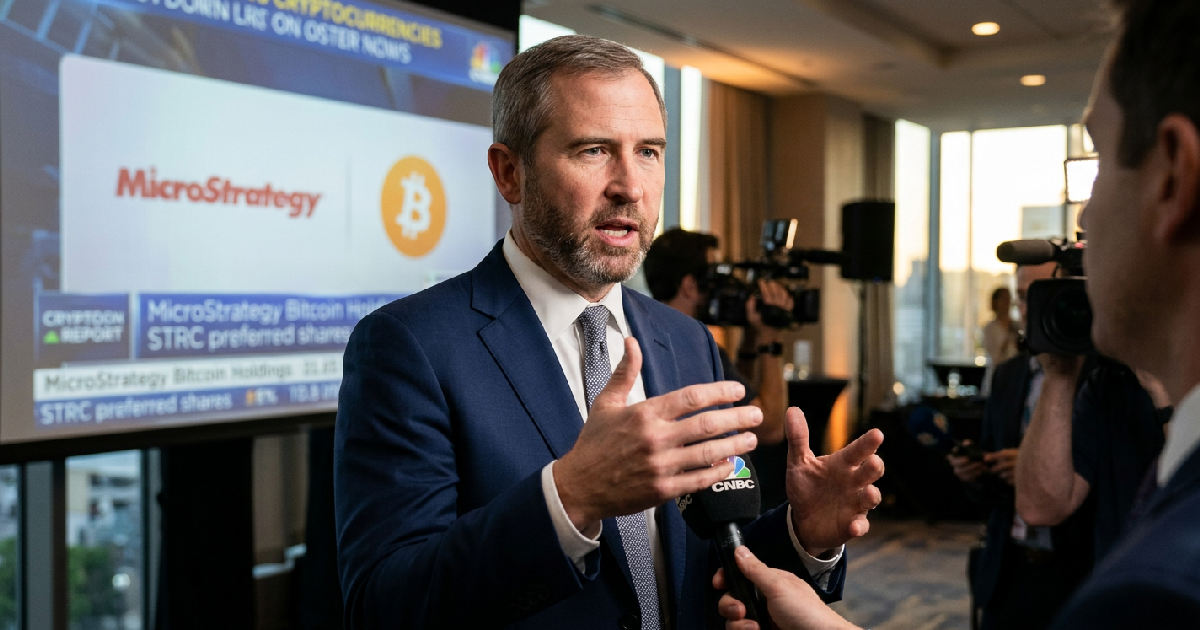

Ripple Labs, Inc. (Ripple) CEO Brad Garlinghouse publicly criticized the Bitcoin acquisition strategy utilized by MicroStrategy Chairman Michael Saylor during a CNBC interview on Friday, June 26, 2026. Suggesting that the aggressive use of leverage to stockpile digital assets is a form of “financial engineering,” Garlinghouse argued that such tactics fail to create long-term value and have negatively impacted the broader cryptocurrency market.
The critique comes at a precarious time for Michael Saylor’s company, MicroStrategy, as Bitcoin briefly dipped below the $60,000 threshold on Friday. The firm, which holds more than 843,000 BTC, currently faces significant pressure as the aggregate unrealized losses on its treasury now exceed $14 billion.
Brad Garlinghouse warns against leverage-led Bitcoin accumulation
This drawdown is calculated against an average purchase cost of roughly $75,646 per coin, highlighting the inherent risks in a corporate model built heavily on debt-fueled asset accumulation.
During his appearance on CNBC, CEO Brad Garlinghouse did not mince words regarding the performance of MicroStrategy and its controversial treasury management. The executive argued that the industry needs to move beyond “balance-sheet tactics” and focus on the practical application of blockchain technology. He specifically targeted the practice of borrowing to increase exposure to a single asset class, a move that characterizes Michael Saylor’s tenure.
Garlinghouse stated that “financial engineering does not drive long-term value” and posited that the value of any digital asset must ultimately be driven by utility. By prioritizing leverage over network growth or product development, Garlinghouse believes “Team Michael Saylor” has distracted from the core mission of the crypto industry.
Key details
The Ripple executive warned that when firms use leverage to buy volatile assets, the results can “compound negatively” during market downturns.
This debate reflects a deeper divide in the industry between those who view Bitcoin primarily as a reserve asset and others who argue for functional ecosystems. As XRP speculative activity returns to the spotlight, many investors are weighing whether utility-focused projects offer more stability than those built on corporate leverage.
Brad Garlinghouse’s comments suggest that the “Saylor model” may be reaching a breaking point as borrowing costs remain a factor for the company’s capital structure.
Pressure mounts on STRC preferred shares amid record lows
A central piece of Brad Garlinghouse’s argument was the performance of MicroStrategy’s STRC preferred shares, which he described as a “pretty damning indictment” of the company’s current structure. These shares, designed to raise cash for additional Bitcoin purchases, have recently hit a record low. As of late June 2026, market data indicates that these shares have traded at a discount to their par value.
The financial strain is visible in the firm’s dividend cushion. According to research, the projected coverage for STRC’s dividend payments has thinned from more than seven years of coverage to approximately 14 months. This rapid decline in the payout safety net has arrived alongside Bitcoin’s price volatility, which crypto market liquidations rise to meet when macro pressures intensify.
Brad Garlinghouse pointed to the discount in STRC shares as evidence that the market is beginning to price in the risks of Michael Saylor’s leverage. If Bitcoin remains suppressed, the cumulative nature of these dividend obligations could become a heavy anchor for the company’s balance sheet.
Garlinghouse reiterated that if a firm is “just trying to financial engineer and leverage and borrow more money to buy more bitcoin,” the method will not produce sustainable value.
Michael Saylor defends the strategy amid market volatility
Chairman Michael Saylor remains steadfast despite the vocal criticism from Ripple’s leadership and the negative price action in the markets. Responding to the market turbulence, Saylor posted on X (formerly Twitter) stating that “volatility tests every capital structure.” This philosophical stance follows his earlier promotion of the STRC instrument as “digital credit” for investors who believe in Bitcoin.
Michael Saylor has previously maintained that his goal is to make the STRC shares the “best credit instrument in the world.” He argues that by locking in long-term capital to buy an asset with a fixed supply, he is protecting the firm’s purchasing power.
However, with Bitcoin trading near $59,000 versus the firm’s average purchase cost of approximately $75,646, the treasury remains deep in the red.
The total unrealized losses exceeding $14 billion complicate the narrative of Bitcoin as a safe-haven asset for corporate treasuries. While David Schwartz joins the XRPL Foundation to foster utility-driven growth, MicroStrategy continues to double down on its accumulation model. The ability of the firm to navigate its cumulative dividend obligations will be a key indicator for investors watching the sustainability of this debt-heavy approach.
Broader implications for the cryptocurrency market structure
The public clash between Brad Garlinghouse and Michael Saylor highlights the growing pains of a maturing asset class. While the MicroStrategy model was once hailed for transforming a legacy software company into a high-growth Bitcoin proxy, it is now being scrutinized for its potential to create market pressure. Garlinghouse argues that legitimate growth should come from real-world application pipelines rather than balance-sheet tactics.
MicroStrategy’s common stock (MSTR) closed near $82 on Friday, reflecting the current market sentiment toward the firm’s exposure. Should the STRC preferred shares continue to trade at a deep discount, it may prompt a reevaluation of the leverage used to fuel Bitcoin demand.
The coming weeks will be critical as the market monitors whether Bitcoin can recover toward the firm’s average purchase price of roughly $75,646 or if debt restructuring becomes a necessary consideration.