
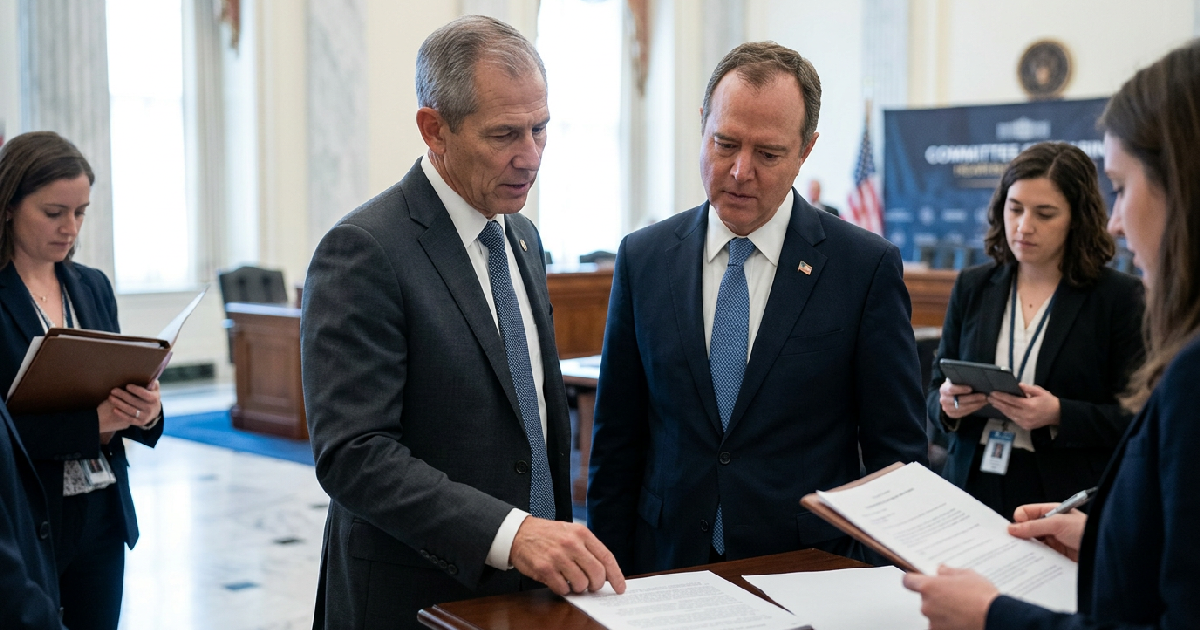

United States Senators John Curtis and Adam Schiff have issued a formal demand for the Commodity Futures Trading Commission (CFTC) to launch a full-scale investigation into the prediction market platform Polymarket.
The bipartisan request follows a series of troubling reports alleging that the crypto-based betting site engaged in deceptive marketing practices, specifically paying social media influencers to stage fake winning bets on dummy versions of the platform.
Bipartisan concerns over deceptive influencer campaigns
The joint letter, addressed to CFTC Chair Michael Selig on Thursday, June 25, 2026, expresses deep concern over the federal agency’s oversight capabilities and its current enforcement of existing laws.
Senators John Curtis, a Republican from Utah, and Adam Schiff, a Democrat from California, argued that the agency appears ill-equipped to serve as a national gambling regulator as prediction markets like Polymarket grow into multibillion-dollar enterprises.
The lawmakers are specifically targeting allegations that dozens of creators were paid to film themselves “winning” high-stakes wagers that were never actually executed on the live market.
The push for an federal inquiry stems from an investigative report by the Wall Street Journal, which analyzed 1,105 videos produced by 10 different social media creators between December 2025 and mid-May 2026. The findings were stark, suggesting a coordinated effort to manufacture viral “wins” to lure in new users.
According to the investigation, roughly 70% of these videos featured bets that were entirely fabricated, totaling approximately $1.9 million in fictitious wagers.
In many instances, these creators reportedly used “dummy sites” or replicas of the Polymarket interface to simulate successful trades. This news surfaces as the market shifts toward transparency, making the allegations of stage-managed betting particularly damaging to the platform’s reputation.
Senators John Curtis and Adam Schiff highlighted that such “deceptive campaigns” could bypass traditional consumer protections and violate federal standards for fair and transparent trading environments.
Key details
Polymarket has responded to the allegations by stating it is “committed to maintaining accurate, fair, and transparent markets.” A spokesperson for the platform confirmed that a comprehensive audit of all promotional content is currently underway. The company stated it is evaluating ways to improve audience engagement while ensuring compliance with regulatory and legal disclosure requirements.
However, the admission of a need for an audit has done little to satisfy critics in Washington D.C.
Regulatory tension between federal and state levels
The letter from Senators John Curtis and Adam Schiff also touches on a larger power struggle between the CFTC and state regulators. As prediction markets increasingly offer bets on everything from election results to sporting events, the question of who holds the authority to “protect the public” has become a flashpoint.
Many states argue that these platforms are essentially gambling hubs and should fall under the jurisdiction of state and tribal gaming commissions.
The senators asked Chair Michael Selig specifically if the CFTC would “commit to preserving state and tribal authority” over casino-style and sports betting products. They warned that the Commission should not allow companies to use federal oversight as a “shield” to avoid stricter state gambling laws.
This jurisdictional battle reflects the legislative progress and analysis often seen in Washington as new financial technologies challenge old legal frameworks.
Challenges in staffing and agency resources
Another point of contention raised by the bipartisan duo is whether the CFTC actually has the “teeth” or the personnel to monitor these fast-moving digital platforms. During recent committee hearings, some lawmakers have pointed out that the agency is stretched thin, particularly as it attempts to manage the influx of digital asset regulation alongside traditional commodities.
If the agency cannot verify the legitimacy of promotional clips or track the flow of funds behind social media bets, its role as a watchdog is effectively neutralized. The senators’ letter emphasizes that if the Commission lacks the resources to be a “federal gambling regulator,” it must be transparent about its limitations rather than offering a veneer of oversight that platforms can exploit for legitimacy.
History of legal friction and federal scrutiny
This is hardly Polymarket’s first brush with federal authorities. The company, which has seen its valuation soar to a reported $15 billion, settled with the CFTC back in 2022. That settlement related to the offering of “event-based binary options” without proper registration.
At the time, the platform paid $1.4 million in fines and agreed to block users located within the United States. Despite those blocks, reports of U.S.-based users accessing the site via virtual private networks (VPNs) have persisted.
In late 2024, the legal pressure intensified when the Federal Bureau of Investigation (FBI) seized the phone and electronic devices of Polymarket CEO Shayne Coplan.
This action was reportedly part of a wider Department of Justice (DOJ) investigation into whether the platform continued to allow Americans to trade on its markets despite its prior agreement to exclude them. The ongoing nature of these investigations suggests that federal agencies have been quietly building a case against the platform for years.
Key details
The intersection of crypto and gambling has often created volatile outcomes for investors and users alike. Similar to how crypto liquidations rise alongside macro shifts, the regulatory crackdown on non-compliant platforms often causes sudden shifts in market liquidity and user trust. For Polymarket, the threat of a renewed CFTC investigation supported by a bipartisan congressional front represents a significant escalation in its legal challenges.
Insider trading and national security concerns
Beyond the “fake bet” allegations, Washington is also focusing on potential insider trading within prediction markets. A recent case involving active-duty U.S. Army Soldier Gannon Ken Van Dyke has brought these fears to the forefront.
Gannon Ken Van Dyke was arrested by the DOJ for allegedly using non-public, confidential information to place a bet on the removal of Venezuelan President Nicolás Maduro. That bet reportedly netted over $400,000.
This incident has provided critics with ammunition to argue that prediction markets are not just recreational platforms but potential venues for financial crimes that could impact national security. When users can profit from “inside information” regarding geopolitical events, the integrity of the market is called into question.
Senators John Curtis and Adam Schiff indicated that the CFTC must be able to prevent these platforms from becoming a playground for bad actors utilizing sensitive intelligence for personal gain.
The potential impact on the prediction market industry
The result of a formal CFTC investigation could set a massive precedent for the entire prediction market sector. Platforms like Polymarket have long argued they provide a valuable “wisdom of the crowds” service, offering more accurate forecasts than traditional polling or expert analysis. However, if those markets are found to be manipulated by fake influencer bets or insider trading, the data they produce becomes unreliable.
For the broader crypto industry, this investigation serves as another reminder that decentralized or crypto-native platforms are not immune to consumer protection laws. If the CFTC decides to impose stricter rules on how these sites promote themselves, we may see a significant shift in how “crypto influencers” operate.
The days of unverified, high-stakes winning videos may be coming to an end as regulators demand the same transparency required of traditional brokerage firms and sportsbooks.
As of late June 2026, the CFTC has neither confirmed nor denied the existence of a new investigation, though sources familiar with the matter suggest that internal inquiries are already active.
Future developments will likely depend on the platform’s audit results and whether the agency feels it has the political and financial backing to take on a $15 billion industry leader. For now, the pressure from Capitol Hill remains the most immediate threat to Polymarket’s business model.