
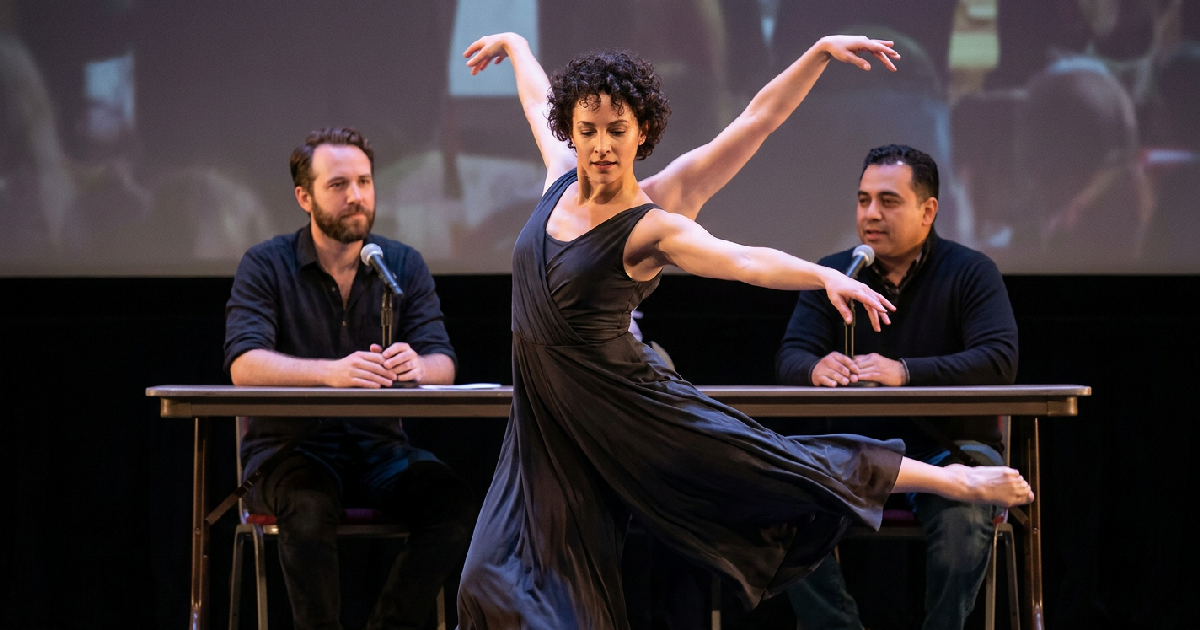

Emmy-winning film critic Manny de la Rosa, often known as Manny the Movie Guy, hosted an intimate and revealing conversation with choreographer Jenn Freeman and director Alexander Hammer to discuss their new Netflix documentary, Room to Move. The 110-minute film follows the life of Jenn Freeman, an acclaimed dancer and educator who received an autism spectrum disorder (ASD) diagnosis at the age of 33. The documentary explores how this late-in-life discovery reshaped her identity and her creative approach to professional dance.
Room to Move debuted on Netflix on May 27, following a world premiere at the 2025 Tribeca Film Festival. During the interview, which is available on Manny de la Rosa’s personal platform, the creators detailed the narrative shift that occurs when a person reframes their entire history through the lens of neurodivergence. The story focuses on Jenn Freeman moving from her home in New York City and her subsequent efforts to create her first full-length dance show, titled Is it Thursday Yet?
The film posits that dance was a fundamental way for Jenn Freeman to process her environment long before she had a clinical diagnosis. “I’ve always understood the world around me, and my place in it, making dance,” she says in the film. Her journey toward seeking a diagnosis was sparked by watching the docuseries Expecting Amy, where Chris Fischer, the husband of comedian Amy Schumer, received his own ASD diagnosis. This recognition prompted Jenn Freeman to explore the shared patterns in her own life.
The struggle of navigating professional social expectations
A major theme highlighted in the interview is the friction between autistic traits and the demands of a high-pressure career. Jenn Freeman explained that while she used dance to therapize herself throughout childhood, the “talent and drive” she possessed became secondary to the social demands of the industry. She noted that her ability to network and build relationships became a significant struggle as she tried to build a sustainable professional life.
com/intesa-sanpaolo-bitcoin-etf-exposure-q1-2026-report/”>investor sentiment shift toward clarity and transparency is often mirrored in how individuals reassess their own value when new data about their identity emerges.
The documentary also captures the sensory and physical experiences that defined her youth, such as a distinct childhood love for the feeling of being dizzy. Jenn Freeman explained that these sensations were helpful in ways she is just now understanding. This realization highlights how late diagnoses can rewrite a person’s history, much like how market data informs sentiment when underlying fundamentals are finally revealed.
Alexander Hammer’s direction focuses on the difficulty Jenn Freeman faced when trying to express the complexity of her internal world. She admitted that “nothing” was a common response when as a dancer she felt it was impossible to articulate her experiences through speech. The film also tackles her evolving relationship with the word “normal,” which she now describes as “scary” and “not very useful” at this stage of her life.
Executive support for diverse neurodivergent narratives
The project reached a global audience on Netflix thanks in part to executive producers Amy Schumer and Sarah Sarandos. Their involvement emphasizes a broader media push toward authentic representations of neurodiversity. By documenting the rehearsals and the vulnerability of the creative process, Alexander Hammer shows that neurodivergent individuals must often analyze legislative and social environments just to find a “normal” that works for them on their own terms.
Manny de la Rosa’s conversation with the filmmakers serves as a deep dive into the human element behind the production. Based in Palm Springs, the NBC Palm Springs reporter and Filipino Channel contributor often uses his platform to highlight stories that blend personal memoir with high-stakes performance. Rather than providing a standard review, de la Rosa explores the “why” behind the film’s creation and the personal stakes involved for Jenn Freeman.
The success of the stage show Is it Thursday Yet? provides a narrative anchor for the documentary, proving that the diagnostic process was not just about looking backward. It provided the necessary framework for Jenn Freeman to continue her career as a vital voice in the dance community. The documentary suggests that while clarity may arrive later in life, it provides a powerful foundation for a redesigned and more sustainable future.