
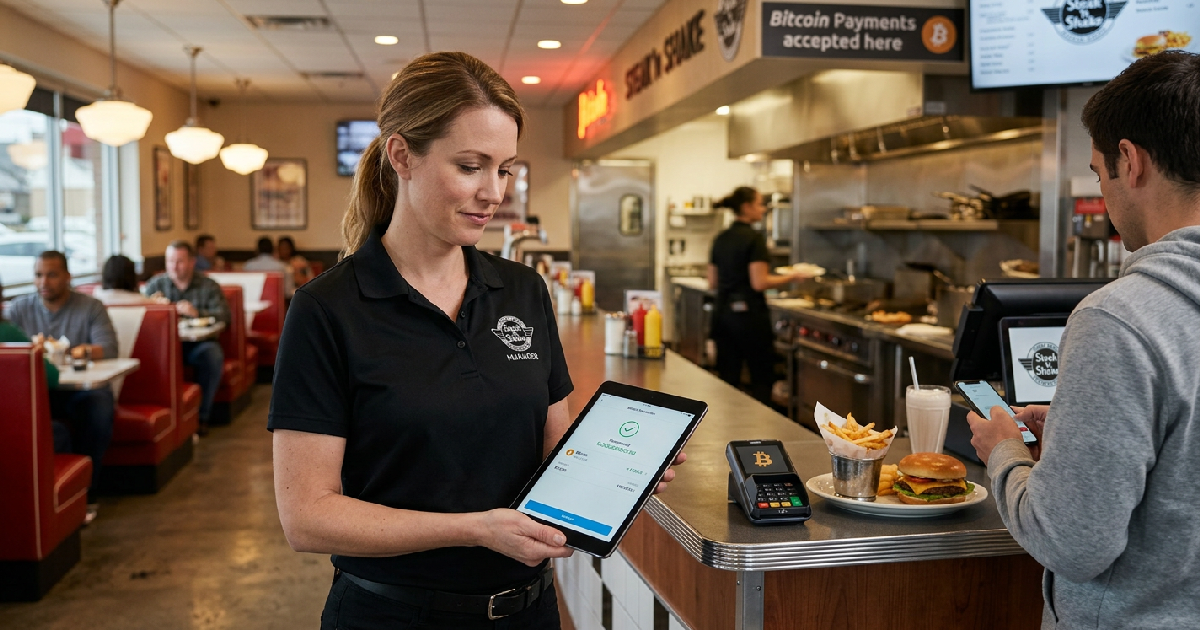

Corporate operators in 2026 are shifting their approach to digital assets, moving beyond simple speculation to treat Bitcoin as a stack of operational capabilities. This strategy, known as vertical integration, involves businesses owning multiple stages of their interaction with the protocol—ranging from payment acceptance to energy production—rather than relying on third-party vendors. By managing these stages internally, companies like Steak ‘n Shake and Strategy (formerly MicroStrategy) aim to lower costs and reduce dependencies on the legacy financial system.
The move mirrors classic industrial vertical integration, where a manufacturer might own its own raw material supply chain. In the context of Bitcoin, this involves four specific stages: accepting payments, holding reserves, producing new coins through mining, and building financial products. As Bitcoin exchange supply maintains multi-year lows, more corporations are choosing to keep these assets within their own operational ecosystems rather than on external platforms.
Lowering transaction costs through the accept stage
The first stage of integration is the “Accept” phase, where businesses take Bitcoin directly from customers, typically via the Lightning Network. While traditional credit card processing fees often range between 2.5% and 3.5% with settlements taking days, Lightning transactions settle in seconds and cost less than 0.1%. For merchants, this eliminates the risk of chargebacks and offers immediate finality of payment regardless of the customer’s location.
Executive Michael Boes reported that Steak ‘n Shake saves approximately 50% on processing fees when customers use Bitcoin compared to traditional credit cards. If adopted universally by its customer base, these savings would equate to roughly $6 million annually. The chain saw same-store sales rise 11% in Q2 2025, a figure that reached 15% in Q3. This phase is becoming the market default for many, as Square enabled Lightning payments for roughly 4 million eligible merchants in March 2026.
Building reserves and underwriting employee benefits
A business moves from simple adoption to true integration when it “wires” these different stages together. At Steak ‘n Shake, Bitcoin payments are not automatically converted back into fiat currency. Instead, they flow into a Strategic Bitcoin Reserve on the company’s balance sheet. This reserve underwrites a $0.21-per-hour Bitcoin bonus for hourly employees and helps fund a menu overhaul that includes grass-fed beef. This transition from Stage 1 (Accept) to Stage 2 (Hold) turns transaction savings into a treasury asset.
Other major entities are following similar reserve strategies. As of June 1, 2026, Strategy holds 843,706 BTC at an average cost of $75,500 per coin, representing an aggregate position of $60.4 billion. Meanwhile, Japanese firm Metaplanet has adopted a similar strategy to provide yen-denominated exposure. While Bitcoin price analysis remains a focus for traders, these corporations treat the asset as a long-term unit of account for corporate treasuries.
Production and infrastructure as a revenue line
The “Produce” stage involves businesses generating their own Bitcoin through mining. Stronghold Digital Mining, led by CEO Greg Beard, operates its own power plants to fuel its mining hardware. This allows for “energy arbitrage,” where the company can either mine Bitcoin or sell power back to the grid when prices are high. Similarly, Cango Inc. recently acquired a 50MW facility in Georgia for $19.5 million to pursue both self-mining and third-party hosting.
In early 2026, several public mining firms, including Core Scientific and Cipher, began reallocating their power capacity. These companies have pivoted some infrastructure toward high-performance computing and Artificial Intelligence (AI) to diversify revenue. This highlights the flexibility of the production stage, as industrial-scale data centers can shift between securing the Bitcoin network and providing cloud services based on market demand.
The final stage, “Build,” sees companies like Blockstream creating infrastructure for others. Blockstream manages the Liquid Network and Core Lightning to offer tools for wealth management and borrowing. Despite these advancements, a Deloitte survey found that 89% of businesses still view the complexity of integration as a significant barrier. Implementation into existing financial infrastructure remains the primary hurdle for widespread corporate adoption.
Navigating volatility and regulatory challenges
While the structural advantages of vertical integration are measurable, operational risks persist. Roughly 79% of business owners express concern over market volatility when handling payments. As of June 1, 2026, the price of Bitcoin sits at approximately €61,515, reflecting a monthly decrease of 8.00% against the Euro. These fluctuations can impact the valuation of treasury reserves, even if the underlying transaction costs remain low.
Additionally, businesses must navigate rising operational costs and complex regulatory landscapes as they expand their mining or payment infrastructure. For those in the “Produce” stage, energy costs now constitute 60-70% of total expenses. Despite these pressures, the global hashrate has reached over 900 EH/s, indicating that the network remains highly competitive. Organizations that successfully bridge the gap between acceptance and production are positioning themselves as their own financial hubs, independent of traditional banking delays.