
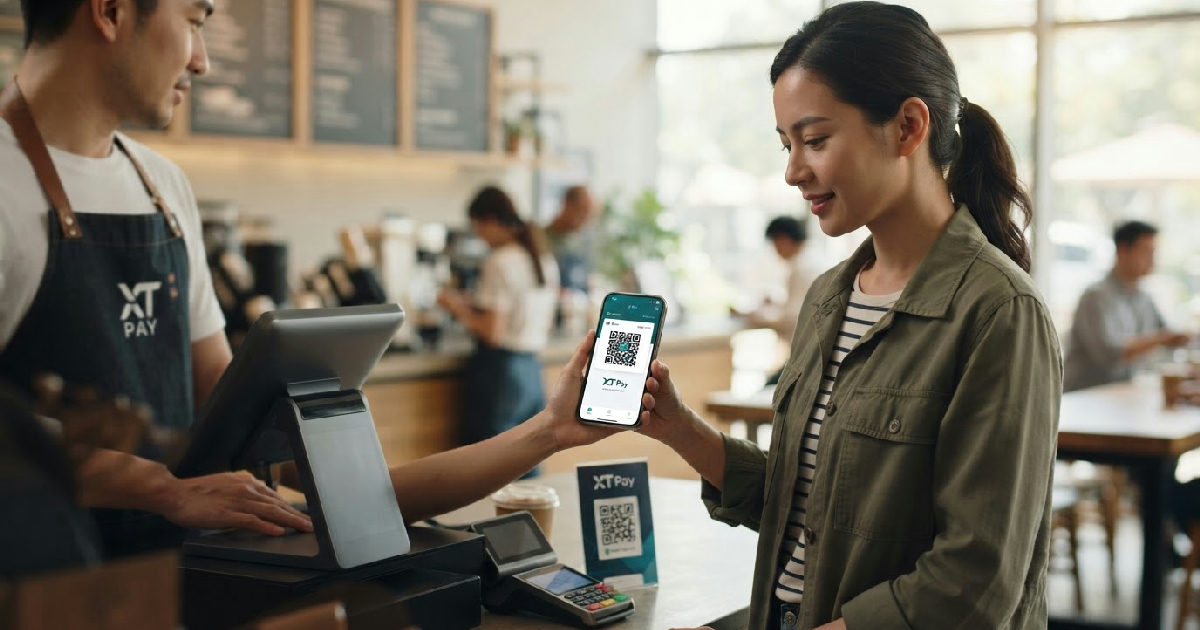

XT Pay, a new offering from XT Exchange, is directly addressing a key hurdle in the mainstream adoption of stablecoins: making them spendable at the everyday checkout.
Launched in September 2026, the service aims to simplify the complex process customers often face when trying to use their Tether (USDT) balances for retail purchases, connecting digital assets to local QR payment networks. XT Pay tackles this challenge by integrating stablecoins into existing QR payment infrastructures.
This initiative targets what industry insiders often refer to as the “last mile” of stablecoin adoption. While consumers might hold digital dollar equivalents like USDT, converting them into a usable form for a grocery run or coffee purchase typically involves several cumbersome steps, effectively preventing their use in casual transactions.
How XT Pay tackles stablecoin payments
The core problem XT Pay seeks to resolve stems from the disconnect between a customer’s cryptocurrency holdings and a merchant’s existing payment infrastructure. Many shops accept QR payments, but a customer’s USDT sitting in an exchange account traditionally requires selling the stablecoin, withdrawing local currency, and then moving funds to another payment application.
XT Pay streamlines this by allowing users to fund purchases directly from USDT held in an XT Spot account via the XT App. A designated third-party provider then processes the local QR transaction and settles with the merchant in local currency. This separation means businesses can accept payments funded by USDT without needing to manage or hold stablecoins themselves.
“Every extra step between holding value and using it gives a customer another reason to pay a different way,” explained Arman Achmed, the Chief Operating Officer of XT Exchange. He emphasized that for exchanges, the role now extends beyond merely making an asset available; it involves ensuring the account remains useful for everyday transactions.
The solution aims to integrate stablecoin payments into existing consumer and merchant habits. But adoption isn’t just about technical bridges. Users will weigh conversion costs, payment clarity, and service availability at their frequented locations. A seamless first experience and consistent reliability are critical for encouraging repeated use.
The broader push for merchant crypto acceptance
XT Pay’s launch comes amid a growing industry-wide effort to facilitate stablecoin corporate payments and merchant adoption. Currently, only about 6% of U.S. merchants directly accept stablecoins at the point of sale, a figure recorded as of June 18, 2026. This low rate is less a technological barrier and more a coordination challenge involving point-of-sale systems, acquirers, and banks.
However, the infrastructure is evolving rapidly. Major financial players like Mastercard and Visa have announced their own stablecoin settlement networks. Stripe, a prominent payment processor, has re-enabled crypto payments and introduced stablecoin payout rails, demonstrating a clear commitment to integrating digital assets into traditional commerce.
PayPal’s proprietary stablecoin, PYUSD, is already accepted by over 35 million merchants through its existing payment network, illustrating the potential for widespread integration when leveraging established ecosystems. These developments highlight a significant shift towards making stablecoins a viable option for everyday transactions.
Businesses are increasingly integrating stablecoins into their operations not just for retail payments but also for financial efficiency. Benefits include faster settlements, often completed in minutes rather than days, and significantly reduced transaction costs, sometimes cutting traditional payment network fees by half. This is particularly appealing for global transactions.
Challenges and opportunities in the retail landscape
Despite the technological advancements and growing interest, significant hurdles remain for widespread stablecoin adoption in retail. Consumer demand for stablecoin payments in most contexts remains low, as reported in March 2026. Merchants also face upfront integration, compliance, and vendor costs that may not be justified without sufficient transaction volumes.
Operational complexities, such as the irreversibility of blockchain transactions, demand new refund workflows and clear customer policies. There are also heightened sanctions compliance risks due to the pseudonymous nature of some blockchain activities. Regulatory ambiguity further complicates matters, with 73% of businesses citing it as their top concern as of March 13, 2026.
Nonetheless, the addressable market is vast. Annual U.S. retail payment volume alone stands at $27 trillion. Stablecoin transaction volumes have shown robust growth, reaching $450 billion per month in 2024 and further climbing to $710 billion monthly by March 2025, according to new data from Visa. This still represents a fraction of Visa’s $1 trillion monthly processing volume, but the trajectory is clear.
The number of unique stablecoin addresses has seen 50% year-over-year growth, now reaching 35 million. Projections suggest daily stablecoin transaction volume could hit $250 billion by 2028. This indicates a strong underlying user base and increasing activity that platforms like XT Pay aim to capitalize on.
Acquisitions in the space underscore this trend. Mastercard announced in March 2026 its definitive agreement to acquire BVNK, an enterprise stablecoin payments platform processing an annualized volume of $30 billion, for up to $1.8 billion. This move, pending regulatory approval, signals traditional finance’s deepening commitment to digital asset integration.
The Guiding and Establishing National Innovation for U.S. Stablecoins Act (GENIUS Act), expected to go into effect by 2027, aims to provide much-needed regulatory clarity by addressing reserve and redemption requirements. Such legislative frameworks are crucial for building trust and reducing uncertainty for businesses and consumers alike.
The path to stablecoins as routine payments
The ultimate goal for stablecoin providers and exchanges is to make digital dollar payments as routine as swiping a credit card or scanning a traditional QR code. Achieving this involves not only technological innovation but also a concerted effort to educate both merchants and consumers, ensuring ease of use and transparency in transactions.
User experience remains paramount. Low conversion costs, clear pricing, and reliable service are key factors that will drive repeated usage. A successful first stablecoin purchase can build confidence, but sustained adoption depends on the service seamlessly fitting into daily routines without added friction.
For platforms like XT Exchange, enabling payments expands their utility beyond just trading. It transforms them into platforms that support everyday economic activity, cementing stablecoins as a practical medium of exchange rather than just a speculative asset. As Arman Achmed noted, stablecoin adoption truly gains ground when it serves both customer and merchant well enough to become an ordinary habit.
The market is poised for significant growth, with nearly three-quarters (75%) of surveyed consumers indicating they would try stablecoins if offered. Overcoming existing barriers, particularly regulatory uncertainty and operational integration challenges, will be vital in unlocking the full potential of stablecoins for everyday retail use. The “last mile” may be the hardest, but companies are clearly pushing to close that gap.