
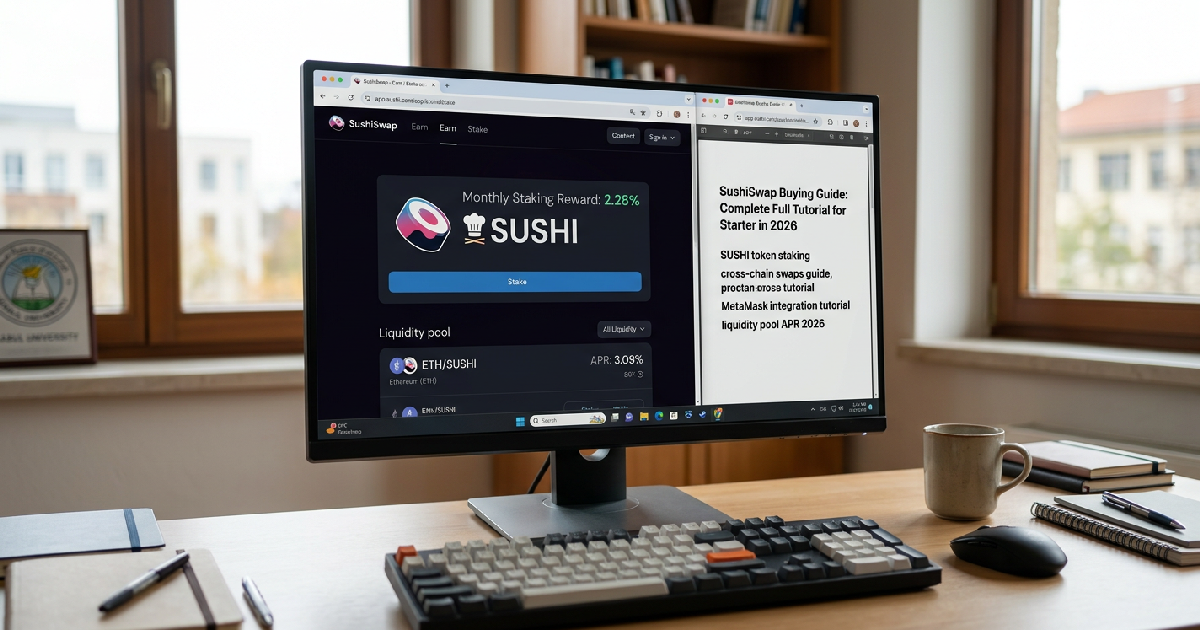

The SushiSwap Buying Guide: Complete Full Tutorial for Starter in 2026 has emerged as a key resource for individuals entering the decentralized finance (DeFi) space. This comprehensive framework provides a step-by-step roadmap for utilizing the SushiSwap (SUSHI) decentralized exchange (DEX), focusing on essential operations such as cross-chain swapping and automated investment strategies.
Despite metadata suggestions in some indexers, there is no verifiable connection between Kabul University and this guide, with the university’s official records showing no history of cryptocurrency publications.
Key trading features of the SushiSwap platform
The availability of such tutorials comes as the Ethereum network outlook remains a central focus for participants managing digital assets. The 2026 guide addresses significant barriers to entry by detailing MetaMask integration and the technical nuances of network switching across various blockchain layers. By simplifying complex protocols, these educational tools aim to move users toward more secure, non-custodial trading environments.
Modern decentralized exchanges have evolved beyond simple token swaps, now offering sophisticated tools that mirror centralized finance. The 2026 tutorial highlights the use of limit orders, which allow traders to program orders to execute at specific prices with a duration of up to one year.
This shift toward advanced automation is occurring as the bitcoin exchange supply sits at multi-year lows, indicating a broader trend of investors moving assets into private, decentralized wallets.
Key details
Another prominent feature detailed in the tutorial is Dollar-Cost Averaging (DCA). This functionality allows users to configure recurrent purchases of specific tokens, automating a disciplined investment strategy directly on-chain. For beginners, the guide explains that these tools require a connected Web3 wallet to manage order history, view balances, and track linked tokens across different networks, including Ethereum and others.
Staking and liquidity pool mechanics for starters
The “SushiBar” remains a primary entry point for those looking to engage in staking within the ecosystem. By staking the native SUSHI token, users can earn rewards, with the guide noting a monthly staking percentage of approximately 2.28%. This mechanism allows participants to see their assets grow through protocol fees rather than keeping them static in a wallet.
Liquidity provision offers another path for users to earn a return on their holdings. By adding pairs like USDC and Ethereum to a liquidity pool, users earn a fee on transactions—typically around 0.3%—plus an additional Annual Percentage Rate (APR). In some Ethereum network pools, this APR can reach 3.09%, though the tutorial reminds users to monitor their positions to understand the risks of price divergence.
Cross-chain navigation and bridge protocols
As the DeFi ecosystem expands across multiple chains, the ability to move assets between networks has become essential. The SushiSwap guide provides a meticulous breakdown of bridging assets to destinations like the Core Chain, Arbitrum, and BNB Chain. This process involves using interfaces like the Core Bridge, where users must approve the protocol to spend their tokens before a transfer is finalized.
Safety is a recurring theme in these 2026 educational resources. Because the sector attracts bad actors, users are urged to confirm contract addresses and avoid fraudulent recovery schemes. This caution is particularly relevant as THORChain warned users regarding fraudulent schemes that often proliferate following technical exploits or market volatility.
Proper education through official Academy resources is presented as the first line of defense against such threats.
Official educational resources and technical tutorials
For those requiring deeper technical knowledge, the SushiSwap Academy serves as the official repository for product explainers. The Academy categorizes content for Beginners, Advanced Users, and Technical Users, covering topics from removing assets via block explorers to managing “Smart Pools.” These resources are designed to help users claim accrued trading fees and adjust price ranges for concentrated liquidity.
The instructional methodology focuses on user autonomy and granular control of decentralized assets. Future updates are expected to further simplify bridging and yield-generating options, making the DEX experience more accessible to retail participants.
For the starter in 2026, the underlying message of these guides is clear: while the tools for financial sovereignty are more robust than ever, the responsibility for security and technical execution rests with the individual user.