
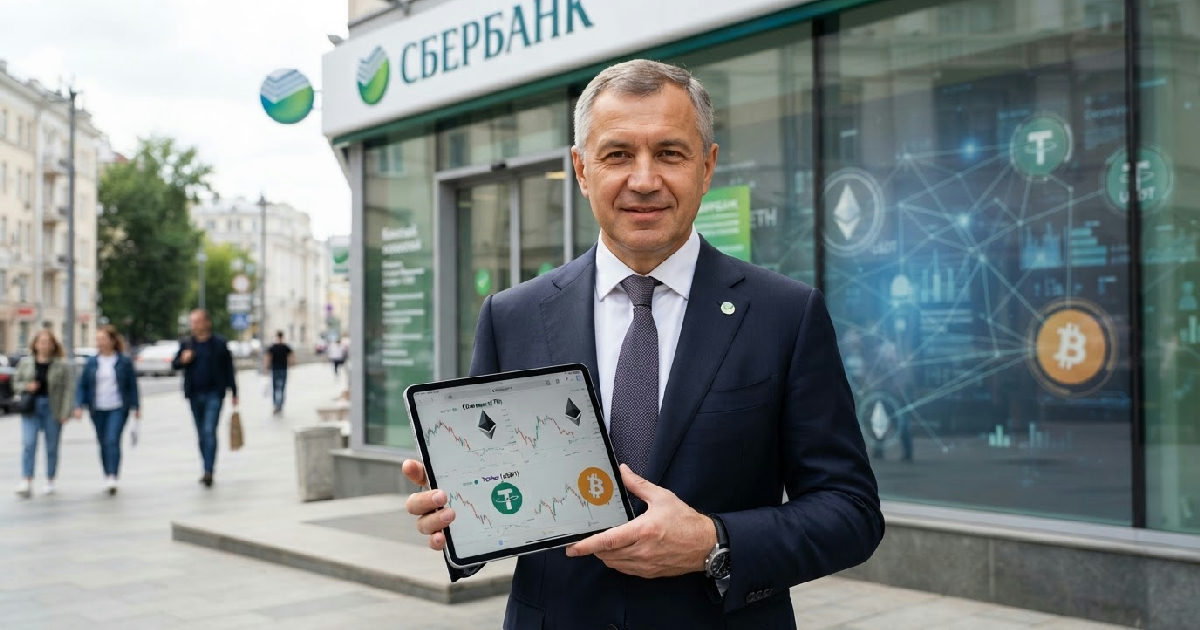

Sberbank, Russia’s dominant state-backed lender, is preparing to significantly broaden its cryptocurrency-backed lending services. The bank intends to accept Ethereum (ETH) and Tether’s USDT stablecoin as collateral for loans, expanding beyond its existing Bitcoin (BTC) offerings. This move demonstrates how Sberbank expands crypto offerings to meet growing demand.
This strategic move, outlined by Deputy Chairman of Sberbank’s Management Board Anatoly Popov, hinges on critical regulatory approval from the Bank of Russia for the public circulation of these digital assets.
Why Sberbank expands crypto offerings
The initiative arrives as Russia’s comprehensive new digital asset framework, Federal Law No. 282-FZ, is set to take effect on September 1, 2026. This legislation aims to establish a regulated market for digital currencies within the country, creating a clearer operational landscape for institutions like Sberbank. The bank’s expansion is a direct response to this evolving regulatory environment.
Sberbank’s pivot toward a more expansive crypto offering underscores its ambition to be a central player in Russia’s emerging digital economy. The bank already completed a pilot Bitcoin-backed loan in December 2025 with industrial mining firm Intelion Data. This successful trial laid the groundwork for the broader collateral options now under consideration.
Beyond lending, Sberbank is actively developing a suite of digital asset services. These include robust custody infrastructure, dedicated crypto wallet services, and a digital depository, with a target launch for the depository by December 1, 2026. This integrated approach positions Sberbank as a key institutional gateway as Russia formalizes its stance on digital currencies.
The growth in crypto card spending globally, fueled by stablecoins, shows the potential for wider adoption. This trend highlights the increasing integration of digital assets into everyday financial transactions.
Regulatory Hurdles and Market Impact
The acceptance of Ethereum and USDT as loan collateral is contingent upon explicit authorization from the Bank of Russia. This central bank plays a crucial role in determining which cryptocurrencies can circulate publicly and be traded on regulated exchanges. Its criteria include market capitalization, average daily volume, and a minimum of five years of price history on international platforms.
Anatoly Popov stated, “We plan to accept not only Bitcoin but also Ethereum and the stablecoin Tether as collateral.” He clarified that this broader offering would commence only “after the Central Bank, of course, [authorizes their public circulation].” This regulatory step remains vital for mainstream institutional adoption.
Driving Corporate Liquidity with Crypto Collateral
The expansion to Ethereum and USDT collateral offers significant advantages for corporate clients holding these digital assets. It allows them to secure liquidity without being forced to sell their holdings, potentially avoiding market volatility or unfavorable selling conditions. This mechanism provides a new avenue for capital access within the Russian financial system.
For businesses engaged in crypto mining or investment, this flexibility is paramount. Sberbank, which controls approximately one-third of Russia’s banking assets, is leveraging its scale to provide these services. This institutional backing could normalize crypto-backed financing for a wider range of Russian enterprises.
The Ethereum stablecoin market has recently seen considerable activity. This trend highlights the demand for such digital assets within evolving financial ecosystems.
Russia’s Evolving Digital Asset Landscape
President Vladimir Putin signed the underlying crypto law on August 4, 2026, marking a pivotal moment for digital asset regulation in Russia. The Central Bank followed on August 11, 2026, proposing that Bitcoin, Ethereum, and USDT be tradable on regulated exchanges. These steps highlight a concerted effort to integrate cryptocurrencies into the national financial framework.
SberCIB analysts project substantial growth in Russian crypto exchange trading, potentially reaching 3.5 to 4 trillion rubles in the first year post-legalization. This figure could further climb to 7.5 trillion rubles by 2029. The bank’s proactive stance in expanding its collateral offerings positions it to capture a significant share of this burgeoning market.
Institutional interest in digital assets, such as observed in Ethereum ETF inflows, continues to shape market dynamics. Such developments underscore the increasing legitimacy and adoption of cryptocurrencies in mainstream finance.