
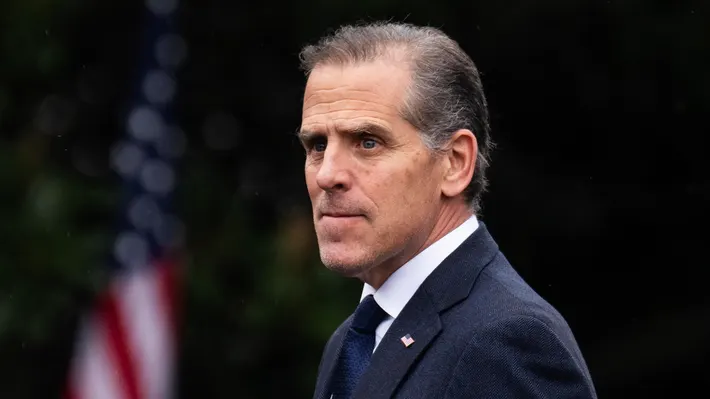

Hunter Biden is turning one of the most politically charged objects of the 2020 U.S. election into a cryptocurrency. The LAPTOP memecoin is set to launch Wednesday on Base, with a token model built around political predictions, targeted airdrops and a mix of token burns and charitable donations.
The idea is deliberately provocative. Hunter Biden has framed LAPTOP as an attempt to reclaim the symbolism of the laptop that became central to a sprawling political fight, writing on X: “They turned laptop into a weapon. I turned it into a token.”
The device was left at a Delaware computer repair shop in 2019 and later became the subject of intense scrutiny. Files recovered from it included emails about Biden’s foreign business dealings, financial records and personal material related to drug addiction.
The contents subsequently became political ammunition. Congressional Republicans investigated whether then-presidential candidate Joe Biden had been involved in his son’s business dealings, although the former president was not charged. Prosecutors later used material from the drive as evidence in Hunter Biden’s 2024 federal firearms trial, which ended in his conviction.
Now, the same object has been repackaged as a digital asset — complete with a billion-token supply and a set of rules that tie portions of that supply to real-world political outcomes.
LAPTOP memecoin has some very political tokenomics
Twenty percent of LAPTOP’s total supply is designated for the community through an airdrop. Ten percent will become available at the token generation event through a claim portal operated by the Phoenix Veritas Foundation, while the other 10% is reserved for a later distribution at the foundation’s discretion.
The first airdrop is split between two groups. Two percent of the total supply will go to people who lost money on Donald Trump’s TRUMP memecoin, while 8% is allocated to subscribers of Hunter Biden’s “Where’s Hunter?” Substack newsletter.
Another 30% of LAPTOP’s supply is connected to 30 public predictions. The scenarios include political events such as Trump being impeached during his term or Democrats taking control of the House or Senate in 2026. Many of the predictions are linked to markets on Polymarket.
Here is where the structure gets particularly unusual: the tokens assigned to those events can either disappear or be donated.
If a specified event happens, the corresponding portion of the supply is burned. If it does not happen, that allocation goes to charity instead. Hunter Biden also said that 50 million additional LAPTOP tokens will go to charity regardless of how those predictions turn out.
That makes the token’s mechanics less about a conventional pitch for future value and more about attaching financial infrastructure to a political narrative.
Biden was explicit about that distinction, writing: “You should not expect me or anyone else to make this token more valuable for you.” He added: “LAPTOP isn’t just about owning something, it’s about saying something.”
The remaining allocation fills out a more familiar memecoin structure. According to the project’s official disclosure, 30% goes to founders, including Hunter Biden, with a six-month lock-up followed by a 24-month vesting period. Another 10% is designated for liquidity, while 5% goes to the foundation treasury to fund ongoing operations.
The launch also comes with a clear political target. In his X post, Biden criticized Trump’s memecoin, arguing that it damaged trust and pointing to the roughly 1 million wallets that were left with an estimated $3.8 billion in collective losses.
LAPTOP memecoin is therefore arriving as something more complicated than another celebrity-backed token. Its branding is rooted in a specific political scandal, its distribution targets holders of a rival political memecoin, and part of its supply is tied to events that may or may not happen in Washington.
Whether that makes LAPTOP a political statement, a piece of internet performance art or simply another memecoin is likely to depend on what happens after launch. For now, its creators are making one thing unmistakable: the controversy surrounding the laptop is no longer confined to politics.
It has been turned into token mechanics.