
Close Menu
  • Markets
    • Spot Market
      • Market Overview
      • Top Gainers / Losers
      • Market Cap Charts
      • Reviews
    • Futures Market
      • Market Overview
      • Funding Rate
      • Liquidations
      • Long Short/Ratio
  • Metrics
    • Dashboard
    • Whale tracker
    • Market Heatmap
    • Funding Rates
  • News
    • Bitcoin
    • Ethereum
    • Altcoins
  • Prediction
  • Opinion
  • Calendar
  • Live Feed
What's Hot

Stefano Gogioso, Daniela Herrmann: quantum money eliminates need for consensus

July 31, 2026

Wall Street Isn’t Choosing Crypto’s Biggest Projects. It’s Choosing the Most Prepared Ones.

July 31, 2026

Sygnum Bank: Ethereum’s 43-day staking queue not a simple demand signal

July 31, 2026

Crypto Treasuries Are Entering the Stage Where Their Assets Need to Start Working

July 31, 2026

Project Agorá: Banks Have Realized They Don’t Need a Stablecoin to Bring Money Onchain

July 31, 2026

Circle secures New York trust charter for USDC, boosting regulatory oversight

July 31, 2026

RLUSD stablecoin gains traction in AI payments through Mastercard collaboration

July 31, 2026

Zcash Fixes Orchard Flaw, $926M Leverage Tests ZEC Rebound

July 31, 2026

KSNet and Solana Foundation Trial Solana Pay in South Korea

July 31, 2026

Ripple Gains MiCA Authorization; XRP Price Capped by Fed

July 31, 2026
Facebook X (Twitter) Instagram
Daily Crypto News
  • Markets
    • Spot Market
      • Market Overview
      • Top Gainers / Losers
      • Market Cap Charts
      • Reviews
    • Futures Market
      • Market Overview
      • Funding Rate
      • Liquidations
      • Long Short/Ratio
  • Metrics
    • Dashboard
    • Whale tracker
    • Market Heatmap
    • Funding Rates
  • News
    • Bitcoin
    • Ethereum
    • Altcoins
  • Prediction
  • Opinion
  • Calendar
  • Live Feed
Dashboard
Daily Crypto News
Home»Opinion»Japan Accelerates Stablecoin Push and Reinforces the Transformation of the Financial System
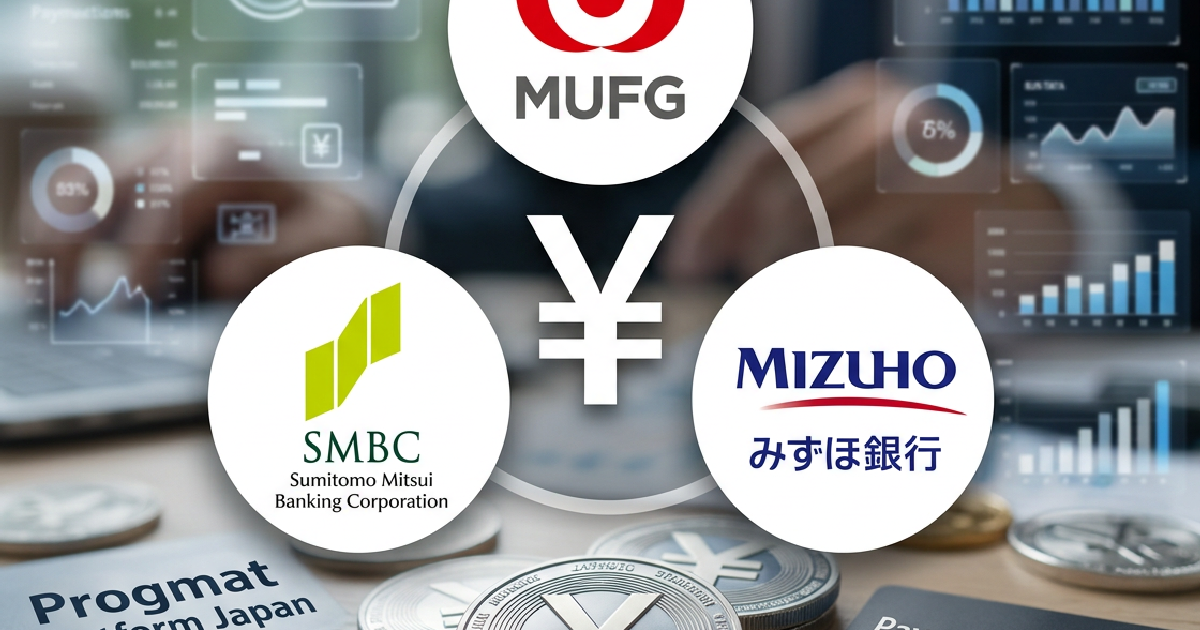
MUFG, SMBC, and Mizuho Bank target 2027 for joint yen stablecoin launch
Japan's three megabanks—MUFG, SMBC, and Mizuho—will debut a joint Japanese yen-pegged stablecoin by March 2027 to modernize corporate B2B payments.
Opinion

Japan Accelerates Stablecoin Push and Reinforces the Transformation of the Financial System

Diego AlmeidaBy Diego AlmeidaJune 10, 20263 Mins Read
Share
Facebook Twitter LinkedIn Pinterest Email

The stablecoin market has just received another clear signal that it is no longer a niche segment of the crypto industry.

Japan’s three largest financial groups have announced plans to jointly issue stablecoins by March 2027 in a project heavily supported by the country’s financial regulators.

The initiative involves Mitsubishi UFJ Financial Group, Sumitomo Mitsui Financial Group, and Mizuho Financial Group – institutions that collectively manage trillions of dollars in assets. Their goal is to build a blockchain-based infrastructure capable of modernizing payments, settlements, and cross-border transfers within Japan’s banking core.

This announcement comes as stablecoins solidify their role in the digital transformation of global finance. What was once viewed primarily as a utility tool for cryptocurrency traders is now capturing the serious attention of central banks, sovereign governments, and major payment processors worldwide.

Why Banks Are Entering the Stablecoin Market

For years, the traditional banking sector watched the growth of stablecoins like USDT and USDC from the sidelines. Today, many institutions view these digital assets as both an operational opportunity and a competitive threat.

Stablecoins offer structural advantages that are difficult to ignore: near-instant settlement, 24/7 availability, and significantly lower costs for international transactions. These features stand in sharp contrast to legacy traditional financial infrastructure, which still relies on fragmented processes and multiple intermediaries.

In Japan’s case, the megabanks intend to develop a model fully integrated into the country’s strictly regulated financial environment. The objective is not to immediately replace existing banking networks, but to leverage blockchain technology to optimize liquidity management and transfer efficiency.

This move mirrors a broader global trend. In Europe, banking consortiums are actively piloting similar tokenized fiat projects, while financial institutions in the United States continue to explore both stablecoins and tokenized deposits as part of the natural evolution of wholesale banking.

What This Means for the Future of Digital Money

The Japanese initiative reinforces a critical shift in market perception: the debate is no longer about whether blockchain will have a place in the financial system, but rather how that integration will take shape.

Over the coming years, multiple asset models are likely to coexist. Stablecoins issued by private tech companies will remain dominant across crypto exchanges, decentralized finance (DeFi), and borderless retail payments.

Concurrently, commercial banks will develop proprietary, institutional-grade versions designed to operate seamlessly within regulated frameworks.

The explicit backing of Japan’s largest banks demonstrates that the traditional financial sector has no intention of being left behind. Rather than an isolated experiment, this project is a strategic move in a global race to determine which infrastructure will power digital payments over the next decade.

For the crypto ecosystem, the announcement serves as a massive validation of blockchain technology. When the world’s largest financial groups begin shifting their settlement rails to distributed ledgers, the conversation moves definitively past experimental adoption and enters the structural evolution of global monetary systems.

Banking Infrastructure Digital Fiat Financial Regulation Japan Crypto MUFG Stablecoins Wholesale Tokenization
Share. Facebook Twitter Pinterest LinkedIn Tumblr Email

Related Posts

Stefano Gogioso, Daniela Herrmann: quantum money eliminates need for consensus

July 31, 2026

Wall Street Isn’t Choosing Crypto’s Biggest Projects. It’s Choosing the Most Prepared Ones.

July 31, 2026

Crypto Treasuries Are Entering the Stage Where Their Assets Need to Start Working

July 31, 2026

Project Agorá: Banks Have Realized They Don’t Need a Stablecoin to Bring Money Onchain

July 31, 2026

Recent Posts

  • Stefano Gogioso, Daniela Herrmann: quantum money eliminates need for consensus
  • Wall Street Isn’t Choosing Crypto’s Biggest Projects. It’s Choosing the Most Prepared Ones.
  • Sygnum Bank: Ethereum’s 43-day staking queue not a simple demand signal
  • Crypto Treasuries Are Entering the Stage Where Their Assets Need to Start Working
  • Project Agorá: Banks Have Realized They Don’t Need a Stablecoin to Bring Money Onchain
Top Posts

Stefano Gogioso, Daniela Herrmann: quantum money eliminates need for consensus

July 31, 2026

Wall Street Isn’t Choosing Crypto’s Biggest Projects. It’s Choosing the Most Prepared Ones.

July 31, 2026

Crypto Treasuries Are Entering the Stage Where Their Assets Need to Start Working

July 31, 2026

Stay updated with the latest crypto news, market trends, and expert insights. We provide accurate and timely information to help you make better decisions.

Facebook X (Twitter) Instagram Pinterest YouTube
Our Resources
  • About Us
  • Privacy Policy
  • Editorial Policy
  • Legal Disclaimer
  • Contact us
Categories
  • Altcoins
  • Prediction
  • Opinion
  • Guides
  • Reviews
  • Bitcoin
  • Ethereum
Recent Posts
  • Stefano Gogioso, Daniela Herrmann: quantum money eliminates need for consensus
  • Wall Street Isn’t Choosing Crypto’s Biggest Projects. It’s Choosing the Most Prepared Ones.
  • Sygnum Bank: Ethereum’s 43-day staking queue not a simple demand signal
  • Crypto Treasuries Are Entering the Stage Where Their Assets Need to Start Working
© 2026 Daily Crypto News

Type above and press Enter to search. Press Esc to cancel.