
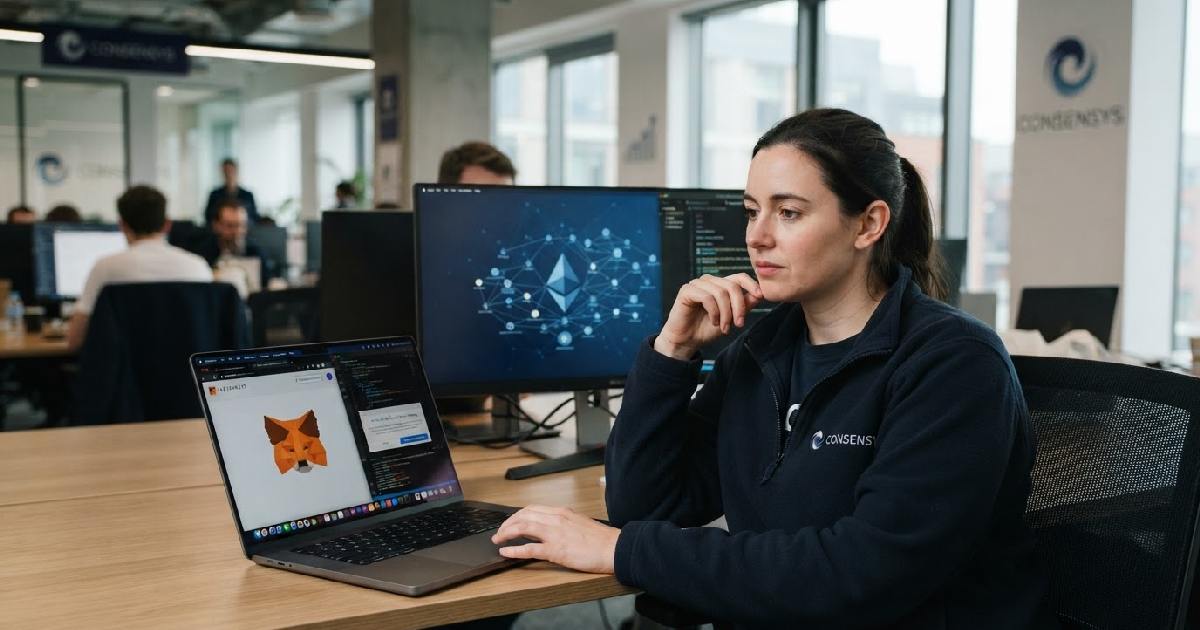

Consensys, the company behind the widely used cryptocurrency wallet MetaMask, temporarily suspended product releases after discovering a contractor with alleged ties to North Korea had accessed its core platform code.
This exposure, which lasted for approximately one month from March 9 until access was terminated in April, prompted an immediate internal investigation and notification to law enforcement, according to reports surfacing between July 17 and July 19, 2026.
Consensys responds to contractor code access
While Consensys’s investigation found no evidence of compromised assets, data theft, or malicious code deployment, the incident has spotlighted persistent supply chain vulnerabilities within the crypto sector. The company’s swift action to halt releases underscores the gravity of such threats, particularly from state-sponsored actors targeting the Ethereum ecosystem.
Consensys General Counsel Matt Corva confirmed the company acted decisively upon identifying the threat. He stated that Consensys immediately terminated the contractor’s access, launched a comprehensive investigation, and alerted law enforcement officials to the situation.
The internal inquiry concluded there was no misappropriation of assets or data. It also found no malicious code deployed and no impact to user safety or security for MetaMask users. This outcome is crucial for user trust in the popular wallet.
The contractor, operating under the alias “Tyler Knapp” with the GitHub handle “imyugioh,” gained entry via an established third-party service provider. Consensys is now reassessing and reviewing its processes for outsourcing engineering and development work, specifically focusing on contractor screening and third-party vendor practices. This review aims to apply rigorous internal standards to external relationships as well.
The growing risk of North Korea-linked operatives in crypto
This incident highlights a significant and ongoing threat from North Korean state-sponsored hacking units. These groups frequently target crypto firms, using deceptive tactics to steal funds, manipulate smart contracts, or harvest sensitive data to finance the regime’s programs. They often leverage fake identities and forged documents to secure remote positions within tech companies.
A six-month investigation, “The Ketman Project,” supported by the Ethereum Foundation’s ETH Rangers Program, further illustrated the scale of this infiltration. Investigators identified around 100 suspected North Korean IT workers using false identities across 53 crypto and Web3 projects. These groups reportedly merged 62 pull requests across 11 code repositories before detection.
TRM Labs has also cautioned that developer environments are becoming critical entry points for attackers. They seek access to systems holding private keys or approving crypto withdrawals. The 2022 Axie Infinity Ronin bridge hack, which caused over $600 million in losses, was reportedly facilitated by a fake job offer targeting a senior engineer.
Strengthening defenses against supply chain attacks
The MetaMask situation underscores the need for enhanced security protocols across the entire development lifecycle, particularly for projects relying on external contractors. MetaMask’s own general security guidance warns against malicious workers using false identities and recommends robust checks. These include using actual documents, multiple interviews, and hardware authentication.
Other vital measures comprise IP and location verification, thorough reference checks, and strict limits on access to critical systems. The Federal Bureau of Investigation (FBI) also warns about North Korean IT workers copying code repositories. Their guidance suggests continuous identity verification, routine audits of third-party staffing firms, and least-privilege access.
The UK National Cyber Security Centre (NCSC) recommends making all repository activity attributable. It advises reviewing every production-bound change, applying extra scrutiny to external contributions, and promptly revoking access when no longer required. These technical and procedural safeguards are essential to protect sensitive codebases.
Lessons for the Ethereum ecosystem’s security
This episode offers a critical lesson for the Ethereum ecosystem and the broader decentralized finance (DeFi) space. While MetaMask successfully mitigated immediate user harm, the underlying vulnerability in contractor vetting processes presents an ongoing challenge. Operational compromises, affecting keys, custody, and approval systems, accounted for about 76% of stolen value in the first half of 2026, according to CryptoSlate.
This statistic reinforces the importance of robust access and operational controls, even as smart-contract exploits remain frequent. Wallet and protocol teams must treat contractor access as continuously conditional, demanding extended identity checks and regular audits of third-party firms. Repository privileges should always be narrow, observable, and subject to independent review.
Consensys’s April release pause demonstrates the value of predefined protocols for halting changes during investigations. Such proactive measures are vital for maintaining trust and security in an environment constantly under threat. The incident serves as a call to action for all projects to strengthen their supply chains and internal security practices.