
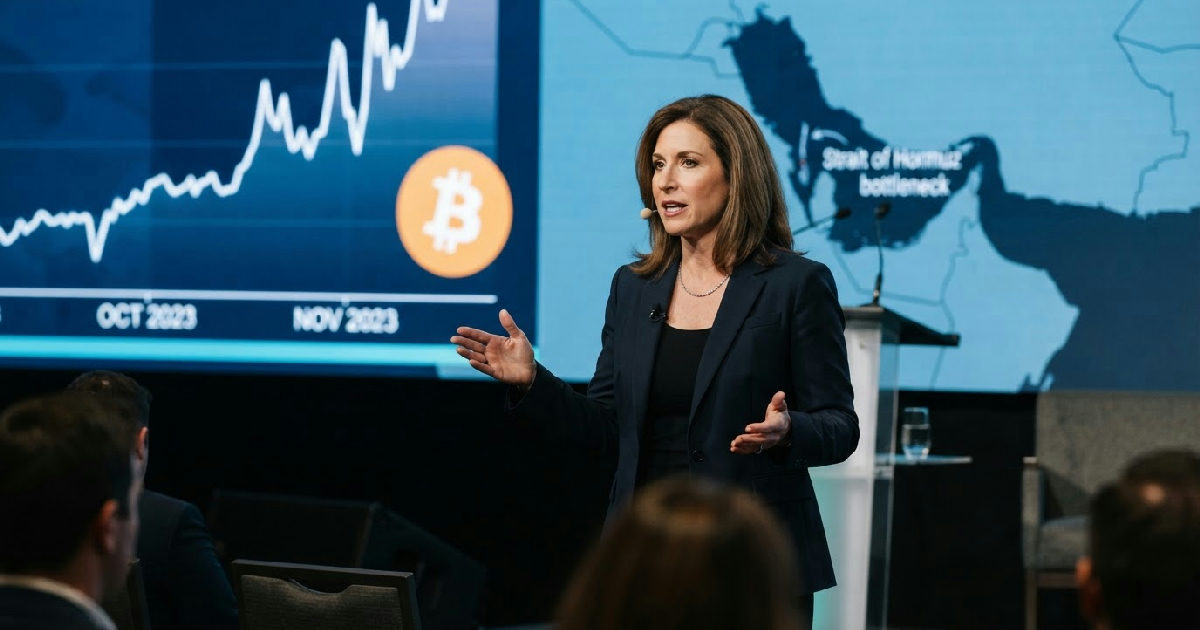

A looming commodities supercycle, triggered by significant disruptions in the global oil supply, is reinforcing the fundamental value proposition of hard assets like Bitcoin. That’s according to Tracy Shuchart, a senior economist at NinjaTrader Live, who laid out the case in a recent video appearance with Bitcoin Magazine, connecting deepening energy market stress to the growing appeal of scarce, non-sovereign assets.
Shuchart pointed to severe chokepoints in the energy supply chain, most notably the six million barrels of oil per day currently blocked from traversing the Strait of Hormuz. This disruption, she argued, is not a transient issue and signals a period of sustained tightening in commodity markets that will have broad economic consequences.
Shuchart warns commodity crisis looms
The core of Shuchart’s warning centers on the precarious state of the global energy supply. The ongoing disruption in the Strait of Hormuz has removed a significant volume of oil from the market, and she believes the lost production from Gulf Cooperation Council (GCC) nations won’t be easily or quickly replaced. This creates a foundational supply shock that ripples outward.
Shuchart highlighted “crack spreads” — the price differential between a barrel of crude oil and the petroleum products refined from it — as a key indicator of market stress. These spreads are widening, signaling a severe shortage of refining capacity globally.
The situation is exacerbated by scheduled autumn refinery maintenance and attacks on Russian refineries, further constraining the world’s ability to process crude into essential fuels like diesel and gasoline.
This confluence of factors creates a dire setup for the coming winter, a period of peak energy demand in the Northern Hemisphere. Shuchart also cautioned that political interventions, such as a potential US ban on diesel exports, would likely backfire.
She argued such a move would create chaos in global markets, particularly for allies in Europe and South America dependent on US supply, without meaningfully lowering domestic prices.
Hard assets shine amid systemic fragility
In an environment of escalating supply shocks and geopolitical friction, Shuchart explained why hard assets like gold and Bitcoin are holding their value. Unlike financial instruments tied to government promises or corporate performance, these assets possess inherent scarcity and are not someone else’s liability. They function as a hedge against systemic instability and currency debasement, which often follows major economic shocks.
While both assets serve this purpose, Bitcoin offers distinct advantages in a digital age. Its global, decentralized network allows for value transfer without intermediaries, making it resistant to the very geopolitical pressures causing turmoil in traditional commodity markets. As physical supply chains fray, the case for a weightless, digital store of value becomes increasingly compelling.
This long-term thesis persists even as Bitcoin futures data signals short-term bearishness from traders.
The resilience of these assets stands in stark contrast to the growing stress seen in debt markets. The macroeconomic picture painted by Shuchart suggests a world grappling with physical limits, a scenario where provably scarce digital property could play a critical role. This thesis is driving accumulation not just by individuals but also by corporate entities looking to protect their balance sheets.
AI and geopolitics add new layers of commodity strain
Beyond the immediate oil crisis, Shuchart identified other powerful forces contributing to the commodities supercycle, particularly the voracious resource demands of artificial intelligence. The buildout of AI data centers is creating an unprecedented strain on electricity grids and a surge in demand for key industrial metals, most notably copper. She pointed to a coming copper shortage as a major supply problem for the AI industry.
This demand creates a secondary effect on financial markets. Shuchart noted the rising stress in the bond market, partially linked to the massive debt being issued to finance AI infrastructure. The bitcoin rally stalls when bond yields spike, showing how interconnected these global capital markets have become.
This dynamic raises questions about whether the US can simply “grow its way” through the impending supply shock, as the very engines of that growth are contributing to the problem.
Furthermore, Shuchart touched on the evolving geopolitical landscape, using Venezuela as an example. She framed the nation not just as an oil producer offering discounted crude to US refiners but as a “critical minerals play.” This perspective underscores a global shift towards securing strategic resources, a trend that often leads to increased competition and conflict, further strengthening the argument for neutral, apolitical assets like Bitcoin.