
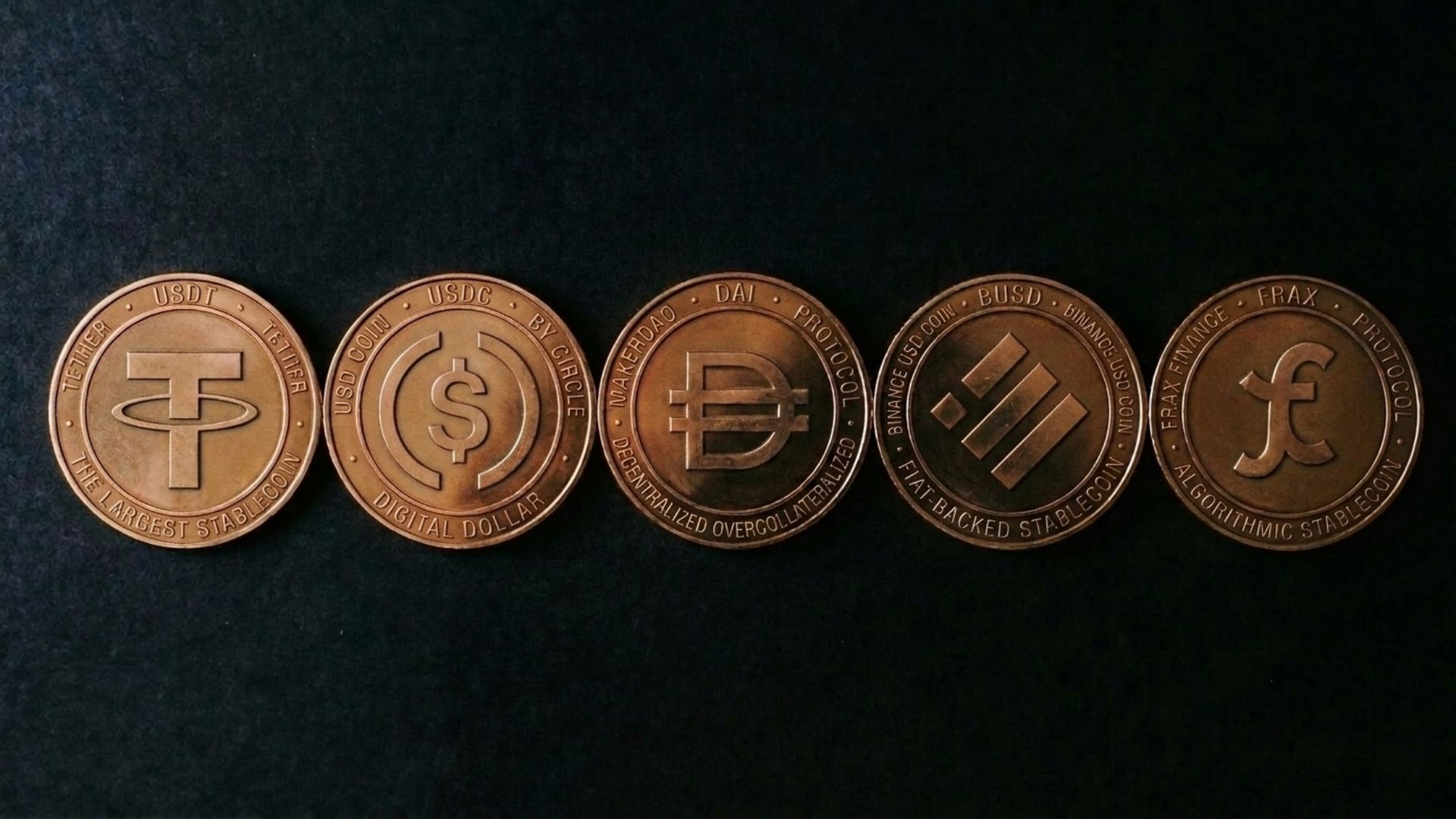

The stablecoins boom is getting difficult to treat as a crypto-only story. With the market hovering around $300 billion to $322 billion, dollar-pegged tokens have grown far beyond their role as a convenient way to move money between exchanges.
The market has more than doubled since the end of 2023, when stablecoin capitalization stood at roughly $124 billion. Now, the vast majority of that supply is concentrated in two names: Tether’s USDT and Circle’s USDC.
USDT represents about 60% of the market, with roughly $180 billion to $190 billion in circulation. USDC accounts for another 24%, at around $73 billion to $77 billion. Together, the two tokens make up an estimated 83% to 85% of the entire stablecoin supply.
The rest of the category looks almost microscopic by comparison. Stablecoins pegged to currencies other than the US dollar account for less than 0.5% of the market, despite years of speculation that digital assets could weaken the dollar’s global position.
Stablecoins Just Became a Treasury Story
That concentration is becoming more consequential because of what sits behind many of these tokens. Under the federal framework created by the GENIUS Act, signed into law in July 2025, approved issuers can issue stablecoins backed one-for-one by dollar-denominated assets, typically short-term US Treasury bills.
That turns stablecoin growth into a potential source of structural demand for US government debt.
Tether, among other issuers, already holds substantial Treasury positions as part of its reserves. Forecasts for the sector suggest that demand for US government debt from stablecoin companies could reach hundreds of billions of dollars, or potentially trillions, by 2030.
Treasury Secretary Scott Bessent has argued that this could create a durable new buyer for American debt, potentially pushing yields lower while extending the dollar’s reach through digital payment networks.
For the US, that is an unusually attractive combination: more demand for Treasuries and a wider digital audience for the currency behind them.
But the same concentration that makes stablecoins powerful also makes them fragile.
Harvard economist Kenneth Rogoff has warned that the industry carries risks familiar from traditional banking, including reserve concentration and the possibility of runs. He has also highlighted the potential for stablecoins to become channels for illicit financial activity.
The numbers make the concern hard to ignore. When two companies effectively control about 85% of a $300 billion-plus market, trouble at either issuer would be difficult to contain within the crypto sector.
The market itself has not grown in a perfectly straight line. Stablecoin supply has stalled or dipped during periods of weaker crypto trading activity in 2026. But recent inflows, particularly into USDC, have pushed the total back toward the $300 billion mark. USDC alone added hundreds of millions of dollars in supply during a single week in September.
Stablecoins Could Make the Dollar Harder to Dislodge
There is an irony at the center of the boom: the technology built around digital money may be reinforcing the world’s dependence on traditional money.
European Central Bank official Isabel Schnabel and Cornell economist Eswar Prasad have both argued that dollar-pegged stablecoins could strengthen US monetary dominance rather than undermine it.
The reason is less technical than cultural. Once users, exchanges and financial platforms build around dollar-denominated tokens, switching to alternatives becomes increasingly inconvenient. Networks create their own gravity.
That is especially striking when less than 0.5% of stablecoins are tied to currencies other than the dollar. The internet may have made money more programmable, but so far it has not made global digital payments meaningfully less dollar-centric.
For investors and policymakers, another question is emerging. If stablecoin issuers become major, relatively price-insensitive buyers of short-term Treasuries, they could place downward pressure on short-term yields regardless of what the Federal Reserve wants the market to do.
And that brings the story back to concentration.
A financial system in which two private companies collectively sit behind more than $250 billion in Treasury demand introduces points of failure that were barely imaginable five years ago. A serious loss of confidence in Tether or Circle could force rapid reserve liquidations, potentially sending consequences well beyond crypto trading screens.
The stablecoin market may have started as a piece of crypto infrastructure. At $300 billion-plus, it is beginning to look like something much bigger: a new digital layer of the dollar system, with all the reach—and vulnerabilities—that come with it.