
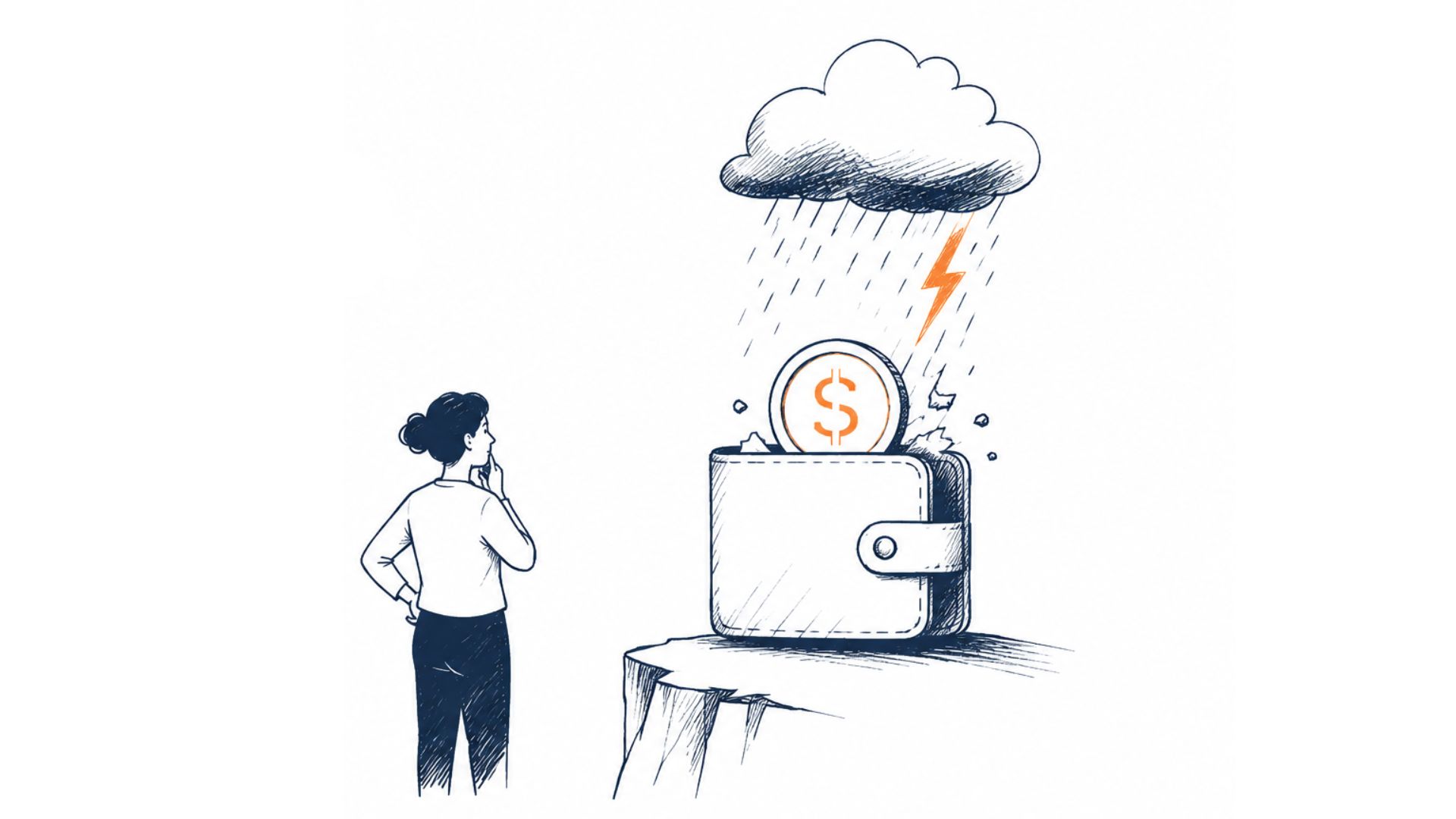

A stablecoin can look almost identical to cash on a screen. One token is designed to remain worth one US dollar, and the company behind it may hold dollars, bank deposits or short-term government securities as reserves.
That can make an easy assumption seem reasonable: if the reserves are sitting inside the traditional financial system, surely the person holding the stablecoin is protected in the same way as a bank customer.
That is where the distinction matters.
Stablecoin insurance does not generally work like deposit insurance. A stablecoin can be backed by highly liquid assets without the token itself becoming an insured bank deposit. The person holding the token may have a claim against the issuer, but that is not the same legal relationship as being a depositor at the bank holding the reserves.
Once that difference is clear, the question becomes more useful: not simply whether a stablecoin is “safe”, but who takes the loss when something in the structure breaks?
The reserves can be solid without your token being insured
The first thing to separate is the stablecoin from the assets that back it.
A fiat-backed stablecoin issuer receives dollars when tokens are created or purchased through its system. Those funds can then be held in a combination of bank deposits, cash equivalents and short-term government securities, depending on the issuer and the rules governing it.
The purpose of these reserves is straightforward: they should give the issuer the assets needed to redeem outstanding tokens.
But the reserve is not necessarily a collection of individual bank accounts belonging to every stablecoin holder.
That difference is crucial.
In the US, for example, FDIC insurance applies to qualifying deposit products at insured banks. It does not automatically extend to other assets simply because those assets are connected to a bank. The FDIC explicitly lists crypto assets, stocks, bonds and mutual funds among products that are not covered by deposit insurance.
So imagine an issuer holding billions of dollars across bank accounts and Treasury securities. The fact that some of those funds are held at an insured bank does not mean every person holding the issuer’s stablecoin has suddenly become an insured depositor of that bank.
The protection belongs to the legal structure in which the deposit exists.
That is why “backed by dollars” and “insured like dollars in a bank” are two very different statements.
What you actually own when you hold a stablecoin
A useful way to understand the structure is to follow the money.
You buy a stablecoin. The issuer receives or already controls the corresponding reserve assets. The token is then transferred to your wallet, where you can send it across a blockchain.
What you own at that point is the token — and the rights attached to it.
That distinction matters because the issuer, rather than you personally, may be the entity holding the underlying bank deposits or Treasury securities.
In practical terms, your relationship is usually with the stablecoin issuer. You are relying on that issuer to maintain sufficient reserves and honour its redemption obligations.
This is different from putting money directly into a bank account in your own name.
The difference can seem academic while everything is working normally. One token remains close to $1, you can move it within seconds, and redemption works as expected.
The distinction becomes much more important during a crisis.
If the issuer becomes insolvent, the question is no longer simply whether there are assets somewhere in the system. It becomes a legal and financial question: which assets belong to the stablecoin reserve, who can claim them and in what order?
The answers depend on how the stablecoin is structured and the laws governing the issuer.
The Silicon Valley Bank episode showed where the risk can appear
The USDC episode involving Silicon Valley Bank is a useful example because the problem was not that USDC suddenly stopped being backed by anything.
In March 2023, Circle disclosed that $3.3 billion of USDC’s reserves were held at Silicon Valley Bank, representing roughly 8% of its total reserves at the time. When the bank was closed by regulators, uncertainty over access to those funds triggered a sharp loss of confidence in USDC’s dollar peg. Circle later said the full reserve deposit would be available after US authorities announced that depositors would be made whole.
The important lesson is not simply “banks can fail”.
It is that a problem affecting the institution where reserves are held can become a problem for the stablecoin itself.
The token does not need to disappear for holders to face disruption. Questions about liquidity, access to reserves or the issuer’s ability to meet redemptions can be enough to push the market price away from $1.
That is what makes stablecoin risk different from ordinary price volatility. A bitcoin holder expects the market price to move. A stablecoin holder is buying something specifically because it is supposed to behave differently.
When that expectation is questioned, confidence becomes part of the mechanism.
What happens if the stablecoin issuer fails?
A bank failure and an issuer failure are two different problems.
If the bank holding part of an issuer’s reserves fails, the issue may centre on access to those reserves and the protection available to the issuer’s deposits.
If the stablecoin issuer itself becomes insolvent, the problem moves up one level.
There may still be billions of dollars in reserve assets, but holders need to know whether those assets are legally separated from the rest of the company’s operations and whether they can be used to satisfy redemption claims.
This is why the quality of a reserve report is only one part of the picture.
Two stablecoins could both report assets worth roughly the same as their outstanding tokens while offering very different levels of protection depending on how those assets are held, how redemption works and what happens under insolvency.
The most important question is therefore not simply:
“Is the stablecoin fully backed?”
It is:
“What legal right does the holder have to those reserves if the issuer fails?”
That is a harder question — but it is also the one that tells you more about actual protection.
So what protects stablecoin holders?
Without a government-backed deposit insurance scheme covering the token itself, protection comes from the architecture surrounding it.
The first layer is the reserve. High-quality, liquid assets can make it easier for an issuer to meet redemptions, particularly during periods of stress.
The second is custody. Where reserves are held matters, as does how they are segregated and what rights the issuer and its creditors have over them.
The third is the legal framework governing redemption and insolvency. A holder is in a stronger position when the structure clearly establishes what happens to reserve assets if the issuer can no longer operate normally.
This is also why greater regulation does not automatically mean that stablecoins have become equivalent to bank deposits.
Rules can impose reserve requirements, restrict what issuers may hold or establish operational and reporting standards. In the US, for example, the federal framework for payment stablecoins requires qualifying issuers to maintain reserves on at least a one-to-one basis and limits the assets that can be used as reserves. But reserve regulation is not the same thing as deposit insurance.
The difference is subtle but important: regulation can reduce the probability and potential severity of a failure without promising to reimburse every holder when something goes wrong.
The missing piece in the phrase “digital dollars”
There is an easy way to misunderstand stablecoins.
Because a token is designed to stay at $1, it can feel as though the risk has been removed. In reality, the risk has often been redistributed.
Instead of asking whether the dollar itself will fluctuate wildly, the holder is relying on an issuer, a reserve structure, financial institutions, custodians and a redemption mechanism.
That does not make stablecoins inherently unsafe. It explains why they need to be analysed differently from an ordinary bank balance.
The same principle applies when a stablecoin is held on an exchange rather than in a personal wallet. Now there is another intermediary between the holder and the underlying asset. Even a well-structured stablecoin cannot remove risks created elsewhere in the chain.
This is the deeper lesson behind stablecoin insurance: there is no single switch that turns a digital dollar into a protected bank deposit.
The stability of the token comes from one set of mechanisms. The protection of the holder comes from another.
And when a stablecoin fails to maintain that distinction, the question is no longer whether the token was “backed”.
It is who, legally and financially, is standing behind the dollar when the system is put under pressure.