
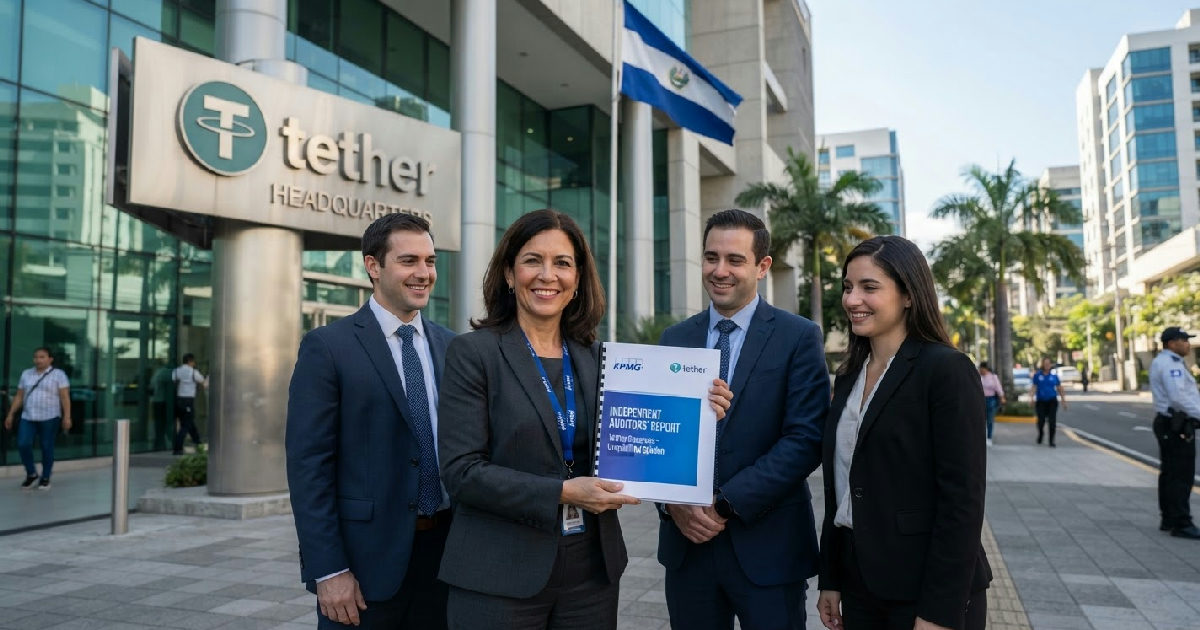

Stablecoin issuer Tether has achieved a critical milestone in its long quest for enhanced transparency, announcing on August 13, 2026, that KPMG U.S. completed the first independent financial statement audit of its reserves. This Tether audit covers Tether International, S.A. de C.V.
for the fiscal year ended December 31, 2025, resulted in the most favorable outcome possible: an “unqualified opinion.” This significant development directly addresses years of market skepticism and regulatory scrutiny surrounding the backing of the world’s largest stablecoin, USDT.
The significance of the Tether audit
For more than a decade, Tether, based in San Salvador, has faced persistent criticism for its perceived lack of clarity regarding the assets underpinning its flagship token. The company had previously relied on attestations, which offered a snapshot of its reserves but fell short of a comprehensive, independent audit by a “Big Four” accounting firm.
Now, Tether CEO Paolo Ardoino asserts the company has silenced its detractors.
The completion of this full financial statement audit by KPMG U.S. represents a significant shift for Tether and the wider stablecoin industry. This isn’t merely a routine financial check; it’s an examination conducted in accordance with rigorous AICPA standards, scrutinizing Tether’s complete financial statements. KPMG assessed the company’s balance sheet, income statement, changes in equity, and cash flow statement, culminating in their unqualified opinion.
Paolo Ardoino was unequivocal about the achievement. He stated, “For years, some detractors said an audit of Tether could not be completed. They said the Company refused to subject itself to the most rigorous scrutiny. We have once again proven them wrong.” He stressed that completing this audit establishes a new industry benchmark, reflecting Tether’s leadership in the market.
Unqualified opinion versus attestations
Understanding the significance of KPMG’s “unqualified opinion” requires distinguishing it from the regular attestations Tether has provided in the past. An attestation confirms that eligible reserve assets covered redeemable tokens at a specific point in time, offering a limited scope. It typically doesn’t delve into the broader financial health or internal controls of the issuer.
An independent financial statement audit, conversely, is far more comprehensive. It offers “reasonable assurance” that the financial statements are materially accurate and free from misstatement, covering a full fiscal year’s activity. KPMG verified transactions, internal systems, asset ownership, valuations, and counterparties, providing a much deeper level of scrutiny and validation than any previous report.
Deep dive into Tether’s financial position
The audit provides a detailed look into Tether’s substantial reserve holdings. As of December 31, 2025, the company’s reserve assets exceeded its liabilities tied to issued tokens by a robust $6.814 billion. This considerable buffer demonstrates a strong backing for its USDT stablecoin.
Tether also reported impressive financial performance, with a net profit exceeding $10 billion for the fiscal year 2025. This profitability continued into 2026, with roughly $1 billion in profit during Q1 and a net operating profit of $1.5 billion in Q2. These figures underline the company’s financial strength beyond just its stablecoin backing.
Diverse and substantial reserve holdings
The audit highlighted the breadth of Tether’s reserve portfolio. KPMG, for example, physically counted and inspected every individual gold bar held by Tether, verifying its existence and identifying information. This was a crucial step, moving beyond reliance on third-party reports from custodians or counterparties.
Beyond gold, Tether holds approximately $141 billion in U.S. Treasuries, positioning it as one of the largest global holders of American government debt. Data from Arkham Intelligence further indicates nearly $60 billion in Bitcoin within its reserves.
This diversification aims to maintain stability and liquidity for its $183 billion USDT product, which remains the third-biggest cryptocurrency and accounts for about 61% of the total $301 billion stablecoin market.
Aligning with evolving regulatory demands
Tether’s decision to pursue a full independent audit also aligns with the rapidly evolving global regulatory landscape for stablecoins. The United States’ Guiding and Establishing National Innovation for U.S. Stablecoins (GENIUS) Act, signed into law in July 2025, mandates annual financial audits for stablecoin issuers with over $50 billion in circulation. Given USDT’s market capitalization, this audit effectively positions Tether ahead of anticipated regulatory requirements.
The move could also pressure other stablecoin issuers to adopt similar levels of transparency. As regulators worldwide continue to scrutinize digital assets, comprehensive audits might become a de facto standard, moving beyond mere attestations. Tether has long argued for more robust regulatory frameworks, and this audit could serve as a blueprint for others.
The enduring impact of the KPMG audit
This audit is more than just a financial report; it’s a strategic move to solidify Tether’s credibility in a market often plagued by trust issues. CEO Paolo Ardoino remarked, “Tether has evolved from a disruptive stablecoin issuer into one of the most financially significant and operationally sophisticated private companies in the world.”
He believes this audit proves their financial infrastructure and governance have matured alongside that responsibility.
Despite the positive audit, a slight discrepancy in reported excess reserves merits attention. While KPMG confirmed $6.814 billion in excess reserves for December 31, 2025, a BDO attestation for June 30, 2026, reported $4.11 billion. This difference, roughly 40% lower, highlights the dynamic nature of stablecoin reserves and the ongoing need for frequent, rigorous reporting, even with a successful full audit.
For the over 650 million users across emerging markets who rely on Tether daily, this independent verification offers a renewed sense of security. It signals a maturation of the stablecoin sector, pushing for greater accountability and potentially paving the way for broader institutional adoption. The long-term implications of this audit will likely resonate throughout the cryptocurrency space for years to come.