
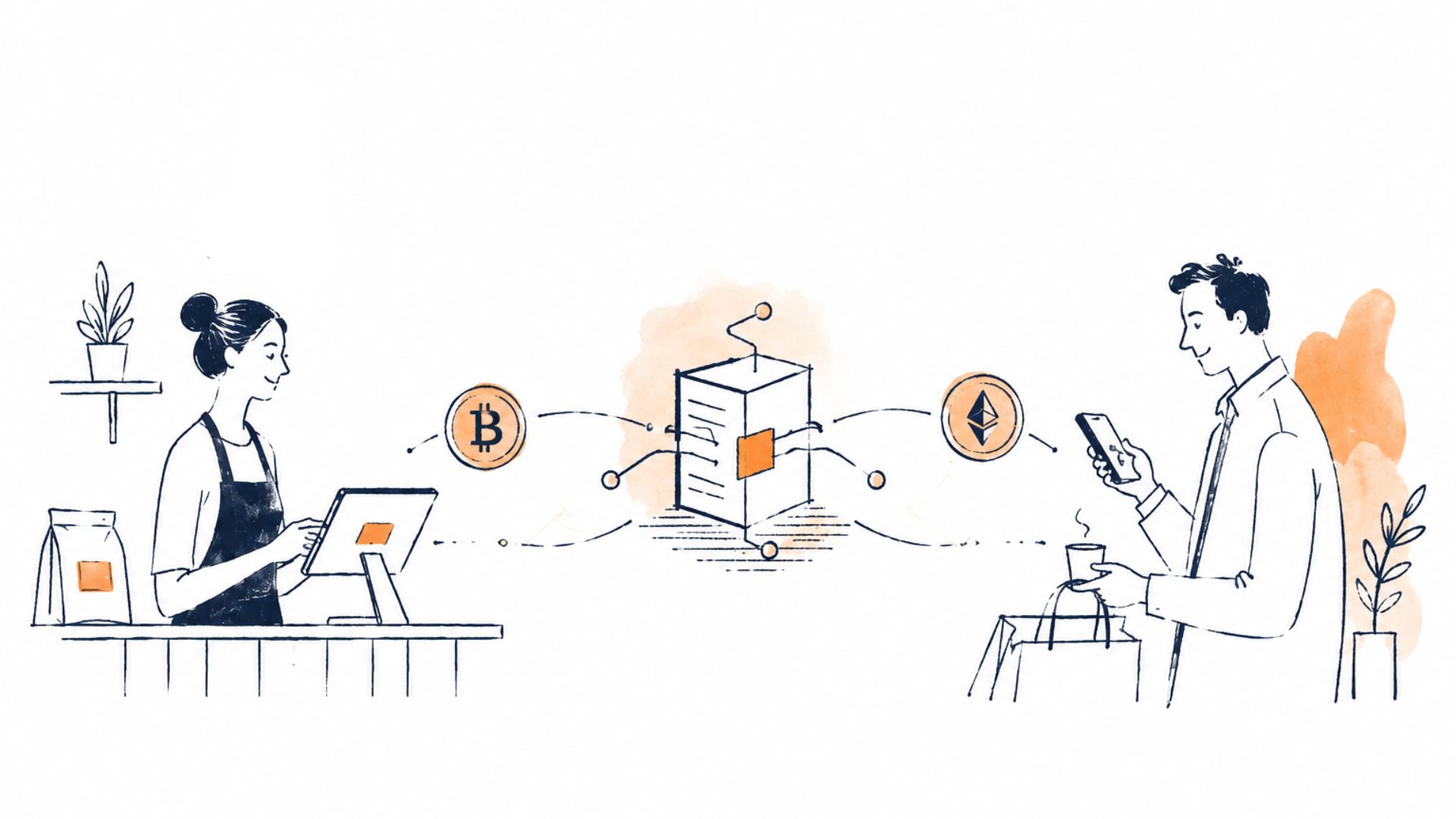

When a customer decides to purchase a product online using a digital asset, the outward experience is remarkably mundane. They select their preferred coin at checkout, a QR code appears on the screen, they scan it with their digital wallet, and a few moments later, a confirmation email arrives in their inbox.
Behind that seamless interface, however, an elaborate mechanical ballet is taking place.
The underlying architecture of a blockchain was not originally designed to interface naturally with corporate accounting software, tax reporting systems, or traditional banking compliance.
To bridge this divide, an entire industry has emerged. Crypto payment processing is the invisible engine room that translates the raw, decentralised data of a blockchain transaction into the structured, predictable format that businesses require to operate.
The gap between raw blockchain and commercial reality
To grasp the necessity of processing infrastructure, one must first look at what happens when a business attempts to operate without it.
Imagine a mid-sized e-commerce retailer deciding to start accepting bitcoin payments by simply placing a single, static wallet address on their checkout page. Initially, it seems entirely faithful to the peer-to-peer ethos of digital currency. A customer sends the funds directly to the merchant, with no banks involved.
However, operational chaos ensues almost immediately. If three different customers purchase items worth US$50 at roughly the same time, the merchant’s wallet will simply show three incoming deposits of identical value. Because blockchain addresses are pseudonymous, the merchant has no automated way to match which specific transaction corresponds to which customer’s order. The fulfilment team is left guessing whose goods are safe to dispatch.
Furthermore, commercial realities clash violently with digital asset volatility. If a customer sends US$1,000 worth of Bitcoin for a laptop, but the market experiences a sudden downturn before the merchant can manually exchange those assets, the business might end up receiving only US$900 in functional value. The merchant absorbs an unpredictable financial loss on a standard retail transaction.
Finally, there is the administrative burden. Traditional business accounting relies on clear records of invoices, transaction timestamps mapped to local timezones, and exact fiat currency values at the moment of sale for tax purposes. A raw blockchain explorer provides none of this in a readily digestible format.
This operational gap is precisely what makes raw blockchain networks incompatible with scale. Businesses require predictability, automated reconciliation, and risk mitigation.
Decoding the backend of a digital asset transaction
To solve these commercial hurdles, crypto payment processing platforms intercept the transaction and manage the complexity on behalf of the business. When a user clicks ‘pay with crypto’, a highly orchestrated sequence of automated events is triggered in milliseconds.
First, the processor locks in the exchange rate. Because digital assets fluctuate, the system calculates the exact amount of cryptocurrency required to cover the fiat price of the goods and freezes that rate for a short window — usually between 10 and 15 minutes. This protects both the buyer from overpaying and the seller from under-collecting.
Simultaneously, the system generates a unique, single-use payment address specifically for that exact shopping cart. This is a critical security and administrative feature. By assigning a distinct address to every single order, the system eliminates the matching problem entirely.
When funds arrive at that specific address, the processor automatically knows exactly which customer and which invoice to credit.
Once the customer broadcasts their payment, the transaction enters the network’s waiting room, known in Bitcoin terms as the mempool. The processing platform actively monitors this space, providing real-time feedback to the merchant’s checkout page, often displaying a “payment detected” message to reassure the buyer.
However, detection is not finality. The processor must wait for network confirmations — meaning the transaction has been permanently written into the blockchain by miners or validators.
Depending on the processor’s risk settings and the asset being used, they will wait for a specific number of block confirmations before officially marking the invoice as paid and signalling the e-commerce platform to dispatch the goods.
The final and most crucial step for many businesses is fiat settlement. Upon confirming the transaction, the processor can instantly liquidate the digital assets into traditional currency, such as Pounds Sterling, Euros, or US Dollars. The crypto never sits on the merchant’s balance sheet, completely insulating the business from market volatility and simplifying their tax obligations.
The funds are then settled into the merchant’s traditional bank account via a standard wire transfer at the end of the business day.
Gateways, acquiring, and processing: Untangling the terminology
As the B2B infrastructure for digital assets matures, the terminology used to describe these services often becomes entangled. Merchants frequently hear the terms gateway, acquiring, and processing used interchangeably, but in the architecture of a payment, they represent distinct functions.
The crypto payment gateway is the front door. It is the technological interface — usually an API or a checkout widget — that connects the customer’s shopping cart to the payment system. Its primary job is to display the generated address or QR code, collect the buyer’s interaction, and securely transmit that data to the backend. It dictates the user experience on the website.
Crypto acquiring relates to the commercial capability and permission to accept digital assets. In traditional finance, an acquiring bank allows a merchant to accept credit cards and assumes the financial risk of the transaction. In the digital asset space, acquiring refers to the service provider holding the necessary regulatory licenses, performing merchant background checks, and officially granting the business the ability to receive funds in this medium.
Processing, as a broader concept, is the heavy machinery sitting in the middle. It encompasses the entire lifecycle we decoded earlier: monitoring the blockchain, validating the ledger, mitigating the volatility risk, and orchestrating the final settlement.
If we use a physical retail analogy, the gateway is the card terminal on the shop counter, acquiring is the contract allowing the shop to use Visa or Mastercard, and processing is the secure banking network that ensures the money moves from the customer’s account to the shop’s till.
The centralisation paradox in a trustless economy
Taking a step back to analyse this infrastructure reveals a fascinating philosophical tension within the digital asset sector.
Cryptocurrencies were fundamentally designed to remove middlemen. The foundational premise of blockchain technology is peer-to-peer interaction, allowing two willing parties to transact across the globe without requiring a central authority, bank, or payment processor to facilitate or approve the exchange.
Yet, to achieve mainstream commercial adoption, the industry has effectively rebuilt a new layer of intermediaries.
By relying on third-party processors to generate addresses, lock exchange rates, and handle fiat settlement, businesses are consciously stepping away from raw decentralisation. They are placing their trust in a centralised corporate entity to manage their digital asset flow, essentially using crypto merely as an alternative payment rail rather than a financial revolution.
This creates a paradox: the widespread use of a trustless, decentralised currency is heavily dependent on centralised, trusted infrastructure.
However, this is not necessarily a failure of the technology; rather, it is a practical compromise. Raw blockchain networks are simply too rigid, transparent, and volatile to function seamlessly within the legacy financial frameworks that businesses are legally required to follow. The processing platforms act as the vital translation layer.
They allow businesses to tap into a global, borderless customer base while remaining safely anchored to the familiar shores of traditional accounting and risk management.
Ultimately, the advancement of digital asset payments does not rely solely on the underlying blockchains becoming faster or cheaper. It relies equally on this invisible processing infrastructure becoming more robust.
By removing the burden of technical expertise from the merchant, these platforms ensure that accepting a payment generated on a blockchain remains just as boring, predictable, and reliable as accepting a standard bank card.