
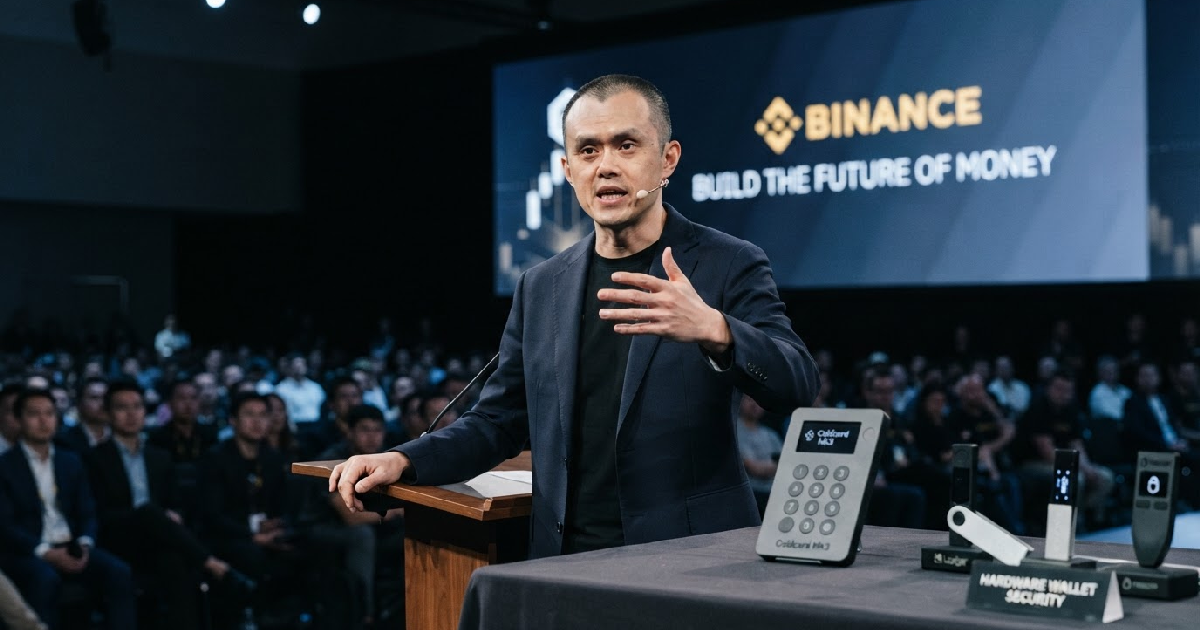

Binance co-founder and former CEO Changpeng Zhao has urged cryptocurrency holders to diversify their digital asset storage across multiple wallets, following a significant security failure in Coldcard Mk3 hardware devices. The exploit, which occurred on July 30, 2026, saw attackers drain an estimated $70 million in Bitcoin from nearly 1,200 affected wallets.
Zhao’s warning, issued on August 1, 2026, underscores a critical pivot in crypto security discourse: from diversifying coin holdings to actively diversifying the methods of storing those holdings. This incident highlights that even highly regarded hardware wallets, long considered a gold standard for offline storage, aren’t immune to deep-seated vulnerabilities.
The Coldcard Mk3 Vulnerability Revealed
The Coldcard exploit stemmed from a firmware flaw present in Mk3 devices since March 2021, compromising the crucial process of generating recovery seeds. Instead of relying on a robust hardware true random number generator, the bug forced devices to use a weaker software pseudorandom number generator.
This software fallback was seeded by non-secret chip data, such as serial numbers and clock registers, making the recovery seeds predictable. Attackers could then reconstruct private keys offline, bypassing the need for physical access to the devices. This fundamental flaw allowed for an automated sweeping of funds.
Details of the $70 Million Bitcoin Drain
Attackers executed the coordinated drain of Bitcoin (BTC) between 1:10 AM and 1:51 AM UTC on July 30, a concentrated attack lasting just 41 minutes. Initial reports indicated approximately 594 BTC, valued at roughly $38 million, were stolen from around 500 wallets.
Subsequent, more thorough analysis by Galaxy Research expanded the scope significantly, pinpointing the loss at 1,082.65 BTC, amounting to approximately $70 million at the time of the incident. This larger figure encompassed 1,196 addresses, many of which had remained dormant for years, suggesting a patient and targeted exploitation of the vulnerability.
Clay Garrett, an engineer at Block, noted an unusual pattern in the attacker’s blockchain movements. Transactions consistently featured identical 30 sat/vB fees, strongly suggesting an automated tool was deployed for the sweeping of funds. This level of automation points to a sophisticated operation designed to maximize extraction during the brief window of opportunity.
Coinkite’s Response and Ongoing Risks
Toronto-based Coinkite, the manufacturer of Coldcard wallets, has acknowledged the critical bug and issued an apology to affected users. The company swiftly released patched firmware versions, specifically 4.2.0 and above, to address the vulnerability.
However, Coinkite stressed that merely updating the firmware isn’t sufficient for users with already compromised seeds. They advised these users to generate entirely new seeds on their patched devices and then carefully migrate their funds to these new, secure addresses. This crucial step prevents attackers from leveraging pre-existing predictable seeds.
Rodolfo Novak, Coinkite co-founder, openly addressed the firmware bug, confirming the severity of the situation. This transparent approach, while necessary, didn’t diminish the blow to user confidence in hardware wallets, traditionally seen as paragons of crypto security.
The Imperative of Wallet Diversification
Changpeng Zhao’s immediate response to the Coldcard exploit emphasized a critical lesson: “Even hardware wallets can have bugs. Even old wallets (with long history) can have bugs. How to mitigate? Split your funds in a few wallets maybe? This has a different set of risks. Nothing is 100%.”
This advice marks a strategic shift from simply diversifying one’s crypto portfolio across different assets to diversifying the *storage mechanisms* for those assets. It challenges the conventional wisdom that consolidating funds on a single, trusted hardware wallet provides ultimate security.
Zhao also conceded the complexities inherent in this approach, noting, “More wallets mean more complexity, more seed phrases to manage, and more opportunities to make a mistake. Diversifying hardware storage is not a free lunch. It trades one category of risk for another.” This pragmatic assessment acknowledges the trade-offs involved in enhanced security practices.
The incident forcefully reminds the crypto community that “nothing is 100%” secure, a core tenet often overlooked amidst rapid technological advancements. Users are now confronted with the reality that trust in a single security solution, no matter how reputable, can prove costly.
Redefining Self-Custody and Digital Asset Security
The Coldcard exploit, dubbed “one of the most serious Bitcoin wallet security breaches to date” by Jack Mallers, CEO of Strike, reignites the debate around the limits of self-custody. While hardware wallets offer significant advantages over centralized exchanges, their perceived invulnerability has been shaken.
For Ethereum users and participants across the broader crypto ecosystem, the implications are clear: the principles of secure self-custody extend beyond simply owning a hardware device. It involves understanding the nuances of how these devices function, staying informed about potential vulnerabilities, and implementing layered security strategies.
Zhao’s previous references to incidents like the 2023 Ledger Connect Kit attack serve as a stark reminder that even established brands face security challenges. This latest exploit reinforces the idea that vigilance and adaptability are paramount for anyone managing digital assets, regardless of the blockchain or token involved.
Ultimately, the Coldcard incident isn’t just about a single vulnerability; it’s about evolving risk management in a dynamic landscape. Diversifying wallet strategies, though adding complexity, represents a crucial step towards building more resilient personal security frameworks in the face of ever-present threats.