
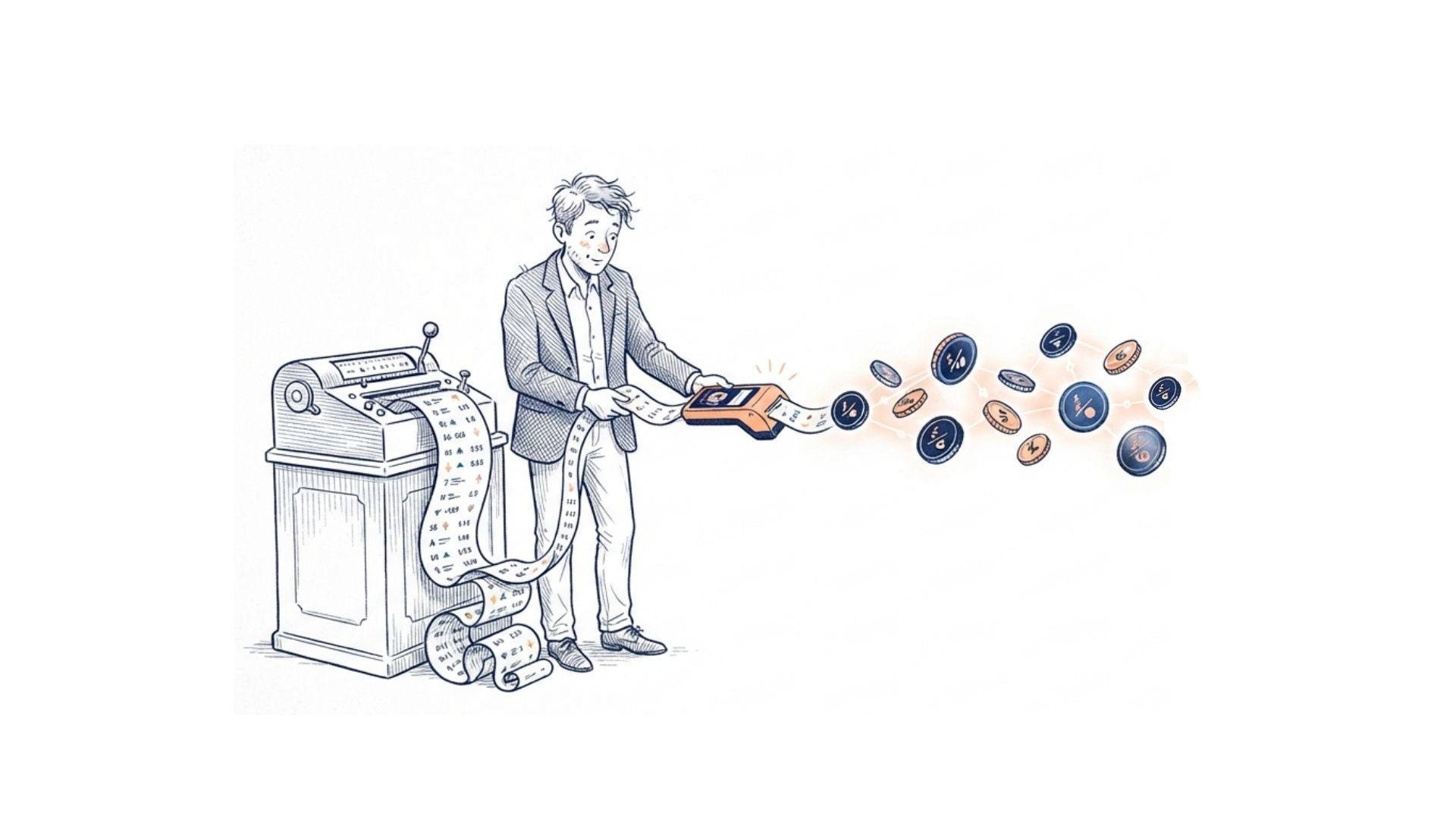

Imagine buying a fraction of an Apple share or a piece of SpaceX directly from a self-custodial crypto wallet, bypassing traditional brokerages entirely. The transaction takes seconds, settles almost instantly, and operates on an infrastructure that never sleeps. This is the promise of tokenized stocks, a cornerstone of the rapidly growing real-world asset (RWA) narrative.
But a dangerous assumption has quietly taken root in the minds of many market participants: the belief that holding a tokenized stock is functionally identical to owning the underlying equity.
It is not. Depending on how these tokenized stocks are structured, your digital token might give you actual economic rights, a mere contractual claim against a startup, or nothing more than price exposure to a synthetic derivative.
The invisible gap between a digital token and a traditional share
The trend of tokenization is often framed as a seamless technological upgrade. By bringing real-world assets like real estate, bonds, and equities onto a blockchain, the goal is to convert physical or legacy paper assets into highly liquid, programmable digital tokens.

However, the transition from a traditional stock exchange to a decentralized ledger is rarely seamless. The fundamental challenge of tokenized stocks lies in the fact that a blockchain is a closed loop. It is incredibly efficient at tracking who owns a specific token on its ledger, but it has no inherent power to enforce corporate governance, guarantee dividend payouts, or verify that a physical share exists in a vault somewhere in New York or London.
Because of this gap, tokenized stocks cannot be treated as a single, uniform asset class. Two tokens that look identical on a block explorer might carry entirely different legal protections, risk profiles, and rights.
Custody, contracts, and synthetics: What exactly are you holding?
To navigate this panorama without falling into expensive traps, investors must look past the digital interface and analyze the underlying structural architecture. Broadly speaking, tokenized stocks fall into three distinct categories:
Direct Custody Models
This is the closest equivalent to traditional investing. Under this structure, a regulated financial institution purchases the actual shares on a legacy stock exchange and holds them in a secure custody account. The issuer then mints a corresponding number of tokens on a blockchain, where each token is backed 1:1 by a real share.
While this model often passes along economic benefits like dividends, it rarely conveys voting rights. Because the shares are legally registered in the name of the custodian or the issuer, you are technically a beneficiary of their custody agreement, not a shareholder on the company’s official registry.
Contractual Claim Tokens
In this scenario, there is no direct link between the token holder and the underlying corporation. Instead, the token represents a bilateral contract between the investor and the issuing platform. The platform promises to pay the investor an amount equivalent to the performance of the stock, but the legal relationship is entirely bound by the terms of that specific contract. If the platform goes bankrupt, the investor is treated as an unsecured creditor rather than an equity holder.
Synthetic Tokens
Synthetic stocks do not even attempt to hold real shares in reserve. Instead, they act as pure price-tracking derivatives. Using decentralized price feeds (oracles) and smart contracts, synthetic tokens replicate the price movements of an equity. If Tesla shares rise by 5%, the token’s value rises by 5%.
This model offers maximum flexibility and avoids the friction of real-world custody, but it carries zero corporate rights and is highly reliant on the solvency of the collateral pool backing the synthetic protocol.
Where market efficiency meets decentralized finance
Despite these complexities, the push to tokenized stocks is gaining momentum among both retail users and institutional players. The motivation boils down to two main drivers: operational efficiency and programmability.
In traditional finance, buying a stock feels instantaneous because of modern user interfaces, but the plumbing behind the scenes is remarkably slow. Settlement—the actual transfer of ownership and funds—typically takes up to two business days ($T+2$). During this window, clearinghouses, custodians, and transfer agents must reconcile their ledgers. On a blockchain, this process can be compressed to near-instantaneous settlement, drastically reducing counterparty risk and lowering administrative overhead.
Furthermore, tokenization democratizes access to global markets. A retail investor in an emerging market can purchase a $0.05$ fraction of a high-priced stock without needing to navigate the complex compliance, high fees, and geographic restrictions of foreign brokerage accounts.
But the true paradigm shift occurs when tokenized stocks enter the decentralized finance (DeFi) ecosystem. Once an equity is represented as an ERC-20 token (or its equivalent on other networks), it becomes money legos. It is no longer just a passive investment sitting in a brokerage account. An investor could theoretically deposit tokenized stocks into a lending protocol to borrow stablecoins, use it as collateral for complex hedging strategies, or trade it on a decentralized exchange outside of traditional market hours.
The custody paradox in a decentralized network
For all the talk of decentralization, tokenized equities expose a glaring paradox at the heart of the RWA movement: you cannot remove the middleman when dealing with physical-world assets.
If you hold Bitcoin, your security is guaranteed by cryptography and network consensus. If you hold a tokenized share of Apple, your security is ultimately guaranteed by a custodian’s vault, a legal team, and a local regulatory framework.
┌────────────────────────┐         ┌────────────────────────┐
│    ON-CHAIN LEDGER     │         │   OFF-CHAIN REALITY    │
│                        │         │                        │
│   • Instant Transfers  │ ───?─── │   • Custodian Vaults   │
│   • Smart Contracts    │         │   • Legal Agreements   │
│   • Public Audits      │         │   • Regulatory Audits  │
└────────────────────────┘         └────────────────────────┘
            ▲                                  ▲
            └────────────── THE GAP ───────────┘
The blockchain can flawlessly record that a token transferred from Wallet A to Wallet B. But if the custodian holding the physical shares goes insolvent, or if the legal connection between the token and the asset is deemed invalid by a court, the on-chain ledger becomes a record of ownership for a worthless digital shell.
This means that investors cannot rely solely on “code is law.” The integrity of a tokenized stock is only as strong as its off-chain legal wrappers, the reputation of its custodian, and the frequency of its third-party audits.
Why the ultimate test for tokenized equities is written in law, not code
The technology to support global, 24/7 tokenized stock trading has existed for years. What has lagged behind — and what will ultimately dictate the success or failure of this asset class— is the legal framework.
Because these assets straddle two worlds, they are subject to intense regulatory scrutiny. To traditional regulators like the SEC or ESMA, a tokenized stock is not a novel crypto-asset; it is a security. This means issuers must comply with strict registration, disclosure, and Know Your Customer (KYC) guidelines. This regulatory friction is why many tokenized assets are restricted to accredited investors or barred from trading in specific jurisdictions.
Ultimately, the future of tokenized stocks will not be won by the protocol with the fastest transaction speeds, but by the platform that designs the most resilient legal bridge to the physical world. The true revolution lies in creating an environment where traditional investor protections coexist with the liquidity and composability of open-source networks. Until those legal rails are firmly established globally, investors must remember to look past the ticker symbol on their screen and read the legal code that actually governs their digital asset.