
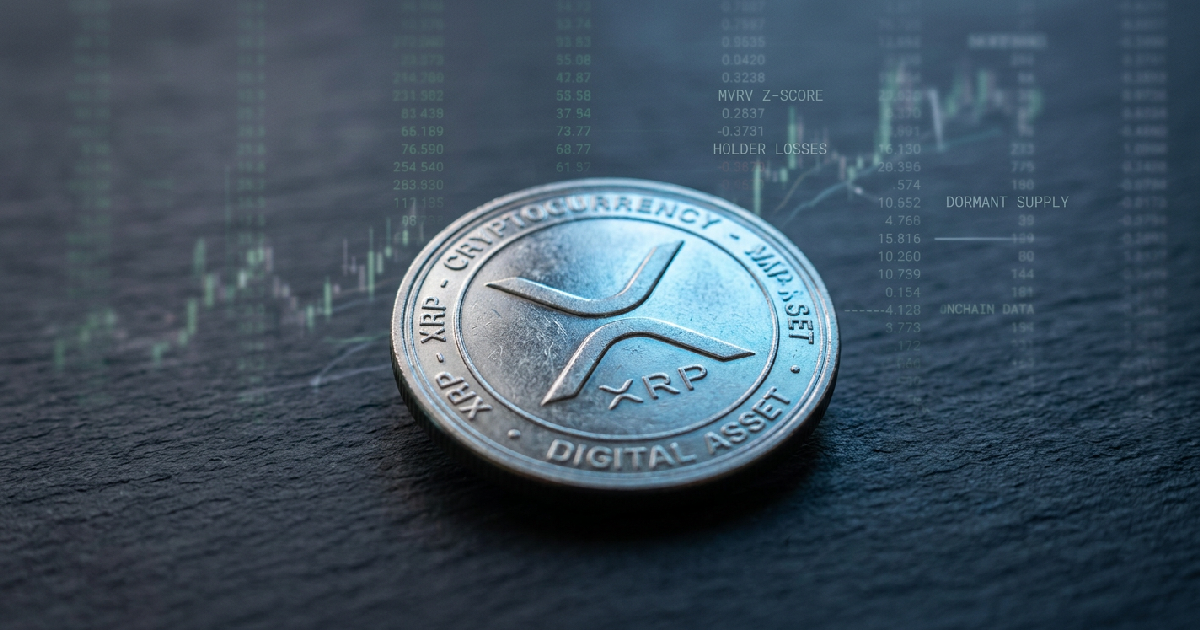

XRP, the digital asset linked to Ripple, has climbed about 8% over the past seven days, reaching roughly $1.14 according to CoinDesk data. This upward price movement comes as an onchain metric, the Market Value to Realized Value (MVRV) ratio, points to unprecedented unrealized losses for its holders.
Analytics firm Santiment highlighted that both the 30-day and 365-day MVRV ratios for XRP are hovering near -45% and -47% respectively. These figures mark the lowest point in XRP’s history, suggesting many holders are deeply underwater and could be in a “capitulation” phase.
Understanding MVRV and the XRP capitulation phase
The MVRV ratio serves as a vital onchain indicator. It compares an asset’s current market value with its realized value, which is essentially the average price at which all of its supply last moved. When this ratio dips below zero, it generally signals that the average holder is currently experiencing a loss.
For XRP, the deeply negative readings mean that both recent buyers and those who have held for a year are significantly in the red. Santiment, in a Friday post, specifically noted that the combined 30-day and 365-day MVRV ratios are at their lowest point ever recorded for XRP.
This situation often describes a “capitulation” phase in market cycles. It’s a period where extended unrealized losses lead to weaker hands selling off their holdings, often at a loss, to buyers willing to step in. Santiment itself carefully describes this as a “risk-reward point,” rather than an outright price prediction.
Contrarian signals amidst deep losses
For some traders, such extreme levels of holder losses are often interpreted as a contrarian signal. The prevailing logic suggests that when the majority of market participants are facing maximum pain and sentiment is overwhelmingly negative, the potential for further price downside might be limited.
Santiment explicitly stated, “The best setups often appear when the crowd is feeling maximum pain.” The firm noted that so much downside has already been absorbed by existing holders that adding here carries less risk than usual. However, they also cautioned that XRP’s price could still fall further if the broader market weakens.
Despite these depressed MVRV readings, XRP has managed its approximate 8% climb over the last seven days to around $1.14. This suggests that even with widespread losses, there’s discernible buying interest absorbing the available supply, marking a period of heightened XRP speculative activity.
Broader market context and future outlook
This dynamic of significant holder losses coinciding with a modest price rebound isn’t unique to XRP. Onchain analysts have recently observed similar patterns in other major digital assets, including Bitcoin.
Large Bitcoin wallets, for instance, have reportedly been accumulating the asset even amidst record outflows from Bitcoin exchange-traded funds (ETFs). This reflects a “capitulation-and-absorption” setup, which typically forms near cycle lows rather than market tops. Such patterns indicate that savvy investors often seek opportunities when Bitcoin exchange supply remains historically low, signalling reduced selling pressure from specific cohorts.
It’s important to remember that while MVRV measures how “washed out” positioning might be, it doesn’t pinpoint an exact market bottom. Stretched losses can persist or deepen if the overall market experiences a significant downturn. What the gauge does highlight is that selling pressure from underwater holders is likely largely spent.
Traders should closely monitor whether new buyers continue to step in and maintain this recent momentum. Sustained buying interest at these historically low MVRV levels could pave the way for a more substantial recovery for XRP. Conversely, a lack of continued demand could lead to stagnation or a retesting of lower price points.
Ultimately, the current MVRV signal for XRP acts as a crucial guide for risk assessment. It suggests the “pain trade” has reached historic extremes, potentially attracting contrarian investors. Patient observation and a firm grasp of evolving market dynamics will be essential for navigating XRP’s next phase.