
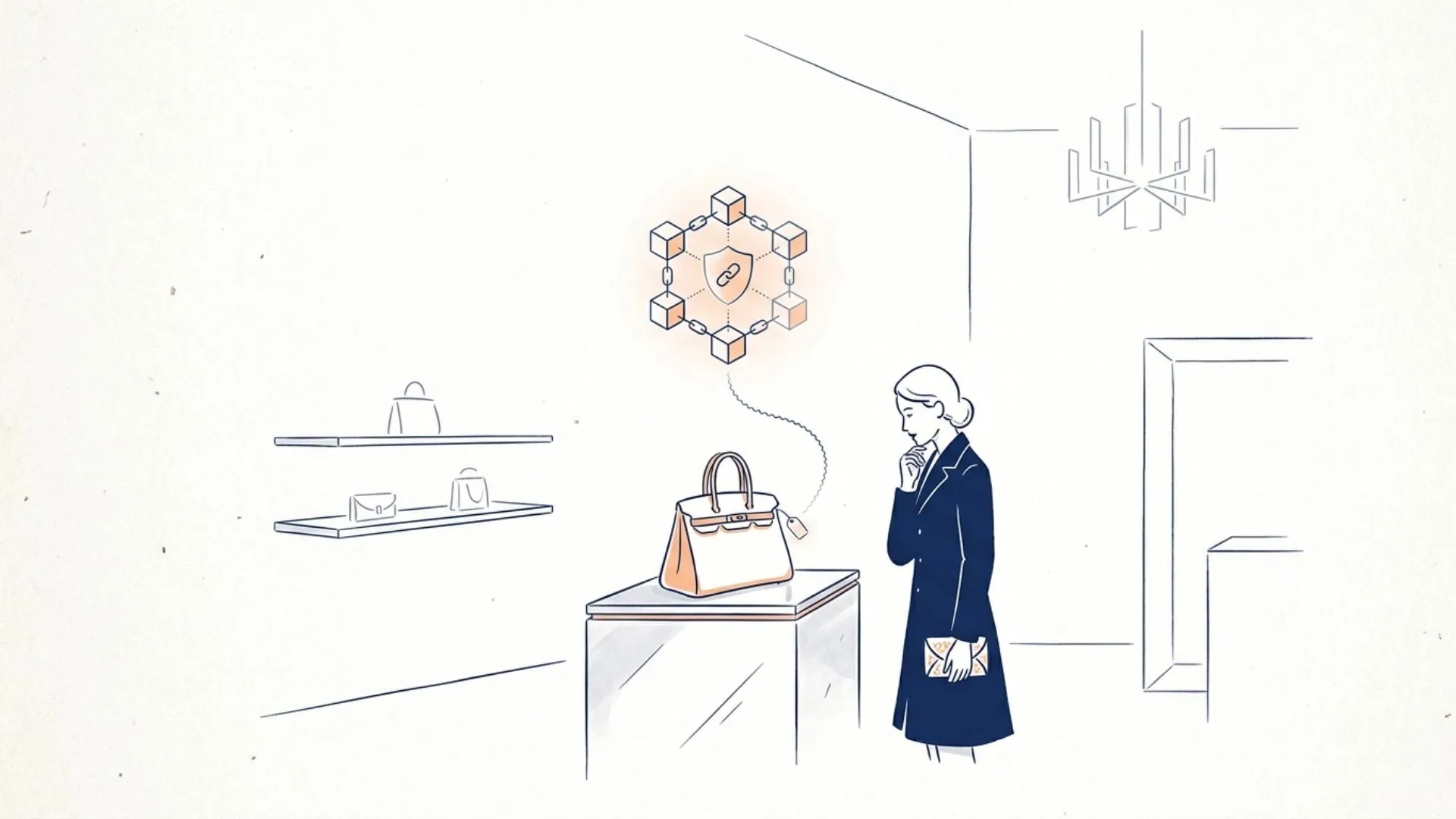

If you ask the average person about digital tokens, they will likely recall the speculative frenzy of a few years ago when cartoon images sold for millions of dollars. But behind the scenes, a massive shift has occurred, and NFTs in luxury brands are proving that the underlying technology is far from a passing trend. Instead of speculative digital art, premium companies are now using blockchain as a quiet, invisible infrastructure to solve a multi-billion dollar problem: the rampant global counterfeit market.
This NFT evolution marks a crucial turning point for both the fashion industry and the broader crypto ecosystem. The focus has completely shifted from hyping up token prices to utilizing digital ledgers for their original, most powerful purpose: establishing unshakeable proof of origin, ownership, and authenticity.
Crypto Bull Market Guide: is it too late to buy the dip?
What You Need to Know Before We Dive In
To understand this shift in NFTs, we first need to strip away the complex jargon that usually surrounds cryptocurrency. At its core, a Non-Fungible Token is simply a unique digital certificate recorded on a public database known as a blockchain.
Unlike traditional databases, a blockchain is decentralized and immutable. This means that once a piece of information is recorded, it cannot be secretly altered, forged, or deleted by a single entity.
When you apply this concept to high-end goods, it changes everything. A luxury handbag or a rare watch is valuable primarily because of its verifiable scarcity and origin.
If there is any doubt about a product being genuine, its value plummets instantly. Historically, high-end houses relied on paper certificates, stamped warranty cards, or serial numbers sewn into the lining of a jacket.
The problem is that paper can be lost in a move, warranty cards can be easily forged, and sophisticated counterfeit operations can replicate serial numbers. The fake goods industry generates billions of USD annually, flooding the market with replicas that can fool even seasoned collectors.
This is where the tokenization of physical assets comes into play. By minting a unique digital token that corresponds to a physical item, brands are creating what the industry calls digital twins in fashion.
This NFT digital twin acts as a permanent, untamperable passport for the physical item. It lives on the blockchain, moving from wallet to wallet as the physical item changes hands in the real world.
For the first time, consumers and brands have a shared, transparent record of an item’s entire lifecycle. It is a fundamental shift from relying on trust to relying on cryptographic verification.
How Blockchain Authentication Actually Works for Physical Items
The theory sounds promising, but the practical execution is where the real value lies. Several major players have moved past the experimental phase and are implementing these systems at scale.
A prime example is the Aura Blockchain Consortium, a collaborative effort initiated by giants like LVMH, Cartier, and the Prada Group. Instead of competing, these luxury conglomerates teamed up to build a shared blockchain infrastructure dedicated entirely to tracking premium goods.
Similarly, Swiss watchmakers like Breitling have begun issuing digital passports for every new timepiece they produce. The process of blockchain authentication luxury goods generally follows a clear, three-step framework.
1. The Digital Passport
The journey begins on the manufacturing floor. When a luxury item is finished and passes quality control, the manufacturer creates a unique digital token on the blockchain.
This token acts as the birth certificate of the product. It securely stores crucial metadata, such as the exact date of manufacture, the specific materials used, the original retail destination, and the warranty information.
Because this information is hashed onto a blockchain, it establishes an absolute baseline of truth. Anyone querying that specific token can see exactly when and where the item was born, without needing to contact the brand’s customer service.
This digital passport is then transferred to the first buyer. Instead of walking out of the boutique with just a paper receipt, the buyer receives the token in a digital wallet, officially registering them as the verified owner.
2. Linking the Physical to the Digital
The most critical challenge in this ecosystem is ensuring that the digital token and the physical item remain securely connected. If the link can be broken or swapped, the entire system falls apart.
Brands solve this by embedding secure, tamper-proof hardware directly into the products. This is often done using encrypted Near Field Communication (NFC) chips hidden behind the dial of a watch or stitched deep inside the leather of a handbag.
When a customer or an appraiser taps their smartphone against the hidden chip, the phone reads the data and instantly queries the blockchain. The screen then displays the digital passport, confirming that the physical object in their hands matches the digital token on the ledger.
In cases where embedding a chip is impossible, some companies use advanced microscopic scanning. By capturing the unique surface structure of a material—much like a human fingerprint—they can mathematically link that specific physical texture to the blockchain record.
3. The Secondary Market Shift
The most profound impact of these digital passports is felt in the secondary market. Buying pre-owned luxury items has traditionally been a high-stress experience, full of risks and hefty authentication fees.
If you wanted to buy a vintage watch from a private seller, you usually had to meet at a jeweler, pay an expert to open the case back, and hope their assessment was correct.
With NFTs in luxury brands, the dynamic changes entirely. The buyer simply scans the item with their phone and requests the seller to transfer the digital token to their wallet.
If the seller does not possess the digital twin, or if the NFC chip fails to match the blockchain record, the buyer knows immediately that something is wrong. This creates a trustless environment, meaning you do not need to trust the seller; you only need to trust the cryptographic math.
This level of security brings unprecedented liquidity to the resale market. It allows peer-to-peer transactions to occur with the same confidence as buying directly from the flagship store.
Are NFTs Dead, or Just Evolving into RWAs?
Given the drastic drop in media coverage and the collapse of trading volumes for digital profile pictures, many casual observers ask: are NFTs dead? The short answer is no, but the narrative has matured significantly.
The early speculative phase in NFTs was a stress test for the technology. It proved that digital ownership could be managed securely on a decentralized network.
Now, the smartest capital in the room is looking at how to apply that tested infrastructure to tangible things. This transition is widely known in the crypto industry as the tokenization of Real-World Assets (RWA).
RWAs represent a massive leap forward. Instead of hoping a pixelated image goes up in value, institutional investors and high-net-worth individuals are looking at how blockchain can optimize the management of assets that already hold intrinsic value in the real world, like real estate, fine art, and high jewelry.
This brings us to a fascinating new development at the intersection of wealth management and decentralized finance (DeFi). The digital twins of luxury goods are beginning to unlock financial utility that was previously unimaginable.
Imagine a collector who owns a rare, highly sought-after handbag valued at thousands of USD. In traditional finance, extracting liquidity from that asset requires selling it or navigating a cumbersome, high-interest pawn process.
However, if that handbag is securely vaulted and linked to an authentic digital token, the owner can use that crypto real world assets (RWA) token as collateral on decentralized lending protocols.
They can lock the token in a smart contract and borrow stablecoins against its value instantly, without credit checks or intermediaries. The physical item remains safe in a vault, while the owner accesses liquid capital globally and instantly.
If the loan is repaid, the smart contract automatically returns the token. If the borrower defaults, the protocol transfers the token—and thereby the legal claim to the physical item in the vault—to the lender.
This turns static luxury goods into dynamic financial instruments. It is a prime example of why institutional players view blockchain as a serious wealth management tool, far removed from the volatile speculation of internet trends.
Is the Tokenization of Luxury Goods Worth It?
From an analytical standpoint, evaluating the intersection of high fashion and blockchain through NFTs requires a sober look at both the benefits and the persistent hurdles.
The advantages for the brands are clear and compelling. First and foremost, the technology provides an unforgeable defense against counterfeiting, protecting brand equity and ensuring revenues are not lost to the black market.
Secondly, it grants brands visibility into the secondary market. Historically, once a watch or bag was sold, the brand lost track of it.
With digital passports, brands can see how often an item changes hands and offer exclusive perks, repair services, or private event invitations to the current secondary owner, effectively turning a second-hand buyer into a direct customer.
However, the challenges cannot be ignored. The most significant barrier to mass adoption is technological friction.
The average luxury consumer is not necessarily a crypto native. They are paying for elegance, seamless service, and convenience.
They do not want to memorize a 24-word seed phrase, nor do they want to navigate complex exchanges like Binance, Kraken, or Coinbase just to verify the authenticity of a newly purchased coat.
For the tokenization model to succeed globally, the blockchain element must become entirely invisible. The user experience should feel as simple as using Apple Pay, with all the complex cryptography hidden neatly behind a polished brand application.
Another vulnerability lies in the physical-to-digital bridge. While blockchain records are practically indestructible, physical NFC chips can be damaged, degraded by water, or intentionally extracted by sophisticated bad actors.
If a counterfeiter manages to carefully remove an authentic chip from a damaged real bag and implant it into a high-quality fake, the blockchain will blindly verify the fake item as genuine. Technology mitigates fraud, but human ingenuity in the black market means the system is not absolutely flawless.
Furthermore, regulatory clarity remains a moving target. Different jurisdictions have vastly different laws regarding digital property rights, consumer privacy data stored on public ledgers, and the legal status of tokenized physical assets used as collateral.
Despite these hurdles, the long-term outlook remains incredibly robust. The integration of NFTs in luxury brands is not a marketing gimmick; it is an infrastructural upgrade.
Conclusion
The narrative surrounding Web3 and digital ownership has fundamentally changed. The era of buying tokens purely on the hope of flipping them for a higher price has given way to an era of pragmatic, silent utility.
By using decentralized networks to issue verifiable digital passports, premium companies are solving the very real, very expensive problem of counterfeiting. They are bringing transparency to secondary markets and giving buyers absolute confidence in the provenance of their high-value purchases.
The most successful implementations of this technology will be the ones that users never even notice. Just as we use the internet daily without understanding the underlying protocols, consumers will soon authenticate their physical goods using blockchain without ever needing to know what a token is.
The real revolution of digital assets is happening right now, not on social media feeds, but hidden inside the seams of leather goods and beneath the glass of mechanical watches. It is a shift from speculation to verifiable trust, proving that the foundation of blockchain technology is here to stay.
AI crypto trading tools: how to upgrade your analysis without losing your mind (or your capital)
This content is for informational purposes only and does not constitute financial advice.