
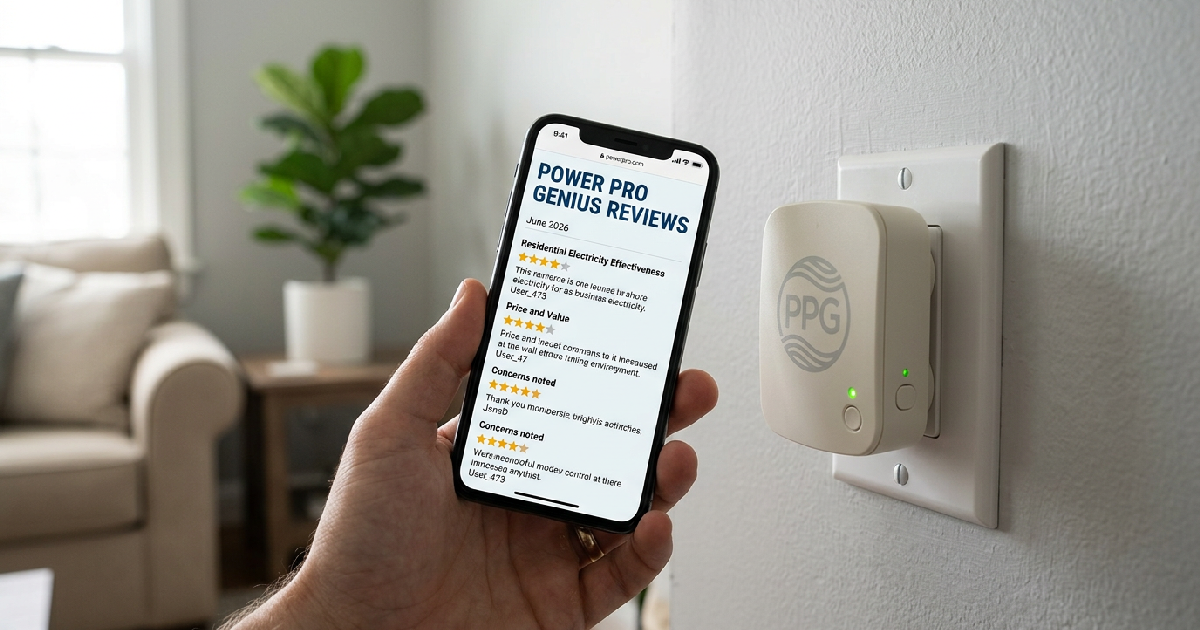

Power Pro Genius has emerged as a focal point of consumer scrutiny this June as new reports examine claims that the plug-in device can optimize residential electricity and reduce monthly utility bills.
The device, marketed as a solution for “dirty electricity” and power surges, is currently being sold as a consumer electronics tool for homeowners looking to stabilize their home’s electrical current. However, recent reviews from the month of June 2026 suggest that potential buyers should verify their home’s specific electrical needs before finalizing a purchase.
Evaluating the marketing claims of Power Pro Genius
The marketing surrounding Power Pro Genius focuses on the concept of Power Factor Correction, a process that supposedly filters out electromagnetic interference. Retailers claim the device can protect sensitive appliances from the micro-surges common in modern municipal grids, yet pricing structures and refund policies have become a primary source of customer feedback.
As the macro outlook for household expenses continues to tighten, more consumers are turning to these third-party devices to shave costs off their energy overhead.
The core promise of Power Pro Genius involves stabilizing the voltage within a residence to prevent the “bleeding” of electricity. The manufacturer asserts that by plugging the unit into a central outlet, users can mitigate the effects of dirty electricity—electrical noise that fluctuates outside the standard 60Hz frequency.
In theory, this leads to cooler-running appliances and a longer lifespan for expensive electronics like refrigerators and smart televisions.
Key details
And while the science of capacitors—which the device likely uses—is well-established in industrial settings, its effectiveness in a standard three-bedroom home is often debated by electrical engineers.
Experts suggest that while the device may improve the efficiency of motor-heavy appliances, it won’t necessarily result in the massive percentage drops in billing that some promotional materials imply. It’s a nuance that many consumers miss when clicking through high-pressure sales funnels.
Key details
The most frequent grievances regarding Power Pro Genius center on the lack of visible results in the first billing cycle. Since residential power bills are influenced by seasonal temperature changes and fluctuating kilowatt-hour rates, isolating the impact of a single device is notoriously difficult.
Some users have also noted that the device takes up a valuable socket in high-traffic areas, which can be a minor but persistent annoyance in smaller homes.
So, what should a frustrated consumer do? If the device fails to produce the expected savings, the first step is documenting the energy usage via the “before and after” utility statements. Contacting the manufacturer’s support line with specific data often yields a faster resolution than a vague complaint about “not working.”
Most reputable sellers prefer to issue a refund than face a formal dispute through consumer protection agencies.
Future of residential energy optimization products
The rise of devices like Power Pro Genius highlights a growing consumer demand for energy independence. As municipal grids age and electricity prices rise, the market for “grid edge” technology is expected to expand. However, the next generation of these devices will likely focus more on integrated smart-home software rather than simple plug-and-play capacitors.
This shift will provide users with better data to justify their purchases.
For now, the Power Pro Genius remains a polarizing tool in the home improvement space. While some users swear by its ability to quiet the “hum” of their electronics, others view it as an unnecessary expense.
The truth likely lies in the middle: it may offer marginal benefits for homes with heavy inductive loads, but it is not a magic wand for high utility costs. Diligence and data remain a homeowner’s best tools for saving money.