
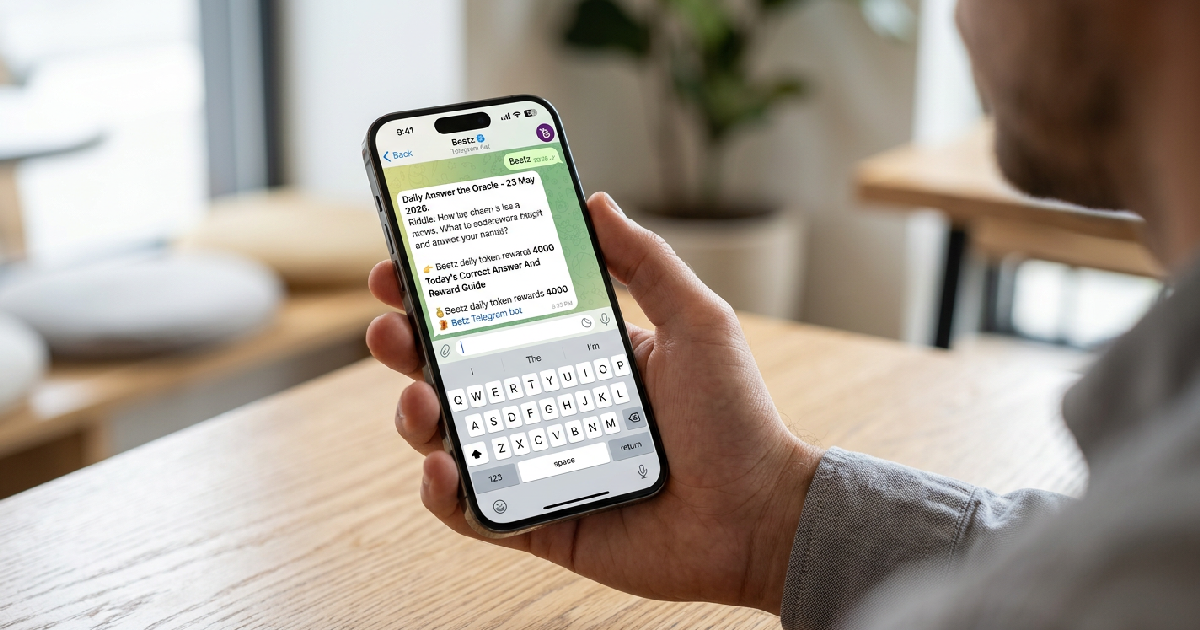

Driven by the explosive growth of trading bots and a surging retail demand for hyper-fast execution, Telegram is aggressively outgrowing its original purpose to capture a massive share of the Web3 financial landscape.
The app has evolved into an execution layer where complex financial transactions happen around the clock.
Trading Bots Are Transforming Telegram
A large part of this shift is tied to the growing popularity of trading bots integrated directly into Telegram’s API.
These automated tools allow users to buy and sell cryptocurrencies, set limit orders, track real-time prices, and receive market alerts without ever leaving the chat interface. What once required jumping between multiple exchanges and charting tools can now be accomplished within a single message thread.
Within the same environment, investors can spot a trending token in a community group and trade it almost instantly. This dynamic has become the lifeblood for traders focused on memecoins and emerging tokens, where seconds literally dictate the difference between profit and liquidation.
Another core feature driving this volume is copy trading. This model allows retail investors to automatically replicate the trades of seasoned market participants in real time.
Instead of analyzing charts or coding their own scripts, users simply link their wallets to track professional traders with verified on-chain track records. For beginners, it eliminates the steep learning curve of technical analysis. For pro traders, it provides a highly lucrative opportunity to monetize their expertise and scale their communities.
Telegram Goes Beyond Buying and Selling Crypto
Modern trading bots have outgrown basic order execution. Today’s solutions offer a comprehensive suite of tools including automated portfolio tracking, real-time PnL monitoring, liquidity pool analysis, token contract scanners, and whale-wallet tracking.
In practice, Telegram is evolving into a simplified, all-in-one financial terminal.
This structural shift reflects a broader macroeconomic trend: the unbundling of traditional financial services into hyper-accessible applications that consumers already use daily.
The deep synergy between Telegram and crypto is no accident. The platform has always been the default home for Web3 projects. However, that connection has reached a turning point with the massive growth of the TON network and the emergence of Mini-Apps.
Digital native wallets, micro-payments, and high-speed trading infrastructure are now native to the Telegram user experience, aggressively crowding into a territory traditionally dominated by centralized exchanges.
Convenience Does Not Eliminate Risk
Despite the frictionless user experience, market experts warn that easy access does not mitigate the high-risk nature of the asset class.
Security vulnerabilities, private key exposure, reliance on opaque third-party software, and poorly calibrated automated strategies continue to cause massive losses. Furthermore, the extreme simplicity of the interface can create a dangerous psychological effect, giving inexperienced users a false sense of security that encourages over-leveraging without proper risk assessment.
Automation optimizes execution speed, but it cannot replace fundamental risk management and trading discipline.
Even with these structural risks, the parabolic growth of bot volume suggests that the next generation of the crypto market may not operate within the walled gardens of traditional web exchanges. Instead, it is thriving within the digital communities where traders already live.
By merging messaging, data feeds, and execution into a single screen, Telegram is rewriting the rules of retail asset interaction. If this trajectory holds, the boundary between a messaging app and a global financial terminal will soon disappear entirely.